



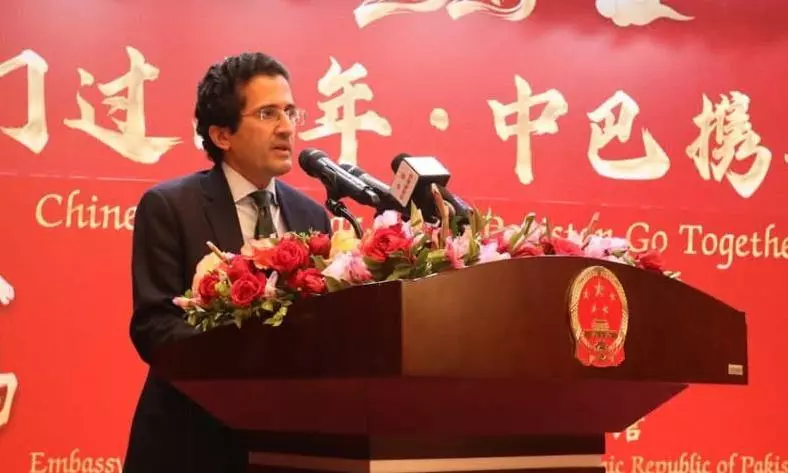
Malik said that Pakistan only has strategic reserves. Photo: @AliPervaiz450
'We have no strategic oil reserves like India,' says Pakistan minister
Pakistan says it has no strategic oil reserves and only 5-7 days of commercial stocks as Middle East tensions push global crude prices higher.

Amid the global crude oil price surge due to the ongoing Middle East conflict and consequent shipping disruption in the Strait of Hormuz, Pakistan has stated that, unlike India, it does not maintain any “strategic oil reserves” to absorb global supply shocks. The admission recently came from Pakistan's petroleum minister, Ali Pervaiz Malik.
Oil reserve crunch
Speaking to Samaa TV, Malik said that Pakistan only has strategic reserves. “We don't have any strategic oil reserves. We only have commercial reserves,” said Malik as reported by the Hindustan Times.
Also Read: Why is Pakistan playing mediator in US-Iran conflict? Expert explains
Elaborating further, the minister said that Pakistan’s crude oil would only last “five to seven days”, adding that India, on the other hand, can use much larger oil reserves “with just a single signature.”
Comparison with India
He also said that India maintains about 60–70 days of combined strategic and commercial reserves while pointing out the economic differences between the two countries. He said that India has “fiscal room” to respond to such a situation, which includes reducing taxes in case of surging oil prices.
Also Read: Ahead of Pahalgam anniversary, Pakistan defence minister threatens to strike Kolkata
The minister’s remarks come at a time when fuel prices have skyrocketed in Pakistan by 42.7 per cent, pushing it from PKR 321.17 to PKR 458.41, reported ANI.
Fuel price pressure
Despite Pakistani Prime Minister Shehbaz Sharif’s move to cut petrol prices by PKR 80 to PKR 378 per litre, it has reportedly done little to address public grievances.
Also Read: Tharoor mocks Pakistan’s mediating role in Iran crisis, suggests it's more a proxy than power
Malik further stated that Islamabad’s response is influenced by its commitments to the International Monetary Fund (IMF), which in its turn has decreased the government’s flexibility.
IMF constraints
“Now, with diesel prices rising up to 3-4 times, we decided to reduce the levy to zero on diesel and shift the entire burden to petrol while protecting motorcyclists by giving them a targeted subsidy,” he added.
However, he warned against breaching the IMF’s commitment, stating that it may lead to far worse consequences.
“We conducted backchannel negotiations with the IMF and convinced them to reduce the levy by 80 rupees per litre,” added Malik.