







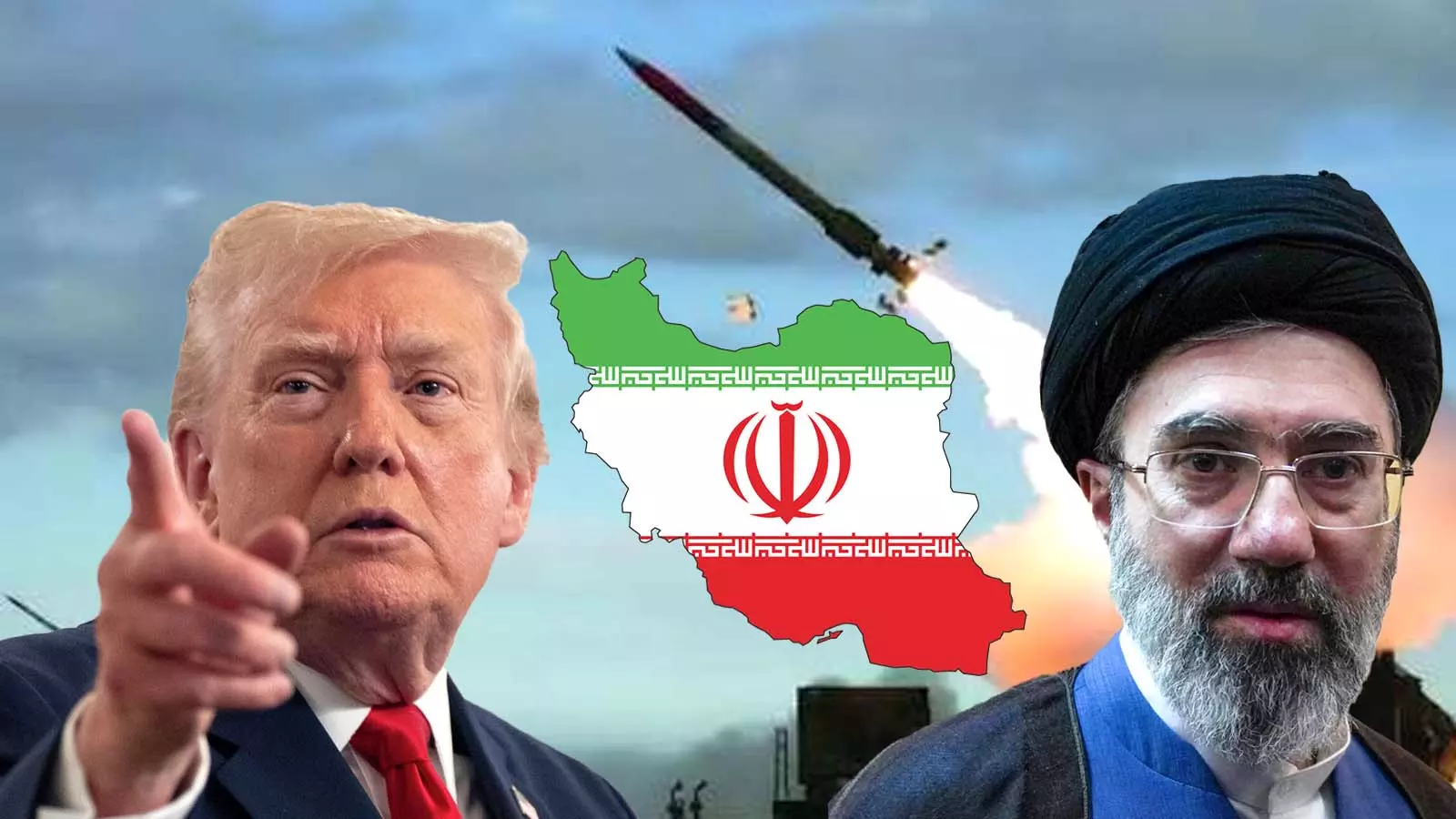
US launches Task Force Iron Gate to choke Iran's land supply routes
The US has launched a 20-member task force to disrupt weapons shipments and illicit trade through Iran's land borders and the Caspian Sea

After Tehran threatened to retaliate against American targets beyond the Middle East, US President Donald Trump has shown no signs of stepping back.
On November 7, Iranian Army spokesperson Mohammad Akraminia warned that any further American attack would invite an immediate response, with Iranian forces prepared to strike US targets without geographical restrictions.
Against this backdrop, the US military's Central Command (CENTCOM) has announced the creation of Task Force Iron Gate, which will seek to extend the existing naval blockade of Iranian ports to the country's land borders and the Caspian Sea.
The 20-member task force will comprise both civilian and military personnel and will be based in Tampa, Florida. It will work to prevent the movement of advanced weapons systems, dual-use technologies, sanctioned materials and illegal revenue streams.
"The establishment of Task Force Iron Gate reinforces the success of our ironclad blockade against Iran at sea," CENTCOM chief Admiral Brad Cooper said in a statement posted on X.
Why is the US targeting Iran's land routes?
The move marks an expansion of Washington's efforts to restrict Iran's trade and military supply networks. While the naval blockade has targeted Iranian ports and crude oil exports, land-based transportation and shipping through the Caspian Sea offer Tehran alternative channels for bringing in goods.
Iran shares land borders with seven countries: Iraq, Turkey, Armenia, Azerbaijan, Turkmenistan, Afghanistan and Pakistan. It also has access to the Caspian Sea, which connects it to Russia and other countries in the region.
These routes have become increasingly significant amid restrictions on maritime trade.
Also read: Trump threatens, Tehran hits back: Iran war edges towards another flare-up
CENTCOM has not specified how the task force will enforce restrictions across these routes or whether its mandate will involve direct military operations.
Also, as per CENTCOM’s estimates, the naval blockade has prevented more than $25 billion worth of Iranian crude oil from being exported.
The US has also stepped up enforcement at sea. On Saturday, American forces disabled a commercial cargo vessel in the Gulf of Oman after it allegedly ignored repeated warnings and attempted to violate the blockade.