



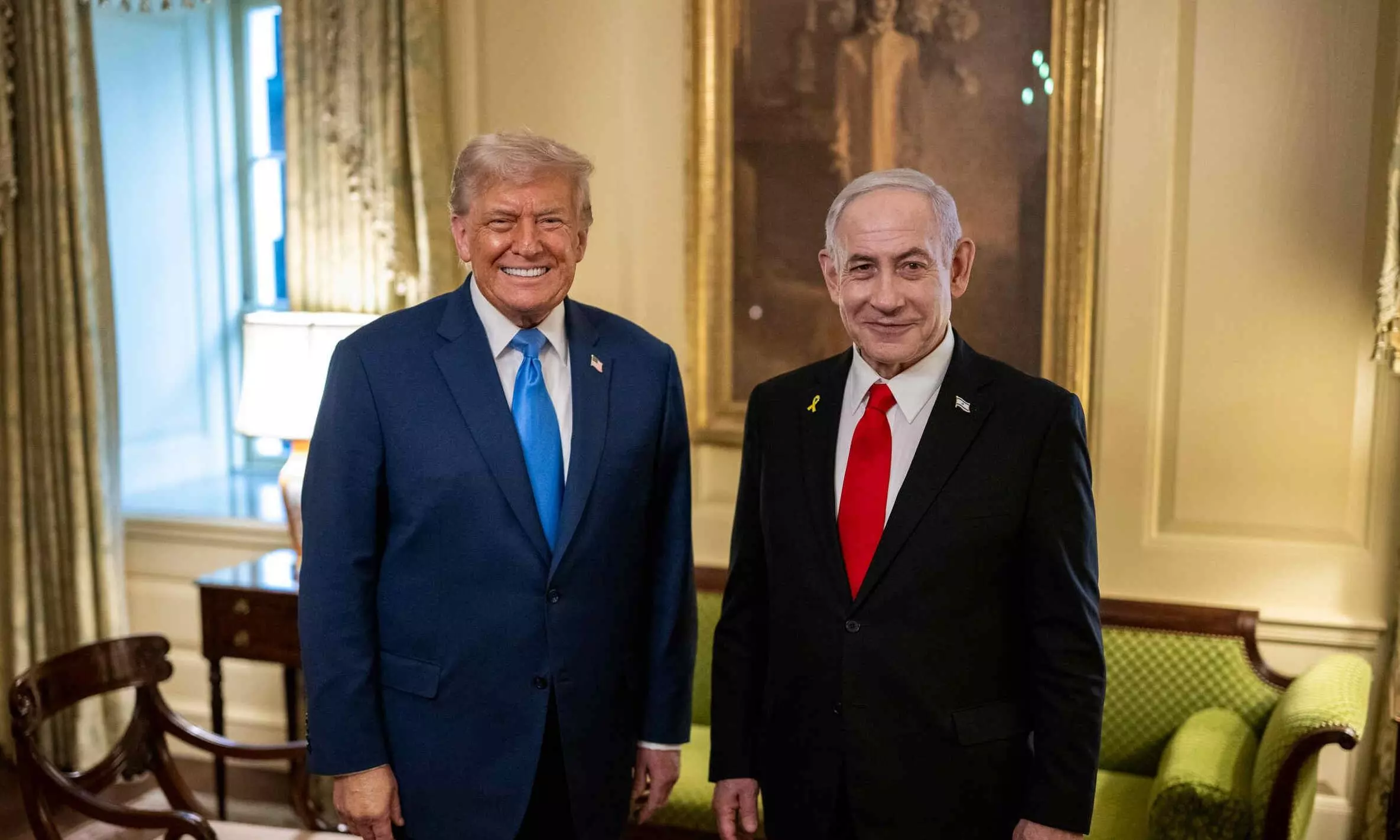
Trump’s latest expletive-laden rebuke of Netanyahu underscores yawning US-Israel rift
A leaked vitriolic phone call reveals a massive rift between allies Trump and Netanyahu as Washington accuses Israel of sabotaging peace talks with Iran

Even as US President Donald Trump rushes around to halt hostilities between Israel and Lebanon, which is hampering the US-Iran peace talks, the rift between Trump and Israeli Prime Minister Benjamin Netanyahu has seemingly widened.
As Israel's escalation in Lebanon threatens to jeopardise the ongoing peace talks with Iran to end the West Asia conflict, Trump lashed out at Netanyahu calling him "crazy" and accusing him of ingratitude, according to a report by Axios.
The report further gave details about a heated phone call between the two leaders regarding Israel's escalating military campaign in Lebanon.
Trump lashes out
Trump reportedly lost his temper and accused Netanyahu of "ingratitude" and warned that his actions are alienating the global community. “Everybody hates you now,” he allegedly told Netanyahu.
According to US officials and sources familiar with the conversation, Trump bluntly told Netanyahu: "You're f***ing crazy. You'd be in prison if it weren't for me. I'm saving your a**. Everybody hates you now. Everybody hates Israel because of this."
The reference to prison appears to be with respect to the political and diplomatic backing Trump provided Netanyahu during his high-profile domestic corruption trials. At another point in the conversation, an enraged Trump reportedly demanded, "What the f*** are you doing?"
Israel's relentless attacks
One of the major triggers for the rift between them stems from Israel's continuing aggressive military escalation with the goal of permanently weakening regional adversaries.
In addition to the threats on Beirut, Israel has been expanding its ground operation in southern Lebanon. Trump was reportedly angry over the fact that Netanyahu's decision to escalate in Lebanon was threatening to derail his negotiations with Iran.
Also read: Trump says US-Iran deal ‘very close’, warns of alternative action if talks fail
US sources told Axios that the president had been concerned about Lebanese civilians and had objected to the Israeli plan of knocking down buildings to take out a single Hezbollah commander.
According to the report, after the call, an Israeli official revealed that the Jewish state no longer plans to strike Hezbollah targets in Beirut.
Not the first fallout
This is not the first disagreement between the US and the Israeli leaders. Trump and Netanyahu share a complex, decades-long relationship, being strong allies but fraught with deep private tension. In the past, both leaders have had several tense run-ins but have still coordinated closely on Iran and other issues.
This time, with the broader peace process in the West Asia conflict teetering on the brink of collapse after Netanyahu's orders to strike Beirut's southern suburbs, Trump directly intervened.
Following a tense back-and-forth, Trump used his Truth Social platform to announce that he had successfully leveraged diplomatic pressure to halt the imminent Israeli advance and secure a fragile de-escalation. After a productive call, he said Netanyahu agreed to halt plans for a major raid on the Lebanese capital, noting that any troops already en route had been turned around.
"I had a conversation with Bibi Netanyahu today, asking him not to go into a major raid of Beirut, Lebanon. He turned his troops around. Thank you, Bibi!"
Trump further claimed to have bypassed traditional channels to broker a fragile truce: "I also had a conversation with representatives of the leaders of Hezbollah, and they agreed to stop shooting at Israel and its soldiers. Likewise, Israel agreed to stop shooting at them. Let's see how long that lasts — Hopefully it will be for ETERNITY!"
Netanyahu's counter
Netanyahu quickly countered that narrative, casting the call not as a moment of US-enforced restraint, but as a warning. The Israeli Prime Minister stated he informed Trump that Tel Aviv would absolutely strike Beirut if Hezbollah’s attacks did not cease, and emphasised that the Israeli military would continue to "operate as planned" in southern Lebanon
He warned that Tel Aviv will not hesitate to resume strikes in Beirut if Hezbollah violates its end of the truce.
Reasons for growing rift
The friction between Trump and Netanyahu spiked this time because of unilateral Israeli operations—such as the strike on Iran's South Pars gas fields—which Trump publicly distanced the US from, noting that the strike triggered retaliatory attacks on innocent US allies like Qatar.
Essentially, Trump is eager to conclude the military conflict to claim a diplomatic victory, lower global oil prices, and secure a legacy of ending "endless wars". Conversely, Netanyahu opposes de-escalation under the current framework, viewing an early truce as an incomplete victory that leaves Israel vulnerable.
Israel wants to permanently dismantle hostile nuclear and proxy capabilities.
Also read: US and Iranian negotiators reach tentative deal to extend truce, Trump nod awaited
While the foundational military and intelligence-sharing partnership remains intact out of necessity, the diplomatic alignment has severely deteriorated, leaving Israel increasingly isolated as Washington pursues independent channels for a regional truce.
Hezbollah has not yet issued a public response to Trump's claims.
The Rubio proposal
The fighting in Lebanon has severely fractured a regional ceasefire that had been tenuously holding. However, a potential diplomatic breakthrough has emerged via US Secretary of State Marco Rubio.
According to a statement from the Lebanese embassy in the US, Lebanese authorities have secured Hezbollah’s approval for a new de-escalation framework. Under Rubio's proposal Israel would completely halt all strikes on Beirut's southern suburbs and Hezbollah would cease all rocket and military attacks targeting northern Israel.