Tougher ICE crackdown under Trump did not boost jobs or wages for US-born workers
Researchers found that heightened ICE enforcement reduced employment among immigrants and weakened hiring, with little evidence of gains for American workers

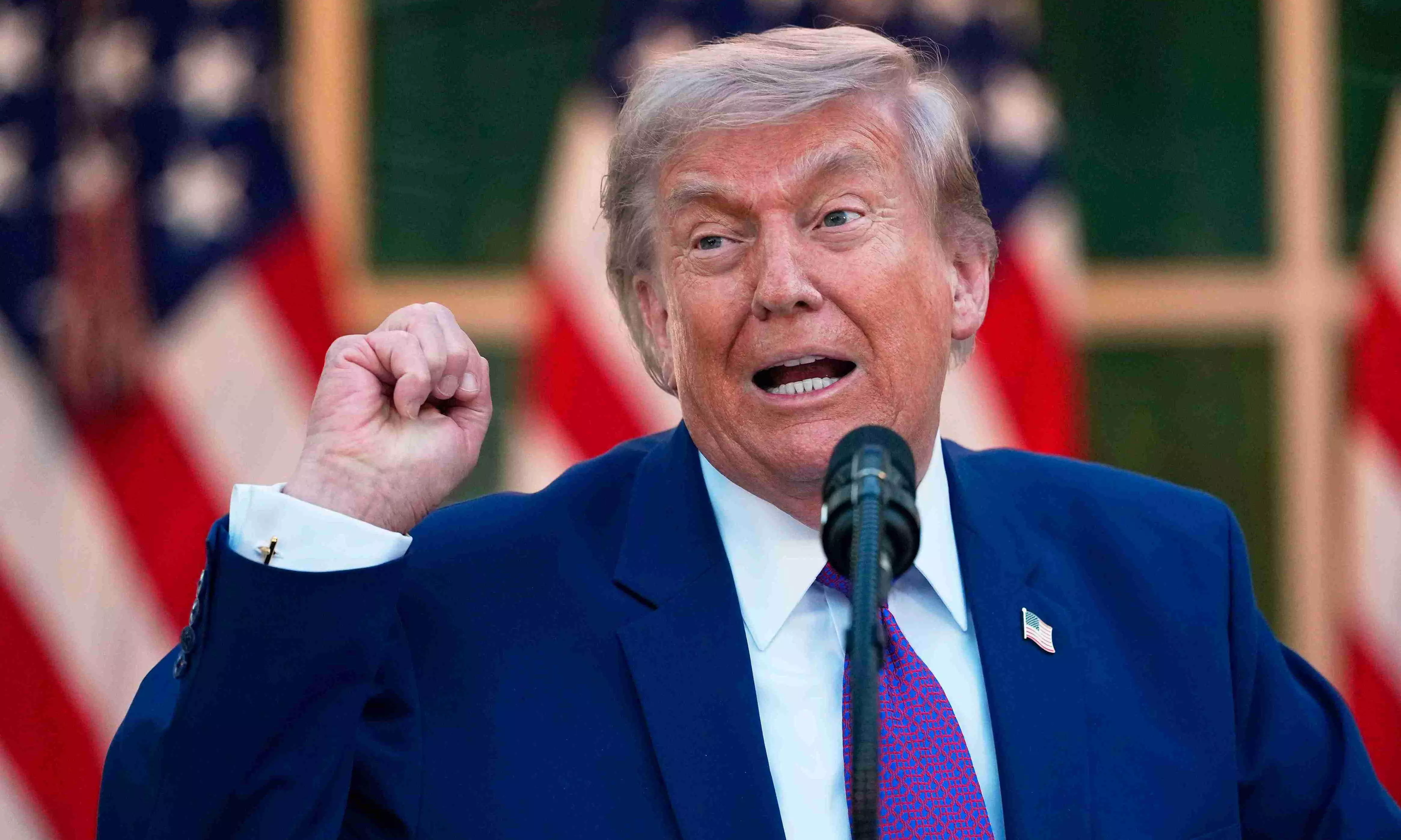
US President Donald Trump campaigned on a pledge to boost the labour market, with his hardline immigration agenda—including what he described as the largest deportation drive in US history—at the heart of that promise.
“For too long, Washington ignored how mass illegal immigration artificially suppressed wages, hurting working-class Americans – especially young men,” wrote Treasury Secretary Scott Bessent on X in July 2025. “But under President Trump, we now have a secure border, a blue-collar wage boom, and major investments from trade deals.”
But the labour market paints a starkly different picture. Unemployment rose, hiring slowed and wages barely grew during the first year of Trump’s second term, with the construction sector among the hardest hit.
We’re scholars of labour markets, immigration and public environmental policy who have examined how these economic trends can be traced to the mass deportation campaign of Trump’s second term. Notably, while areas with heavier ICE enforcement saw a drop in employment among immigrants, there was no increase in either employment or wages among US citizens.
A chilling effect on immigrant workers
Using data from October 2023 through November 2025, we looked at employment rates and wages for immigrant and US-born workers in places that experienced sudden spikes in ICE arrests and compared them to places that did not.
In the regions where US Immigration and Customs Enforcement ramped up its activity, we found a significant drop in the employment rate among likely undocumented immigrants who were neither detained nor deported. This was especially notable in sectors where such workers are heavily represented – such as agriculture, construction, manufacturing and wholesale markets – where we found a 4 per cent drop in the employment rate.
These immigrants appeared to be staying home out of fear, a concern that’s widespread. In a Pew Research survey from summer 2025, 43 per cent of foreign-born respondents said they feared deportation for themselves or someone close to them. We call this a chilling effect, since these people aren’t physically removed from the labour market. Instead, they changed their behaviour because of ICE.
The chilling effect on employment in Trump’s second term is roughly double of what we found in prior work on mass deportations, when we looked at a program in President Barack Obama’s first term called Secure Communities.
As we wrote in a companion paper co-authored with sociologist Caitlin Patler, a likely explanation is that ICE arrests during Trump’s second term have been far more indiscriminate and visible: The average number of daily ICE arrests was higher than any time in the past 10 years.
The percentage of arrests conducted in public spaces – streets, workplaces, courthouses and school parking lots – more than doubled, rising from 19 per cent to nearly 50 per cent of all apprehensions. As a result, the intimidation effect was likely more widespread.
The broader effects
Trump pledged during his 2024 presidential campaign to focus ICE enforcement on criminals, especially violent offenders. In fact, we found the share of immigrants arrested by ICE who had a criminal conviction fell to a nearly record low in this time period, from roughly 60 per cent in January 2025 to under 30 per cent by the end of the year.
The economic effects have extended beyond immigrant workers. More broadly, many consumers have pulled back.
Other researchers have found that in cities with expanded ICE raids in 2025, consumer spending and economic activity fell. In February 2026, for example, Minneapolis officials estimated that the city’s economy lost US$203 million due to falling restaurant, hotel and retail revenues, as well as lost wages.
Another analysis found that states with enhanced ICE enforcement saw aggregate credit- and debit-card spending drop by 1.7 percentage points compared with those that did not.
Scholars have found similar effects with foot traffic, which dropped sharply in areas where ICE expanded its activities. A Wharton study released in May 2026, for instance, estimated that foot traffic in areas heavily impacted by ICE operations dropped by 2.7 per cent, with spending down by 6.2 per cent, per week.
What happened to US-born workers?
Trump’s core political promise was that deportations would open up jobs for American workers. But we found the opposite: Employment among US-born workers also declined in areas with heightened ICE activity. And employers didn’t respond by raising wages to attract more Americans to their workplace. Their demand for workers contracted instead.
At issue is the premise that foreign-born and US-born workers directly compete for the same jobs. But the example of Trump 2.0 underscores a different dynamic. As we and other economists have documented, the labour market is not zero-sum. Immigrants and US-born workers tend to fill complementary jobs rather than compete for identical ones.
Construction is a clear example. Fewer undocumented labourers on a job site means less work for the electricians, roofers and supervisors – roles more commonly held by US-born workers who depend on those projects moving forward.
The broader stagnation of employment in the construction industry in 2025 fits this pattern. It also mirrors earlier findings that Obama-era deportations reduced homebuilding and pushed up new-home prices.
Immigration crackdowns are, of course, nothing new in US history. In the early 1930s, President Herbert Hoover expelled 400,000 Mexican workers, which lifted neither wages nor employment of US-born workers. Obama’s Secure Communities program in the 2010s had similar results.
And as our most recent research shows, mass deportations don’t create new job opportunities for American citizens. Presidents seeking to strengthen the labour market will need to look elsewhere.