



Sri Lanka’s Buddhist monks retreat after showdown with Marxist government
A protest demanding special treatment for jailed monk Galagoda Atte Gnanasara fizzles out, exposing the limits of Buddhist monks’ political influence in Sri Lanka

In the first showdown between Red and Saffron in Sri Lanka, the otherwise influential Buddhist monks have announced an embarrassing retreat after taking on the ruling Marxist-led coalition in a battle marked by a deadly mix of street power, religious aggression and voodoo practices.
In a country where some 70 per cent of the population is Buddhist and where Buddhism enjoys state patronage, saffron-robed monks enjoy a privileged status. As a result, many conduct themselves with an air of superiority.
Also read | Prison, probes and exile: Dramatic fall of Sri Lanka’s once-powerful Rajapaksa family
In the process, scores of monks, particularly senior ones, have come to consider themselves above the law. They travel in flashy imported SUVs and lead lives of comfort even as they preach Lord Buddha’s principles of compassion and equality.
Pardon revoked, protests erupt
So, when the Supreme Court overturned on September 10 a presidential pardon granted in 2019 to a notorious Buddhist nationalist monk and ordered him to serve the remaining 63 months of his sentence, the ruling sent shockwaves through Sri Lanka.
Galagoda Atte Gnanasara, who headed the extremist Bodhu Bala Sena (BSS), a group accused of targeting Muslims, was sentenced in 2018 to six years in prison for contempt of court.
The well-built monk, who is known to have enjoyed the backing of intelligence agencies at one time, was also accused of criminally intimidating Sandya Eknaligoda, whose husband, cartoonist Prageetha Eknaligoda, disappeared in 2010, a year after Sri Lanka routed the Tamil Tigers.
But then President Maithripala Sirisena, himself a Buddhist, pardoned Gnanasara in 2019 after he had served just nine months in jail. The Supreme Court set aside the pardon in September this year and sent him back to prison to serve the remaining 63 months of his sentence.
The real storm erupted on October 6, when Gnanasara appeared in court without his customary robes, which had been taken away by jail officials. The Buddhist clergy denounced this as blasphemy.
Only religious leaders, they roared, could disrobe a Buddhist monk. Arguments that Gnanasara had worn prison clothes even in 2018 did not cut ice.
Monks take protest to Colombo
Within days, dozens of angry monks set out on a protest march from the revered Temple of the Tooth in Kandy to Colombo, 120 km away, demanding justice for the disrobed Gnanasara.
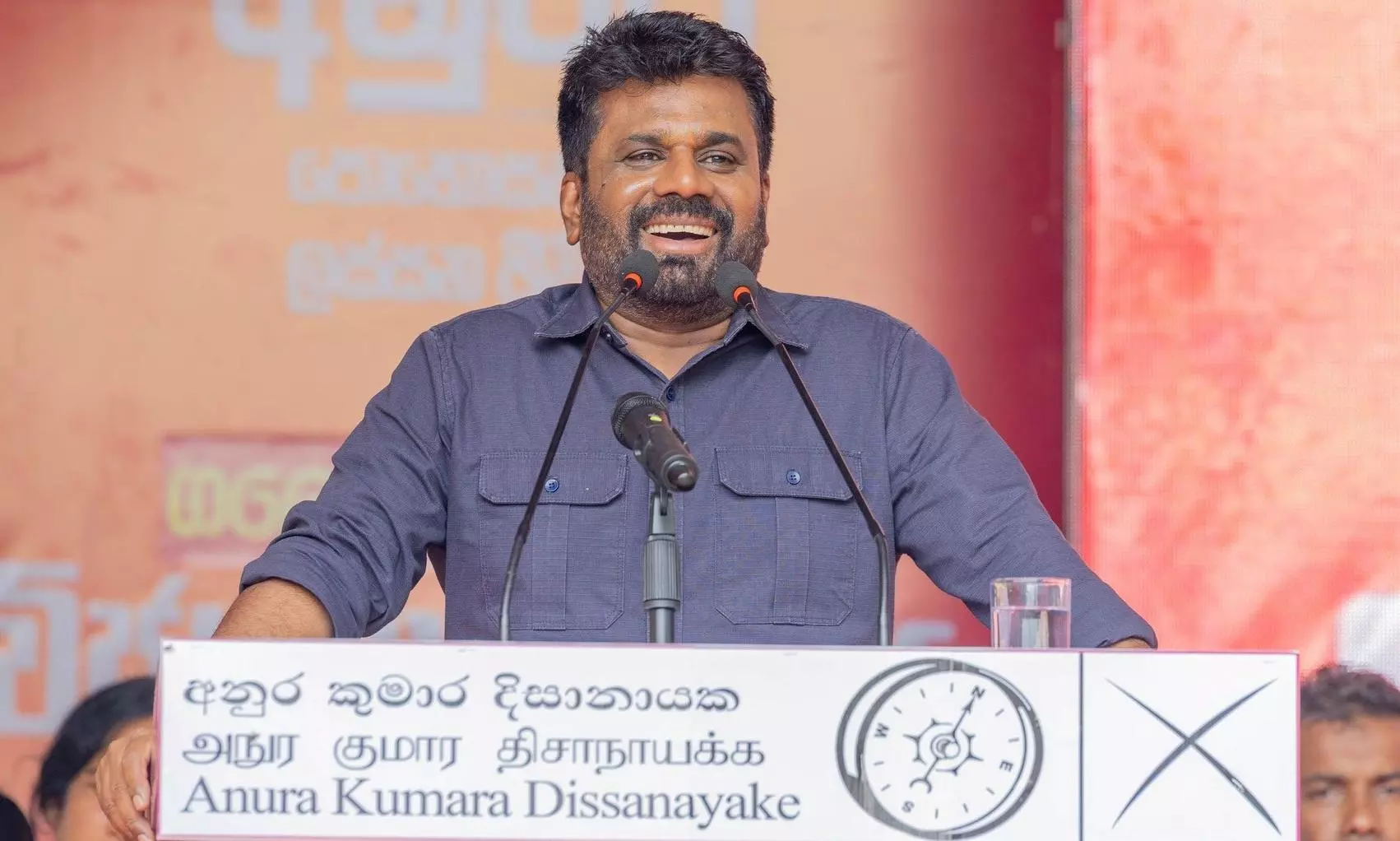
Fiery speeches were delivered at every halt along the way to the capital. The monks accused President Anura Dissanayake’s Marxists of disrespecting Buddhism and vowed to teach him a lesson. The march was titled ‘Justice for the Robe’. A section of the mainstream opposition parties, routed in elections two years earlier and led by Buddhists, joined the bandwagon.
Meanwhile, the most senior monks from various orders met President Dissanayake, who defended the jail officials, saying they had acted under the British-enacted Prison Ordinance. He added that 63 other Buddhist monks were in jails across Sri Lanka and that the rules could not be changed for just one person.
But Dissanayake, a Buddhist although a committed Marxist, promised to have the rules governing the clothing of jailed monks amended.
With religious tensions rising, the government initially stood firm on the decision to keep Gnanasara out of his robes. But it made a U-turn four days later, saying he could wear them again until he was convicted in another ongoing case.
Monks retreat after failed protest
Having tasted victory, the head of the order to which Gnanasara belonged then sought permission to hold a ceremony to restore his robes. A court rejected the request.
By then, the monks marching from Kandy had reached the presidential secretariat in Colombo. Their latest demand was that President Dissanayake pardon Gnanasara, as Sirisena had done in 2019.
This time, the government held firm. The protesting monks then staged a sit-in near the secretariat and refused to leave. Forced to move by a court order, the monks, now joined by larger numbers, shifted to Vihara Mahadevi Park, a green lung in the heart of Colombo. There, they staged what critics saw as a sacrilegious spectacle involving curses and dark occult rituals directed at the Marxist president.
Also read | Sri Lanka assures New Delhi it won’t allow anti-India activity on its territory
Politicians whose parties had been routed by the Marxists joined them at the park. They were happy to stoke the fires, claiming that the government was plotting to destroy the Buddhist order.
The government refused to give in. The monks were told to leave the popular park. They initially refused. Then, all of a sudden, their leaders announced a ‘temporary truce’ and withdrew.
The unexpected climbdown pleased many, including Sinhalese Buddhists. Colombo residents and commentators said the monks had realised that their demand for a second pardon for the jailed senior monk, who had been accused of criminal offences, did not enjoy public support.
Backlash against Buddhist monks
This was most evident when the Kandy-Colombo march drew only thin crowds. Even at the park in Colombo, most ordinary Buddhists chose to ignore the protest.
According to commentator Sarath De Alwis, decades of politicisation of religion in Sri Lanka have led to moral and social bankruptcy.
Others spoke contemptuously of the misdeeds and corruption among monks in the country. “Just seeing some of these senior, overfed monks travelling in imported SUVs is revolting,” said a Buddhist shopkeeper in Colombo who did not want to be named. “Many monks are obese. They do no work, suffer from diabetes and more,” he added. “They just don’t radiate piety or spirituality.”
De Alwis added: “Values like secularism and progressive governance are seen by the monastic elite as existential threats to their inherited property, wealth and systemic immunity. The monastic landlord cartel has opposed any legislation that calls for land reforms to cap private holdings.”
Buddhist monks in the country have also traditionally opposed negotiated attempts to settle Sri Lanka’s ethnic divide, both during the armed separatist war and in the years that followed.
Gamini Gunetileke, a hospital employee who is otherwise pious, said very few monks were now dedicated to selfless social service and intellectual enlightenment.
The limits of monk power
In a hard-hitting editorial, the Daily Financial Times said that the Buddhist robe must symbolise renunciation, compassion and moral discipline and should never become a shield for criminality.
“To demand preferential treatment for a convicted individual simply because he wears the saffron robe is to undermine the very foundation of justice,” it said. “If the robe is a sacred symbol of the Buddha’s teachings, its sanctity must derive from the conduct of the person wearing it, not from the garment itself.”
According to the Department of Buddhist Affairs, Sri Lanka has more than 40,000 registered Buddhist monks and some 12,000 registered Buddhist temples, both large and small.
Also read | Once wary, Sri Lankans warm up to India; New Delhi must take serious note
Some 70 per cent of Sri Lanka’s estimated 22 million people are Buddhists. The Constitution accords Buddhism a ‘foremost place’ in the state, while recognising other religions, including Christianity, Hinduism and Islam.
Against this backdrop, most Buddhist monks have come to believe that governments must consult them on major issues. Indeed, government leaders routinely call on senior monks at their monasteries and temples.
At present, however, a combination of factors has helped the Marxists, most of whose members and leaders are Buddhists, put the more aggressive sections of the monks in their place.