Why did New Delhi allow Sheikh Hasina’s media conference?
Exiled leader Sheikh Hasina announces her return to Bangladesh from India. How will this impact South Asian politics?

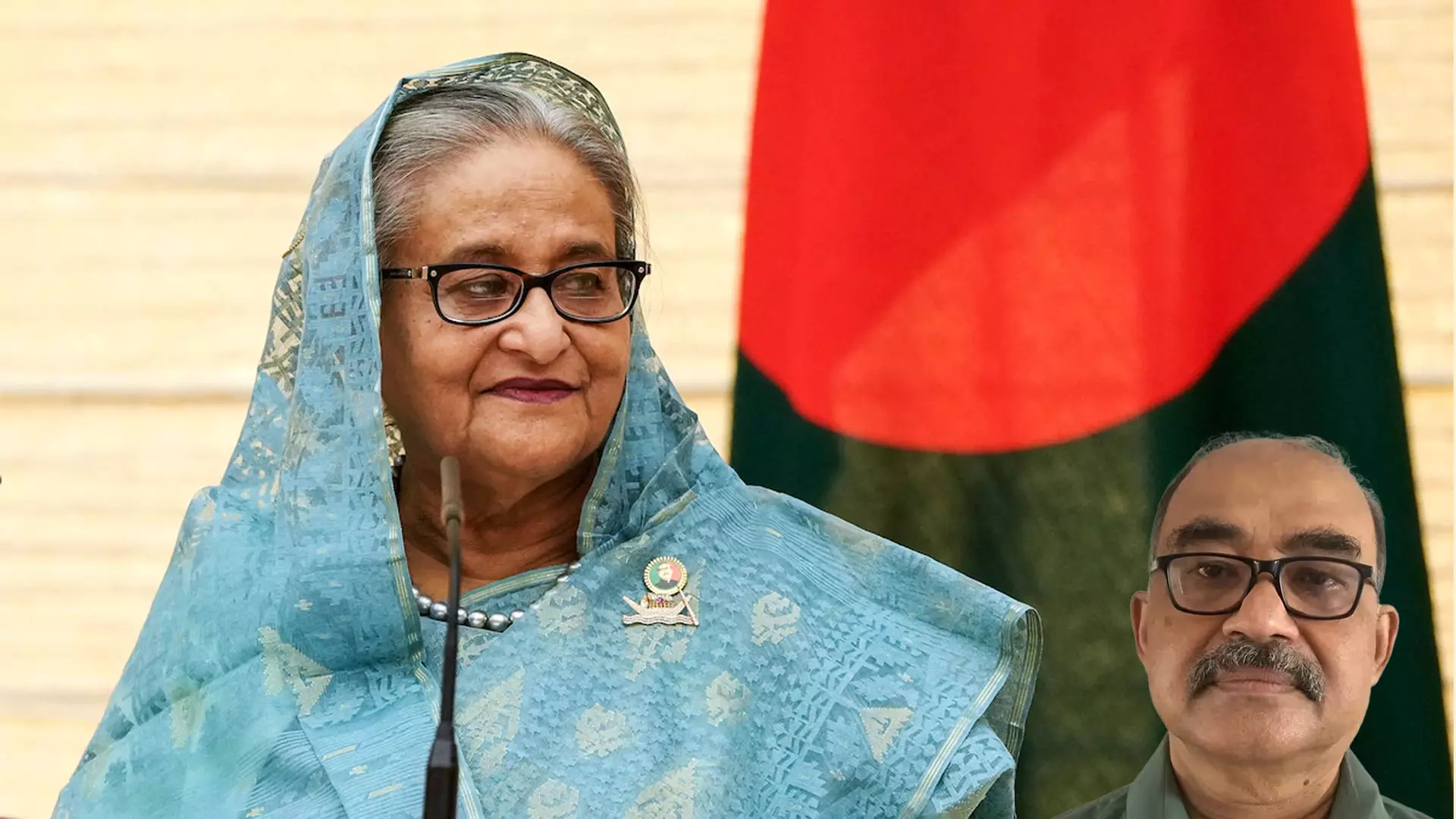
Exiled former Bangladesh Prime Minister Sheikh Hasina’s virtual media conference from her safe house in India—announcing her intent to return home by December—has triggered strong diplomatic outrage from the Tariq Rahman-led government in Dhaka, which labelled the event an assault on Bangladesh's sovereignty. The announcement has heightened tensions between New Delhi and Dhaka while raising questions about regional security and the future of South Asian geopolitical alignments. The Federal spoke to senior journalist Subir Bhaumik, an expert on Bangladesh politics, to unpack the implications of Hasina’s statement, India’s strategic posture, and the rising influence of external powers in the region.
Why did India permit Sheikh Hasina’s address knowing it would strain ties with Dhaka?
There is a huge contradiction in the way the Tariq Rahman government is reacting to this event by Hasina. During his long, self-imposed exile in the UK for 17 long years until he returned to contest elections and become prime minister, Tariq Rahman used similar online events to address Bangladeshis back home. The Hasina government at that point did not impose restrictions or block the internet to prevent him from speaking to his party members and supporters.
It is strange that the very person who used this medium from another country is now raising a furore over Hasina doing the same. It points to a colonial mindset where doing it from Britain is considered fine, but doing it from India causes outrage.
Also read | ‘They may kill me’: Sheikh Hasina says she'll return to Bangladesh in December
Furthermore, regarding Dhaka's demand for extradition, Hasina did not come to India as a convict. She was sent here while still the prime minister—she never resigned, and no government in Bangladesh can produce a resignation letter. She was sent on the explicit request of the Bangladesh Army Chief, conveyed to the Indian Army Chief and National Security Advisor Ajit Doval because the Bangladesh army could not protect her. India's stance, based on my conversations with senior officials in the MEA and security agencies, is that the way she came is the way she can go back.
She has announced she will return home before December this year to face trial and justice, daring the government to prepare the gallows. Interestingly, while an advisor to Tariq Rahman threatened to arrest anyone monitoring or forwarding her address, screenshots show that senior figures, including Prime Minister Tariq Rahman himself, were following the broadcast live.
Is New Delhi taking a deliberate geopolitical risk with Bangladesh by allowing this event?
I do not see it as a major risk for the Modi government because, ultimately, Bangladesh has to deal with India regardless of who is in power. India needs Bangladesh, but Bangladesh needs India just as much. They depend on India for river water sharing and electricity. Bangladesh is currently facing a severe power crisis; if Indian power exports stop, their garment industry—their major export driver—will fail to meet Western orders and suffer immensely.
Tariq Rahman himself was convicted in the August 21, 2004 bombing case in which Hasina was targeted, yet he communicated freely from exile without Hasina's government blocking him. India has invited Rahman to the upcoming BRICS summit in India, but the elephant in the room is not India—it is the US.
Washington does not want the Rahman government getting too close to China, especially after Beijing offered $9 billion for infrastructure, including port projects in Mongla, Payra, and Anwara near Chittagong. China wants to extend the China-Myanmar Economic Corridor into coastal Bangladesh to secure access to the Bay of Bengal, balancing American interests. Bangladesh is getting caught in a Sino-American geopolitical rivalry. The US is also not in favour of Bangladesh joining BRICS or Rahman attending the summit.
How high are the safety risks if Sheikh Hasina returns to Bangladesh?
Indian security chiefs remain extremely concerned about her safety. While the Rahman administration might afford her due process, radical Islamist factions like the NCP and Jamaat-e-Islami are demanding she be taken straight to the gallows upon arrival.
More critically, senior Indian intelligence officials view Pakistan’s ISI as a major threat. The ISI has deepened its penetration in Bangladesh over the past two years, with senior terror figures like Ehtasham Zaheer visiting madrasas near the Indian border. Pakistan's military establishment views Sheikh Mujibur Rahman as the figure who broke up Pakistan, and that animosity extends to his daughter.
While back-channel arrangements or diplomatic pressure from international actors might exist to advocate for her safety, you can never completely rule out a jihadi suicide attack, similar to the one that killed Benazir Bhutto. Hasina is aware of these severe risks, given her family’s history where most members were killed in the 1975 coup, but she is prepared to return and face the situation alongside her senior leadership.
How will Hasina's potential return impact the banned Awami League?
People close to Sheikh Hasina feel that unless they exert tremendous political pressure, the ban on the Awami League will not be lifted simply through international diplomatic requests. Muhammad Yunus initially imposed the ban via an executive ordinance, framing it as temporary, but the current administration made it permanent through legislation.
Also read | India distances itself from Sheikh Hasina's virtual presser, denies govt involvement
Banning the Awami League in Bangladesh is equivalent to banning the Congress party in India or the Democrats in the US. The Awami League remains the largest political party in Bangladesh. If opponents claim the party is finished, they should lift the ban and let the electorate decide. A country cannot claim to have a functional democracy while banning its primary political party.
A significant portion of Awami League voters supported the BNP to defeat other elements in the recent elections, establishing expectations that the ban would be addressed. Without the Awami League, Bangladesh’s democratic framework remains fundamentally incomplete.
Could lifting the ban on the Awami League provoke a dangerous political backlash?
The risk of a backlash exists, but the political weight of Jamaat-e-Islami and the NCP should not be overstated. Historically, Jamaat never secured more than 20 seats in a 300-member parliament. While they won 68 seats recently due to the Awami League's absence, they previously won only 18 seats even when allied with the BNP.
Similarly, the NCP failed to reach double digits. Tariq Rahman holds 213 seats in parliament and possesses the majority needed to govern. Denying the main opposition party participation renders the democratic process hollow, much like elections in Myanmar where the military junta barred the NLD from competing.
How deep is Pakistan’s strategic footprint in Bangladesh right now?
Anti-Indian rhetoric remains central to the platform of parties like Jamaat-e-Islami and the NCP, and that orientation will not shift. While the BNP includes former freedom fighters, it has historically operated on an anti-India political stance.
Over the past two years, Pakistani intelligence has made a strong comeback in Bangladesh. The Pakistani High Commissioner in Dhaka has been visiting orphanages, raising concerns among intelligence analysts that these visits could be linked to recruitment drives.
Pakistani Army Chief General Asim Munir openly stated that next time they confront India, it will be from the east. With Pakistan facing internal instability in Balochistan, Khyber Pakhtunkhwa, and along its western border, launching direct attacks from the west risks strong retaliation like Operation Sindhu. Instead, there is a serious danger of Pakistan-trained assets operating through Bangladesh to target eastern Indian locations like Darjeeling or Bagdogra. This represents a grave security threat that India must monitor closely.
What is the present trajectory of India-Bangladesh diplomatic ties?
The official diplomatic climate in Dhaka reflects a degree of disquiet over Hasina addressing her supporters via messaging platforms like Telegram and WhatsApp from India, alongside giving media interviews. However, New Delhi has clarified that it is not orchestrating her activities.
Also read | Bangladesh seeks India’s stand on Sheikh Hasina’s virtual event, issues warning
Historically, India has made repeated efforts to engage with the BNP. In 2001, the Vajpayee administration reached out to Begum Zia’s government, and Tariq Rahman received a warm welcome in Delhi, meeting prominent Indian industrialists. Yet, three years later in 2004, a massive arms consignment of 10 truckloads destined for the ULFA in Assam was intercepted in Chittagong, exposing high-level involvement within Bangladesh’s security apparatus at the time.
Even recently, following Rahman’s election and the passing of his mother, India extended diplomatic invitations, though he chose to visit China first. While India has continuously sought to keep channels open with the new government, political sensitivities in Dhaka remain high. Whether Tariq Rahman chooses to attend the BRICS summit in Delhi will serve as a key indicator of the diplomatic trajectory, though any decision to skip the event may stem more from US diplomatic pressure than friction with India.