



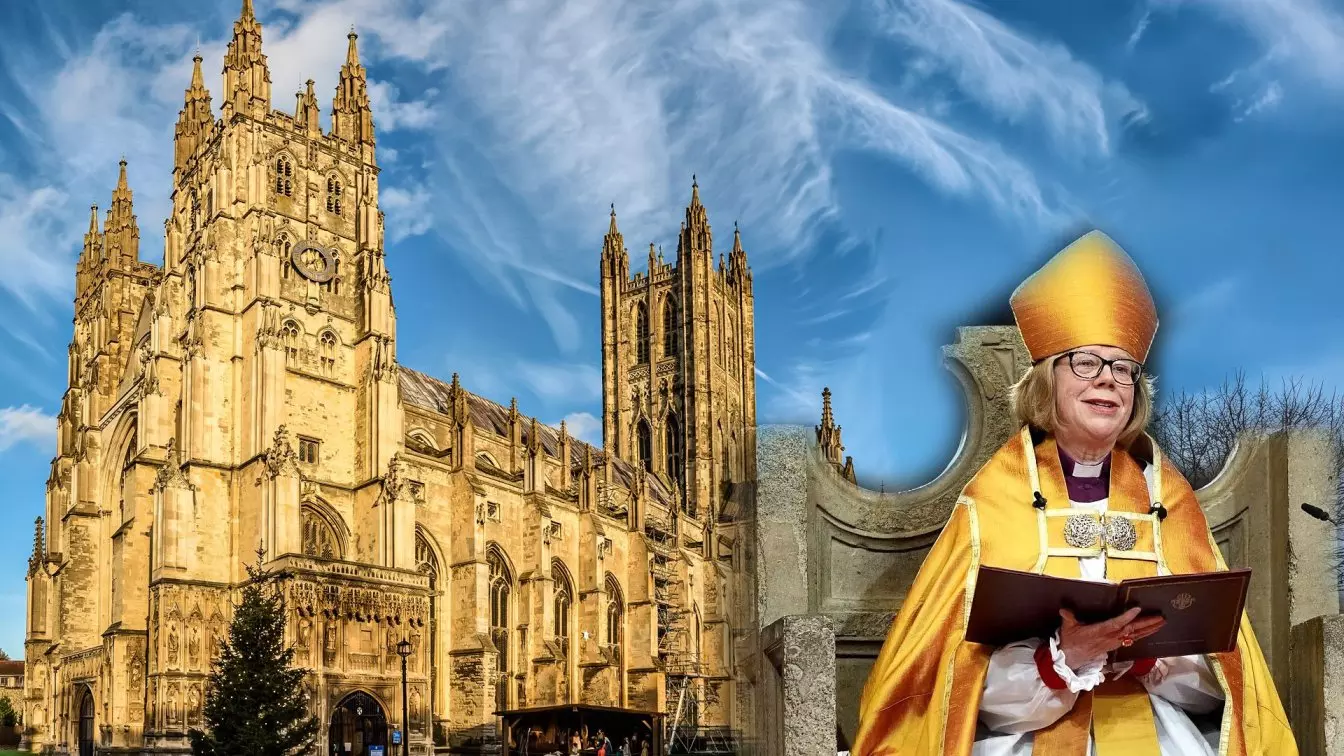
Church of England welcomes Sarah Mullally as first woman to lead Canterbury
Sarah Mullally’s enthronement as Archbishop of Canterbury marks the first time a woman has held the position, reflecting a historic shift in the Church of England

For over a thousand years, one of the most powerful positions in the Christian world was held only by men. That changed this week, as Sarah Mullally was enthroned as the first female Archbishop of Canterbury, marking a historic shift for the Church of England.
The development follows years of debate within the Church over the role of women in leadership. Women were allowed to become bishops only in 2014, but the top post remained out of reach until now.
Mullally’s journey to the role has been gradual. Before entering the clergy, she worked as a nurse and later became England’s Chief Nursing Officer. She was then ordained as a priest and rose through the ranks to become the Bishop of London, one of the most senior positions in the Church.
The enthronement
Her appointment as Archbishop had been confirmed earlier, but the enthronement ceremony this week formally marked the beginning of her tenure. The service followed centuries-old traditions while also reflecting a modern shift within the institution.
The event drew global attention. Among those present were Prince William and Catherine, Princess of Wales, highlighting the significance of the moment not just for the Church, but also for the United Kingdom.
In her remarks, Mullally indicated that her leadership would focus on unity and addressing contemporary challenges facing the Church. Her elevation is widely seen as a milestone in the Church’s efforts to adapt to changing times while balancing tradition with reform.
Role and significance
The Archbishop of Canterbury is not only a religious leader for England but also the symbolic head of the global Anglican Communion, representing millions of followers worldwide.
The role also carries ceremonial importance. The Archbishop of Canterbury frequently officiates at high-profile royal events, including weddings. Ceremonies involving Elizabeth II, Charles III, Prince William, and Prince Harry have all been officiated by the Archbishop. The Archbishop also crowns and anoints the monarch during the coronation ceremony.
A historic shift
With this appointment, the Church of England has taken a step many consider long overdue. It marks a significant moment in its long history, signalling change while maintaining its traditions.
What this shift will mean in practice will unfold in the years ahead, as the Church navigates evolving expectations and challenges.
The content above has been transcribed from video using a fine-tuned AI model. To ensure accuracy, quality, and editorial integrity, we employ a Human-In-The-Loop (HITL) process. While AI assists in creating the initial draft, our experienced editorial team carefully reviews, edits, and refines the content before publication. At The Federal, we combine the efficiency of AI with the expertise of human editors to deliver reliable and insightful journalism.