



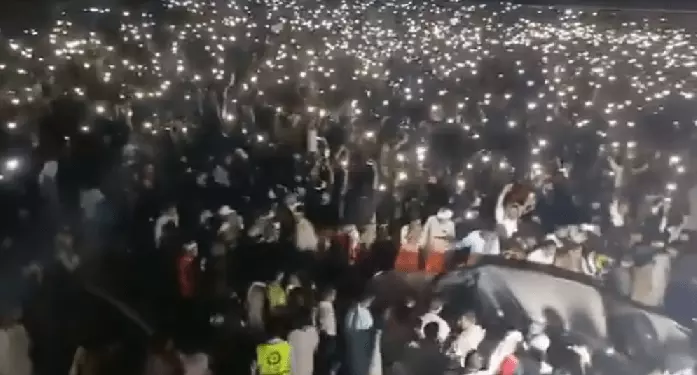
Protests rage on in POK; agitators firm on demands despite govt crackdown, blockade
Protest escalated following violent crackdown on protesters, leaving 58 dead; protesters demand fulfillment of 38-point Charter of Demands

Anti-government protests in Pakistan-occupied Kashmir (PoK) that have left over 58 dead, and led to a shutdown of transport networks and businesses in the region over the past 17 days, continue to rage with protesters demanding fulfilment of their Charter of Demands.
Demands of protesters
The current agitation rocking the region is a response to the government’s violent crackdown on protesters ahead of a June 9 protest planned by the Jammu Kashmir Joint Awami Action Committee (JAAC), an organisation founded in 2023. JAAC had planned the region-wide protest, with its top demand being the abolition of 12 reserved seats in the 53-member PoK Assembly for refugees from Kashmir. The protest was strategically planned to put pressure on Islamabad ahead of the July 27 PoK Assembly polls.
Also read: Why are protests spreading across PoK after the Rawalakot crackdown?
Locals allege that the Pakistani government uses these seats to install a puppet administration.
JAAC also came up with a 38-point Charter of Demands to address economic and governance issues in PoK. This included reducing power tariffs and the availability of subsidised wheat flour to ensure that the revenue of the power generated by the multipurpose Mangla Dam on the Jhelum River in Pakistan trickles down to the locals. Besides asking for the abolition of the reserved seats in the PoK Assembly, the protesters had also demanded more transparency in the judiciary, construction of delayed road projects, and support for small businesses, among others.
How ‘peaceful protest’ went awry?
The situation, however, escalated after the Pakistani government banned JAAC ahead of the protests, calling it a “proscribed organisation”.
The administration, with the help of Pakistan Rangers, a paramilitary force, used brute force to quell any sentiments of protests in the region with a communication blackout and violent crackdown on protesters, resulting in deaths and arrests.
Also read: India slams Pakistan after reports of over 20 deaths in PoK protest crackdown
JAAC claims several protesters, especially in Rawalakot town of Poonch district, were killed in a violent police crackdown, while several others were injured. Several security personnel were also killed in the violent clashes, reports said.
As per reports till June 22, over 1,460 people have been detained, arrested, or gone missing since the crackdown began.
The government is said to have deployed thousands of Pakistan Ranger and military personnel in the area to keep a vigil on the law and order situation.
What is Pakistan govt saying?
The Pakistan government has designated 150 people linked to protests as terrorists under Schedule 5. It has also issued orders to initiate sedition proceedings against JAAC leaders Shaukat Nawaz Mir and Mehran Arshad Khawaja.
Mir, has accused the Islamabad government of unleashing a “massacre” against the protesters and issuing shoot-at-sight orders.
Also read: India flays Pakistan President Zardari over threat to Muslim sites remark: 'Bigotry, hatred'
He asserted that their protest was a “peaceful, non-violent and unarmed movement for basic rights” and demanded to know why the protesters were labelled terrorists by the Pakistani government. He also questioned why the government had engaged with them in talks if it considered them terrorists.
Food, fuel, medicine crisis
Meanwhile, the Pakistan government, which is yet to initiate a dialogue with the protesters, continues to impose a blockade in the region, cutting it off from access to food, fuel, and medicines in its bid to quell the protests. This has hit transport networks and disrupted the movement of goods and services, forcing businesses to shut down.
An India Today report, quoting residents and truck drivers in the region, said that vehicles carrying essential commodities are being prevented from entering the region.
Pakistani authorities, however, have denied imposing any such blockade.
Residents reportedly say that with food, fuel, and medicine already in short supply, the blockade has further aggravated the situation.
Massive protests continue
The restrictions and crackdowns, however, have not dampened the spirits of locals who are taking to the streets in thousands in support of their demands. With Rawalkot’s Eidgah Ground being an epicentre of protests, on June 10, thousands of agitators had assembled at the spot and sloganeered against the government. Reports said around 16 protesters were killed and over 37 were injured in firing by Pakistani Army personnel and Rangers that day.
Also read: India must recalibrate its Pakistan policy as isolation strategy fails
On the 14th day of the protests on June 22, several women and schoolchildren took out rallies and demonstrations, including in Tarar Khel in Sudhnoti district, at Rawalakot’s Eidgah Ground, marking a new phase in the protests.
JAAC’s ultimatum
The JAAC had asked the Pakistan government to resolve the crisis and work on fulfilling their demands by June 23, failing which it had threatened to intensify the protest. They had warned Islamabad that failure to meet the demands will spark a mass march of more than a lakh protesters from Rawalakot to Muzaffarabad, the administrative capital of PoK.