



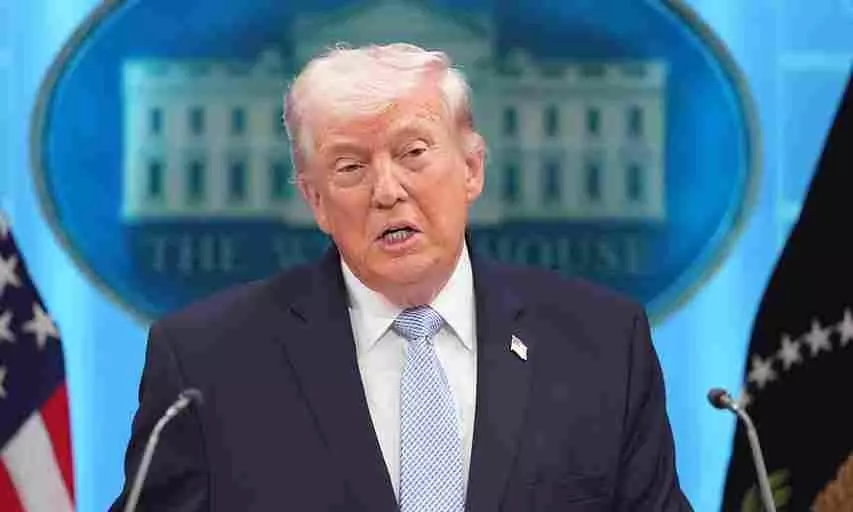
The strikes came shortly after Trump told reporters, "You'll find out," whether the US would respond.
Trump administration mulls $100k fee for foreign graduates to work in US
After court setbacks on H-1B visas, a proposed charge on Optional Practical Training threatens to disrupt post-grad work pathways for over 350,000 Indian students and US tech recruiters

The American Dream is in danger again. Months after a US federal court blocked his administration's move to impose a $100,000 (over Rs 95 lakh) fee on H-1B visas, the White House is reportedly exploring a similar charge in a different corner of the immigration system — this time targeting international students who want to work in the US after finishing their degrees.
For many generations, the appeal of an American degree paired with hands-on work experience has pulled millions of students from around the world to the country's campuses. That path could soon look very different under Trump's second presidential term.
Steep fees to work in US, restrictions on stay
According to a Wall Street Journal report, the Trump administration is considering imposing the steep charge on international university graduates hoping to work in the US after completing their studies there. This is besides the new limits on how long students can remain in the country without seeking government approval.
Also read: H1-B, student visas: US proposes stricter rules from August
Taken together, these would represent one of the most sweeping changes to the US student visa system in recent memory, reshaping both the cost of staying to work after graduation and the length of time students can legally remain in the country.
The fee would reportedly apply to Optional Practical Training (OPT), which allows F-1 students to take up temporary work tied to their field of study after graduation, typically for one to three years depending on their course. Like the earlier H-1B fee proposal that ultimately fell through, this move threatens the American ambitions of many Indian students, potentially affecting over 350,000 of them currently studying in the US.
The OPT can be considered as the bridge between finishing school and landing a first job, and frequently serves as a stepping stone toward an H-1B visa down the line. The Trump administration wants to make this process costlier.
Policy still under consideration: Homeland department
However, the US Department of Homeland Security (DHS) is reportedly discussing the matter internally, and no final decision has been made, the WSJ report said.
“No policies should be considered final until formally announced. At DHS we are always having conversations about how to use all tools in our arsenal to protect the integrity of our legal immigration system,” a department spokesperson was quoted as saying in the report.
Yet, if it goes through, the move would rank among the steepest financial obstacles ever proposed for international graduates hoping to work in the US.
Also read: ‘End H-1B Visa Abuse Act’: Republican lawmakers seek 3-year suspension, tougher rules
For many families, the value of a US education isn't just the degree itself — it's the ability to work afterward and start recouping an often-substantial investment. A $100,000 fee could change that calculus dramatically. Employers may become reluctant to sponsor international hires if they're the ones expected to pay, favouring domestic candidates instead. And if the cost falls on students, many won't be able to afford it.
Education experts and university officials worry this could make the US markedly less appealing to prospective international students. In 2024 alone, roughly 419,000 international graduates were working through the OPT programme.
To tighten immigration, safeguard national security: US
US officials frame these moves of high fees to work in the US or limiting foreign students' stay in the country as an effort to tighten oversight of the immigration system and bolster national security.
A DHS spokesperson said they were always weighing options to safeguard the US's legal immigration system. The fact that Washington is mulling various measures on that front makes the department's stance evident.
How it could affect Indian students and US varsities and tech firms
Indian nationals make up one of the largest groups of international students in the US, with more than 330,000 currently enrolled. The broader trajectory of US immigration policy is becoming harder to ignore for those who want to go to that country to study and work. The route from an American degree to a US career may be entering a period that is costlier, more tightly regulated, and less predictable than it has been in the past — echoing last year's short-lived $100,000 H-1B fee hike, which rattled Silicon Valley before being struck down by a federal judge in Boston this June.
Also read: US initiates H-1B, PERM visa fraud probe; Cognizant among firms under scrutiny
If a similar fee lands on OPT, both tech employers that rely on international talent and universities that depend on foreign student revenue could face a new round of disruption.