







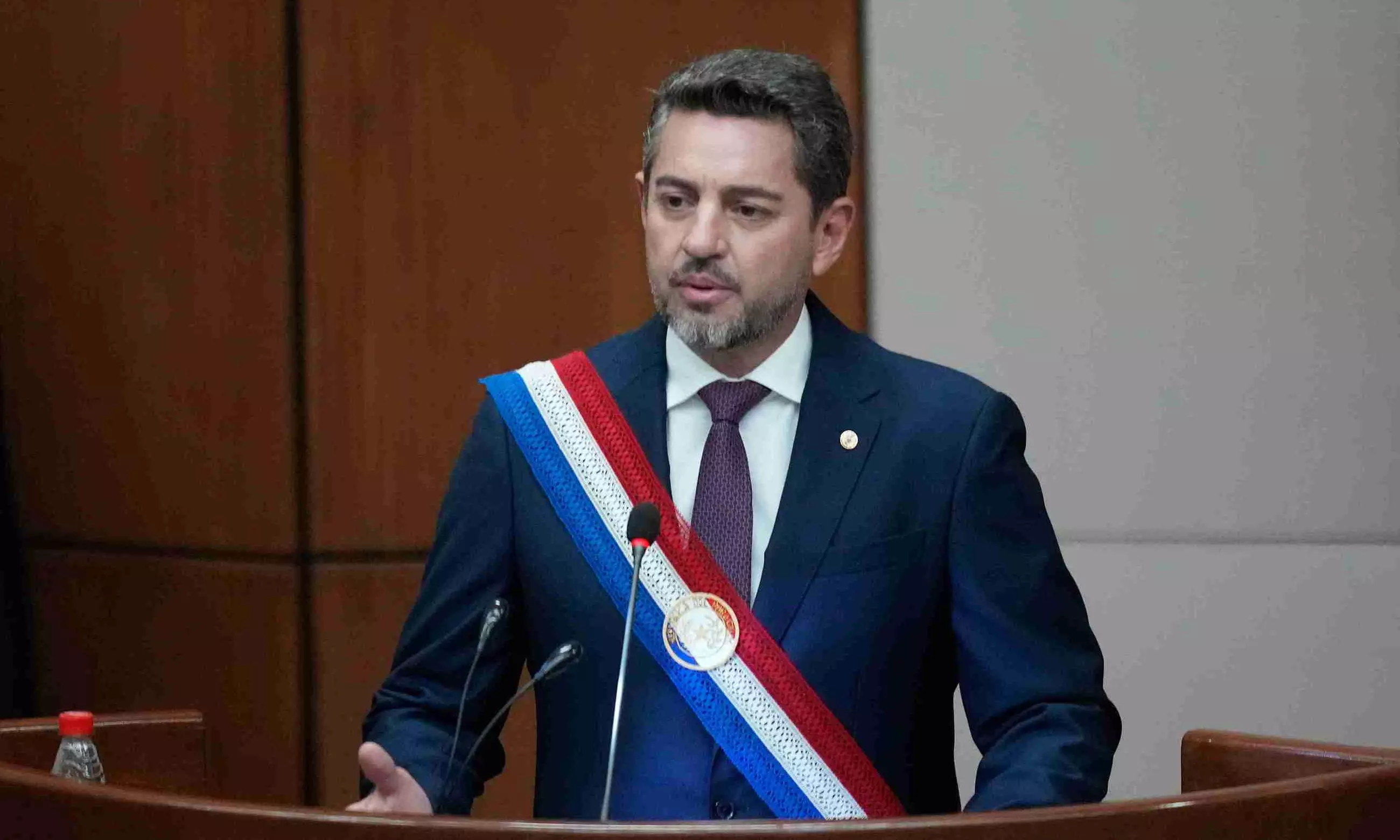
Paraguay crisis explained: How a bank collapse brought down a president
A bank failure, frozen savings and allegations of cronyism brought down Paraguay's president. Here's how the crisis unfolded

Paraguay, long regarded as one of South America’s more politically stable countries, has been plunged into a fast-moving crisis triggered by the collapse of Ueno Bank, one of the country’s largest lenders.
What began as a banking failure, which left nearly three million customers unable to access their money, quickly escalated into a political reckoning, leading to the impeachment of President Santiago Peña, his placement under house arrest, and multiple corruption and financial crime investigations.
At the heart of the controversy are allegations that public funds were funnelled into the bank while regulators failed to act against mounting risks. The scandal has fuelled public anger, street protests, and growing concerns about the integrity of Paraguay’s political and financial institutions.
Here’s a look at how the crisis unfolded and what it means for the country.
What has happened in Paraguay?
Paraguay has been plunged into its biggest political crisis in more than a decade after the collapse of Ueno Bank triggered the impeachment and removal of President Santiago Peña. Within days of the bank’s failure, Peña was ousted by the Senate and placed under house arrest pending investigations into alleged financial misconduct.
Why was President Santiago Peña removed from office?
Lawmakers accused Peña of using his political influence to channel large amounts of public money into Ueno Bank while regulators failed to act against alleged risky lending practices. The Senate unanimously voted to remove him for misconduct in office.
Peña has denied any wrongdoing.
Why is Ueno Bank at the centre of the crisis?
Ueno grew rapidly from a little-known lender into Paraguay’s fifth-largest bank. It reportedly held more than USD 800 million in public deposits and attracted millions of customers through digital banking services and aggressive marketing.
Lawmakers allege that political connections helped shield the bank from scrutiny even as concerns mounted about its financial health.
What caused Ueno Bank to collapse?
Investigators are examining allegations that the bank engaged in risky insider lending and extended loans to related companies, raising questions about its solvency.
Regulators seized the bank after concluding that its financial condition posed a serious risk.
How many people have been affected?
The collapse affected nearly three million customers, many of whom suddenly lost access to savings accounts, bank cards and digital payment services.
The disruption hit particularly hard because Ueno had become a popular bank among first-time account holders and lower-income customers.
Why did the bank failure become a political scandal?
The crisis became political because of allegations that:
- Public funds were heavily deposited in Ueno.
- State pension funds had exposure to the bank.
- Former Ueno-linked executives were appointed to key regulatory positions.
- Authorities allegedly failed to act despite warning signs.
These allegations fuelled accusations that political influence compromised financial oversight.
What role did Peña’s mentor Horacio Cartes play?
Horacio Cartes, a former president and influential leader of the ruling Colorado Party, was long seen as Peña’s political patron.
Analysts say Peña later tried to build an independent power base, with Ueno emerging as a key pillar of that strategy. After the bank collapsed, Cartes reportedly backed efforts to remove Peña, accelerating his downfall.
Why was Peña placed under house arrest?
Prosecutors suspect Peña may have been involved in breach of trust and other economic crimes linked to the Ueno scandal.
House arrest was ordered while investigations continue and before he appears before anti-corruption and economic-crimes authorities.
Who is Paraguay’s new president?
Vice-President Pedro Alliana has been sworn in to serve the remainder of the presidential term until August 2028.
He now faces the challenge of stabilising the government, restoring confidence in the banking system and ensuring depositors recover their money.
Is Alliana also under scrutiny?
Yes. Although he has not been accused of the same offences as Peña, prosecutors are reportedly investigating him as part of the broader scandal.
However, lawmakers recently blocked an opposition attempt to impeach him.
What happens to depositors’ money?
Authorities have begun reimbursing some customers.
Deposits are insured up to a certain limit, which officials say covers the vast majority of Ueno’s account holders. Nevertheless, many customers still face uncertainty about when they will regain full access to their funds.
Why are people protesting?
Thousands of Paraguayans have taken to the streets because:
- Their savings remain frozen.
- Pension funds may have suffered losses.
- They believe regulators failed to protect depositors.
- They want accountability from political and financial leaders.
The anger has spread beyond bank customers to teachers, public-sector workers and pension contributors.
Could the crisis affect Paraguay’s economy?
Yes. While authorities insist the broader banking system remains sound, the scandal has damaged confidence in financial regulation and public institutions.
The crisis has also raised concerns about governance, political stability and investor confidence in one of South America's historically more stable economies.
What happens next?
Several parallel processes are now under way:
- Criminal investigations into Peña and former officials.
- Legal proceedings against Ueno executives and shareholders.
- Efforts to compensate depositors.
- Political attempts by the new government to restore confidence.
The outcome of these investigations will determine whether the crisis remains a temporary shock or evolves into a deeper institutional reckoning for Paraguay.
(With agency inputs)