



Pak to sell national airlines PIA for IMF loan; Munir’s Fauji company a bidder
The bidding on Dec 23 for the national airline will be the country's first major privatisation in two decades, fulfilling a key USD 7-bn IMF bailout condition

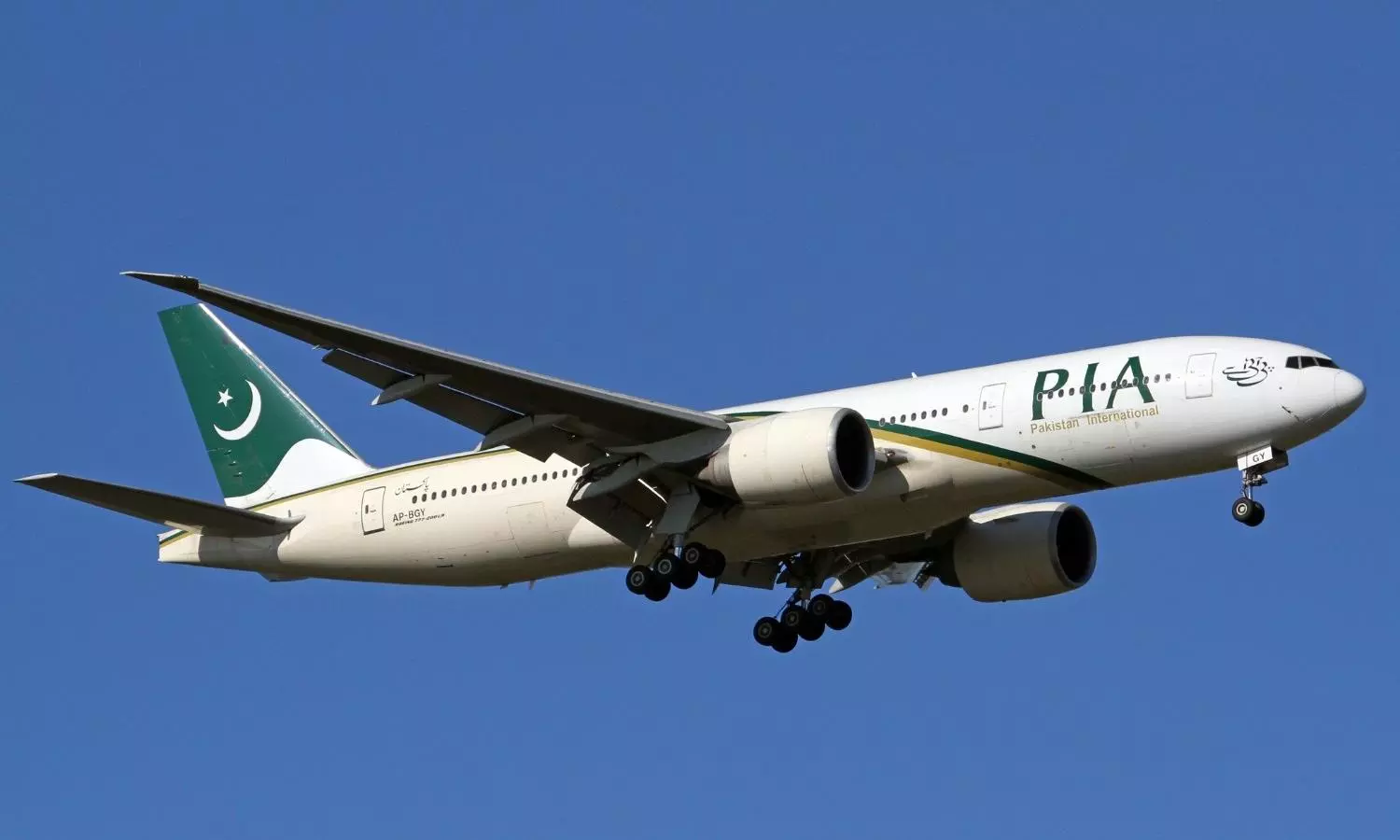
Pakistan will reportedly auction off its debt-ridden national airlines Pakistan International Airlines (PIA) on December 23 in a bidding process that will be broadcast live. The government has described it as the final step to meet a key condition laid down by the International Monetary Fund (IMF) to be eligible for a $7-billion bailout package, according to state media.
Among the four companies that have pre-qualified for the bidding process is Fauji Fertiliser Company Limited, part of the Fauji Foundation which is controlled by the Pakistani military. The other three companies are Air Blue Limited, Lucky Cement Consortium, and Arif Habib Corporation Consortium.
This would be Pakistan’s first major privatisation effort in two decades.
Sale of 51-100 per cent of PIA shares
The formal structural benchmark under the IMF’s Extended Fund Facility (EFF) specifies the sale of between 51 to 100 per cent of PIA shares and the transfer of full management control of the airlines.
The IMF’s Executive Board will be meeting on December 8 to release the next $1.2 billion tranche of the bailout package to Pakistan. The completion of the bidding process for PIA before the end of the year is a requirement for future disbursements of the loan.
Also Read: UK lifts 5-year ban on Pakistani carriers, allows flights
Pakistan’s Privatisation Minister Muhammad Ali said last month that the government was targeting Rs 86 billion in revenues from privatisation this year. He said 15 per cent of the proceeds from the PIA sale would go to the government and the remaining 85 per cent would go to the company.
Asim Munir and Fauji Foundation
Fauji Foundation has become one of the biggest corporate players in Pakistan, with the military having a stake in almost every sector.
Field Marshal Asim Munir is not on the Central Board of Directors of the Fauji Foundation, but he appoints the Quartermaster General, who is on the board.
Also Read: Malaysia holds back Pak's passenger plane over legal dispute
Through the military’s institutional control, including appointments to key positions in the Fauji Foundation and ensuring its alignment with security and welfare priorities, Munir exerts indirect influence over its operations.
According to government regulations, foreign entities are not allowed to acquire controlling stakes and the majority ownership should remain with Pakistani citizens.
PIA divestment crucial for Pakistan
Pakistan was on the brink of defaulting on its loans in 2023, the result of years of financial mismanagement, with one of its major expenditures being for its military.
The IMF approved the $7 billion bailout package for Pakistan in September 2024. It disbursed $1 billion immediately, and the rest of the package was to be given over a period of 3 years.
Also Read: Crashed PIA planes pilot ignored 3 warnings to lower altitude: Report
With a struggling economy, Pakistan has taken more than 20 loans from the IMF since 1958, making it the lender’s fifth-largest debtor.
The PIA divestment therefore is crucial for the country as it takes loans to refinance loans.
Symbol of chronic mismanagement
The national carrier has become a symbol of chronic mismanagement, with its accumulated losses running into billions.
In October 2024, 17 of its planes were grounded due to technical issues, and it had to operate with only 16 aircraft for both domestic and international flights.
In 2020, it was revealed that more than 30 per cent of Pakistani pilots were flying with fake or questionable licences, which resulted in the grounding of 262 pilots and huge disruption in the airline’s operations.
Also Read: 52 Pakistan International Airlines employees sacked: Report
The European Union Aviation Safety Agency (EASA) imposed a ban on PIA flights to Europe in June 2020. This deprived the PIA of billions of revenues from the high-yielding routes, and impacted its cash flow. The problem was exacerbated further when the US and the United Kingdom imposed their own bans.
There were several other problems the airline had to grapple with – safety failures, overstaffing, political appointments, nepotism, bloated salaries and benefits costs, and an environment of inefficiency.