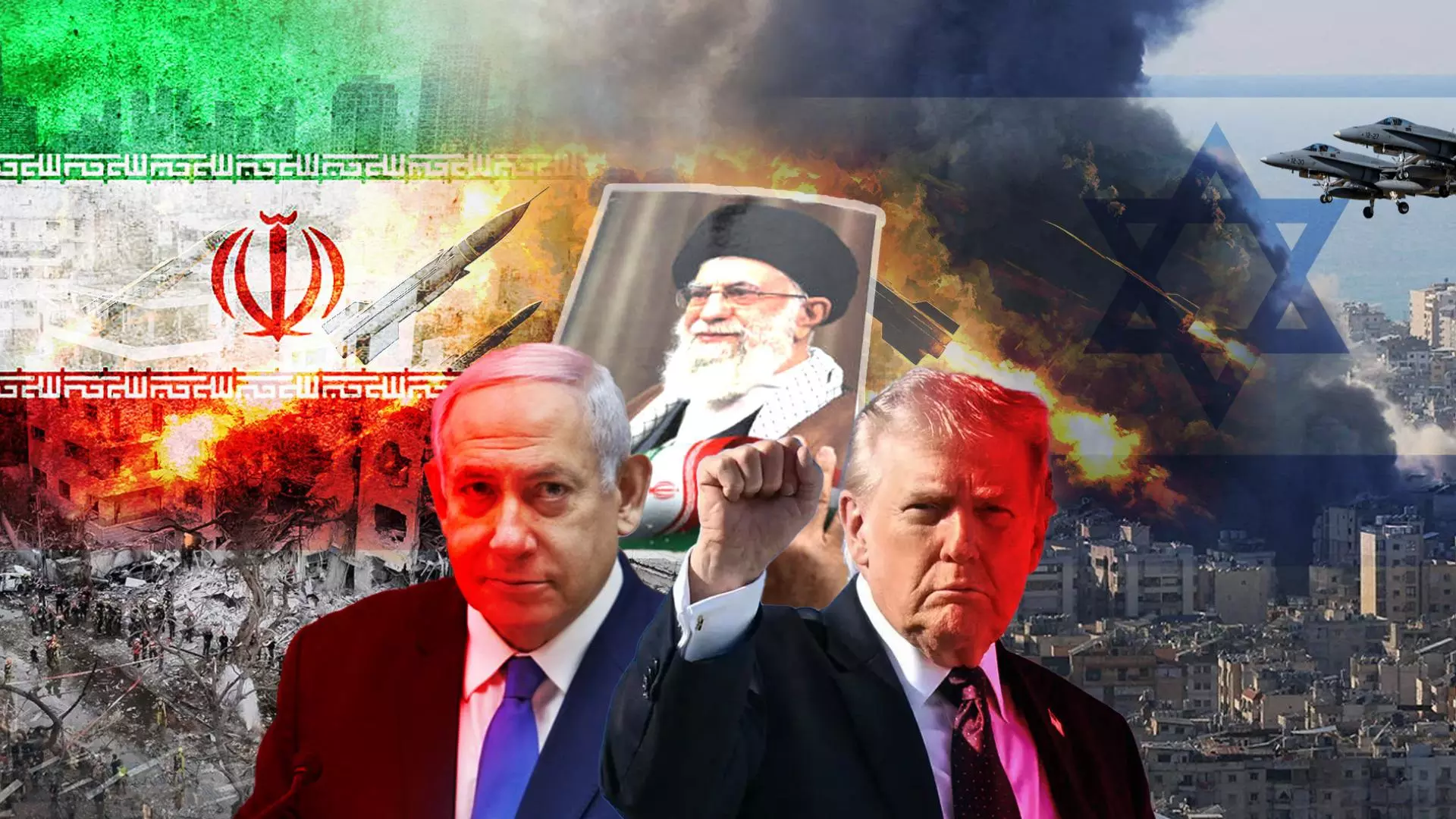
'No sovereign nation will accept what US, Israel are dictating to Iran'
Geopolitics expert KS Dakshina Murthy says bombing Iran achieves nothing, and warns the conflict could turn endless unless global pressure forces de-escalation

As tensions between Iran, the United States and Israel escalate, fears are mounting over regional stability, oil supplies, and the future of global diplomacy. The Federal spoke to Consulting Editor KS Dakshina Murthy, an expert in global geopolitics, on what is unfolding in the Gulf, and what lies ahead.
With Iran targeting American bases across West Asia, could this conflict pull in regional powers like Saudi Arabia and the UAE? Could Hezbollah still play a role?
It’s a very tricky situation as we see now. On the one hand, Iran doesn’t really have a major issue with any of its neighbours. At the same time, it has always warned the US and Israel that in the event of an attack like what we see today, it would respond.
Iran has always said it will go after US bases because, as far as Iran is concerned, it is a legitimate response to attacks on Iran. Otherwise, what will Iran do? It can’t just sit back and keep getting hit.
Iran cannot respond the way the US is attacking it because it is not capable of doing that, and the US is geographically far away. As far as Israel is concerned, Iran is targeting it in retaliation. Missiles have landed in Tel Aviv and some people have been killed.
So how does Iran get back at the US? It goes after US military bases in the region. But these bases are located in countries that don’t have a problem with Iran — like Qatar, for instance. Qatar and Iran actually have a very good relationship. When Qatar faced a blockade around 2017, it was Iran that came to its rescue.
Iran is saying: ‘Look, what do we do?’ Its foreign minister is in touch with Gulf countries, telling them, ‘We have nothing against you. It is only the military bases we are targeting.’ They have advised the Iranian military and the IRGC to be careful and not hit civilian targets. So there is back-channel communication happening between Iran and other Arab countries.
Is that why civilians in places like Dubai and Qatar appear relatively calm?
Yes, because people on the streets in Dubai, Abu Dhabi, Riyadh or elsewhere know this is not a conflict between them and Iran. It is between the US, Israel and Iran.
Many people in the Arab world actually sympathise more with Iran than with Israel or the US. Governments may have diplomatic ties with Israel, but people, by and large, support the Palestinians and understand what is happening. That is why you are not seeing major agitation against Iran.
Could this crisis accelerate a formal alignment between Gulf states and Israel? What happens to the Abraham Accords?
The Abraham Accords are not directly linked to what is happening now, but they reflect divisions within the Arab world.
When Trump pushed the UAE and Bahrain to establish ties with Israel, it was a government-to-government arrangement. It was not based on popular support or a referendum. These countries have their own relationships with the US, which they cannot easily control.
So Arab states joining the Abraham Accords will not significantly impact this current crisis.
Iran controls access to the Strait of Hormuz. What happens if that route is disrupted? What does it mean for India?
You must look at this from Iran’s perspective. Israel is backed by the US, the world’s biggest power. Iran is relatively isolated and has little support.
So what leverage does Iran have? The Strait of Hormuz. A huge amount of global oil passes through it. If Iran blocks it, oil prices will spike and create a global crisis.
Even China, which is close to Iran, would suffer. But Iran wants this to become a larger global problem. That is its protection. If oil prices rise sharply, the rest of the world will pressure the US and Israel to stop the conflict.
This is Iran’s leverage — to force global intervention by creating energy disruption.”
Could Iran expand retaliation beyond the Middle East, perhaps through cyber or other operations?
Iran is not state-of-the-art like Israel or the US. It is far behind in cyber capabilities. I don’t think it has the ability to significantly affect Israel or the US in that domain.
Of course, it could seek China’s help, but there is no indication of that so far.
The UN has largely been a bystander. Does it have any real tools to de-escalate?
The UN has been a bystander not only here but in many crises. When Israel carried out its attack on Gaza and thousands of Palestinians were killed, the UN could do nothing.
The General Assembly can pass resolutions, but they carry little weight. In the Security Council, the US vetoes anything remotely against Israeli interests. So the Council is paralysed.
This reflects how unequal and unfair the UN structure is. Extraordinary power rests with five nations. The rest of the world is at their mercy. It is a very unfortunate arrangement.
India has close ties with both Israel and Iran. How can New Delhi walk this tightrope?
In recent years, especially after Prime Minister Modi’s visit to Israel and his strong praise for the country, India has moved much closer to Israel than ever before.
India and Iran have historically had good relations. The Chabahar port is strategically important for India — it allows exports to Afghanistan and Iran while bypassing Pakistan. But US pressure has stalled progress there.
India used to be one of the biggest buyers of Iranian oil. But sanctions and pressure have reduced this significantly.
If you look at the balance today, there is hardly much balance. There is definitely a pro-Israel tilt. Israel is also one of India’s biggest arms suppliers. So India has entered a dependent relationship with Israel.
Targeted killings of political and military leaders seem to be increasing. Is this a dangerous new normal?
Yes. Israel has perfected targeted assassinations over the past two to three decades. Palestinian leaders have been killed in this way.
You saw the killing of Ismail Haniyeh in Tehran. You saw Trump target IRGC chief Qassem Soleimani in Iraq. And now others have been killed in missile strikes.
Technology has changed warfare. The US and Israel are fighting Iran without ground troops — only through missiles and advanced targeting. They can pick and choose whom to kill.
This is a game changer. Today it is Iran. Tomorrow it could be any country. No leader would be safe if they antagonise major powers. It is a dangerous shift.
How do you see this conflict evolving over the next six to 12 months?
Let’s not compare this with Ukraine. Long wars are not new. The Iran-Iraq war lasted eight years.
But this conflict is senseless. What do the US and Israel want? They want Iran to stop its nuclear and missile programmes and accept whatever they dictate. No sovereign nation with self-respect will agree to that.
Even if you kill leaders, does that mean the end of Iran? No. Iran is an old civilisation with a mature society. Its political system does not depend on one individual.
Bombing Iran achieves nothing except bloodshed and disruption. It disturbs global travel, communication and energy markets.
Unless sense dawns on someone or global pressure forces de-escalation, this will continue. Otherwise, it could become endless.
The content above has been transcribed from video using a fine-tuned AI model. To ensure accuracy, quality, and editorial integrity, we employ a Human-In-The-Loop (HITL) process. While AI assists in creating the initial draft, our experienced editorial team carefully reviews, edits, and refines the content before publication. At The Federal, we combine the efficiency of AI with the expertise of human editors to deliver reliable and insightful journalism.