



Nepal records 18 pc turnout till noon in election since Gen Z protests
Protests had toppled the KP Sharma Oli government last year; voting today going on smoothly with minor incidents in a very few places, says Nepal's poll panel

Kathmandu, Mar 5 (PTI) Nepal which went to polls on Thursday, the first since a violent Gen Z protest that toppled the K P Sharma Oli-led government last year, recorded a turnout of about 18 per cent till noon, according to the Election Commission.
The Election Commission said that around 3.16 million people have exercised their franchise till 12 pm, with the voting process going smoothly.
Voting is ongoing smoothly across the country with minor incidents in a very few places, Election Commissioner Sagun Shumsher Rana was quoted as saying by the Kathmandu Post.
More than 18.9 million eligible Nepalese are exercising their franchise to elect the 275-member House of Representatives from among the 3,406 candidates vying for 165 seats under direct voting, and 3,135 candidates vying for 110 seats through proportionate voting.
The voting started at 7 am and will conclude at 5 pm. The counting will start immediately after the ballot boxes are collected.
Nepal Police confirmed that apart from minor disagreements at a few locations, no serious problems had occurred.
Police spokesperson Abi Narayan Kafle said, “Some jostling is expected during elections, but no major issues have arisen. We are ensuring that the voting process remains peaceful throughout the day.” "Voting started in all the constituencies, including the southern plains, hilly area and the mountain region at 7 am," Election Commission spokesperson Narayan Prasad Bhattarai said.
“The election started in a peaceful environment across the country,” he added.
Addressing a press meet here on the eve of the polls, Acting Election Commissioner Ram Prasad Bhandari on Wednesday had said that all preparations for the election had been completed and urged voters to participate actively and enthusiastically in the democratic exercise.
In Kathmandu, the weather was fine, sky was clear and people were enthusiastically queuing up to cast their votes.
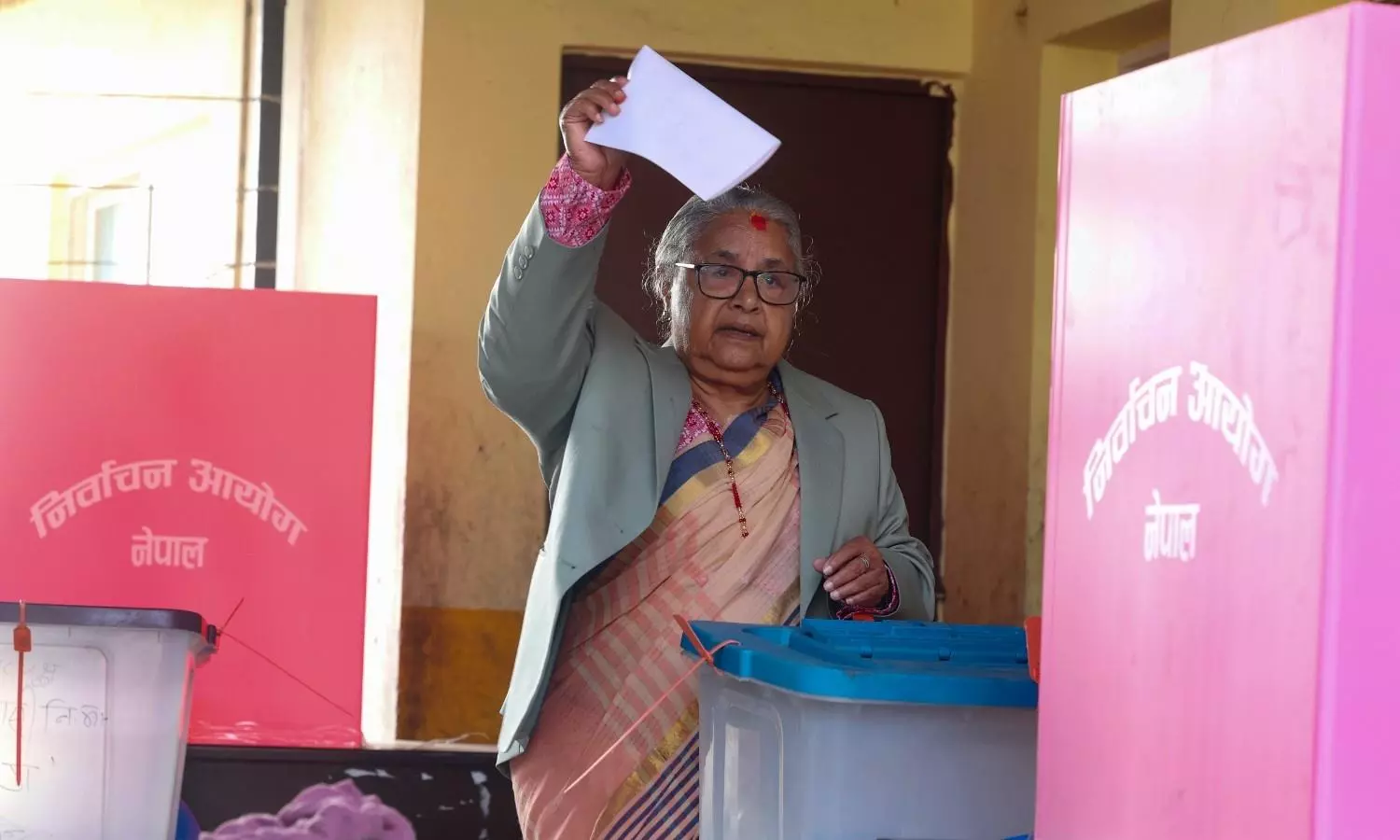
Interim Prime Minister Sushila Karki cast her vote from Kathmandu-5 constituency at Dhapasi on the outskirts of Kathmandu on Thursday morning.
"I have cast my vote, I am happy that people are casting their votes, participating in the general election," she said.
Nepali Congress president Gagan Thapa cast his vote from Kathmandu-4 constituency in Maitidevi in the morning.
"This election was needed to bring the Constitution back on the right track," he said.
Thapa, the prime ministerial candidate of Nepali Congress, is contesting the election from Dhanusha-4 constituency.
Rastriya Swotantra Party (RSP) president Ravi Lamichhane cast his vote from Chuchepati area on the outskirts of Kathmandu.
Prime ministerial candidate of RSP and former Kathmandu mayor Balendra Shah ‘Balen’ cast his vote from Gairegaun, Kathmandu. He is contesting the election from Jhapa-5.
Ousted premier Oli cast his vote from Balkot in Bhaktapur district.
The Gen Z youth, through their two-day intensified protests on September 8 and 9, ousted Prime Minister Oli, chair of the Communist Party of Nepal (Unified Marxist–Leninist) -- CPN-UML -- who was heading a coalition government with the backing of Nepali Congress that enjoyed nearly two-thirds majority support.
The CPN-UML, led by ousted PM Oli, has emerged as the hardliner force. Though former premier Pushpa Kamal Dahal 'Prachanda'-led NCP claims to have addressed the issues raised by the Gen Z, they have not handed over the party leadership to the younger generation.
Rastriya Swotantra Party (RSP), led by its chair Ravi Lamichhane and senior leader Balendra Shah, and the reformed Nepali Congress, led by Gagan Thapa, are voicing the issues raised by the Gen Z, while CPN-UML and Nepali Communist Party, led by ‘Prachanda’, are known as the traditional forces.
Ujyalo Nepal Party, led by Kulman Ghising, and Shram Shakti Party, led by former Dharan Mayor Harka Sampang, are also emerging forces but enjoy support in limited pockets only.
After Oli's ouster, President Ramchandra Paudel dissolved the House of Representatives on September 12 and appointed Sushila Karki as the caretaker PM.
The major issues raised by Gen Z are anti-corruption, good governance, an end to nepotism, generational change in political leadership, etc.
Starting Wednesday, Nepal has declared a three-day holiday for the polls.
There are a total of 10,967 polling booths and 23,112 polling centres, the Election Commission data showed. As many as 65 political parties are taking part in the election. PTI