







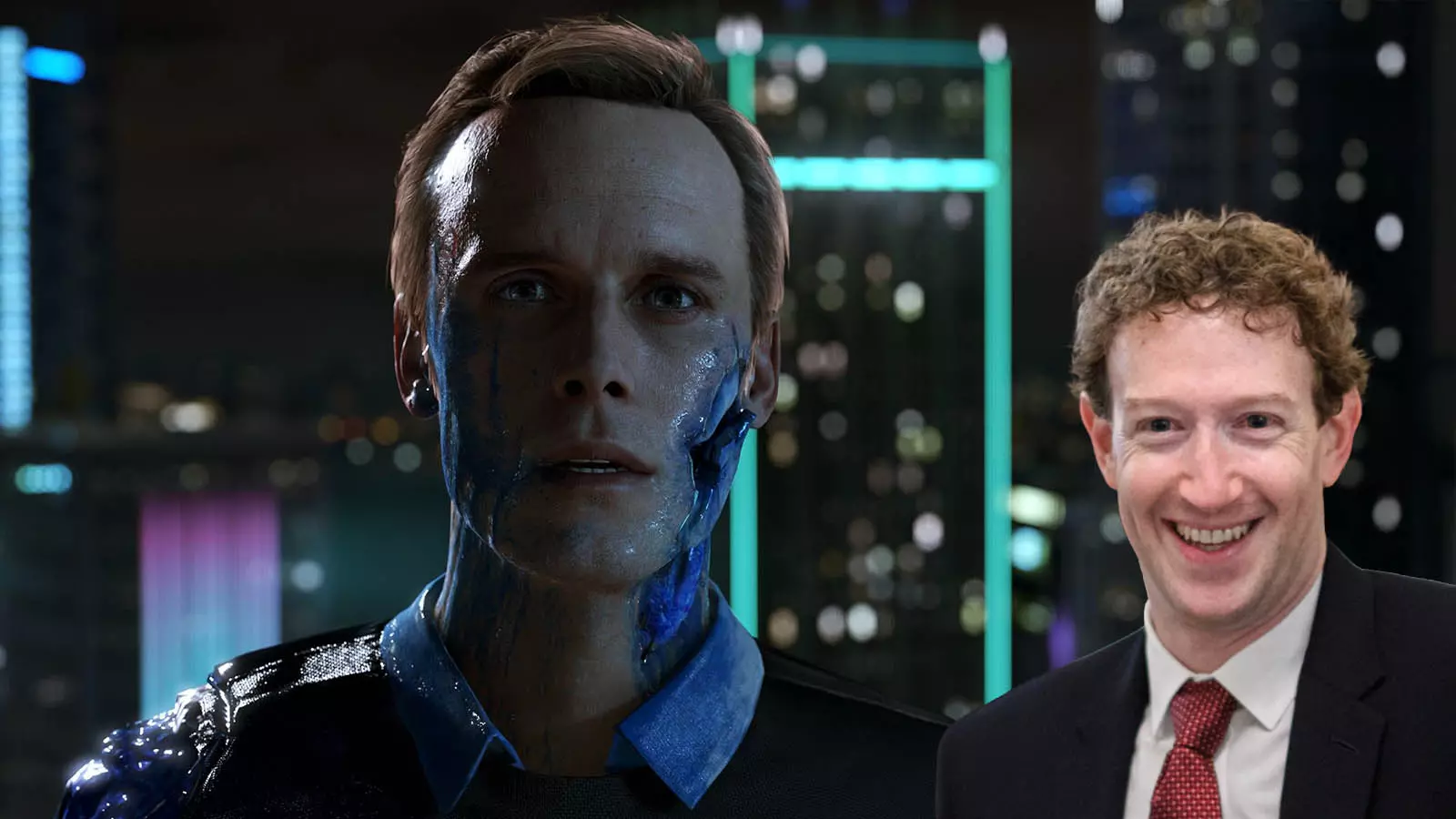
Meta rolls out face-to-face animated Muse AI for US users
AI avatar is fully customisable, allowing users to choose its appearance and voice

Meta’s Muse AI has rolled out a new video calling feature, allowing users to interact face-to-face with a customised AI agent. Until now, most interactions with AI assistants have relied on text prompts or audio conversations. Adding a visual element could change how people use these tools and, perhaps, how they relate to them. It also brings to mind the video game world of Detroit: Become Human, where human-like androids have become part of everyday life.
How Muse works
Speaking at Meta Connect 2026, Meta CEO Mark Zuckerberg demonstrated the feature live. He pulled out his phone and asked Muse to introduce itself to the audience. His AI agent, named “Agrippa”, appeared as a fluffy, humanoid animal and said, “Hello everyone, I’m Agrippa, and I’m here to brainstorm and get things done with you.”
Muse is a personal AI agent launched in September. Unlike conventional chatbots that primarily respond to prompts, it is designed to help users work towards personal goals, remember their preferences, handle tasks and create content. The addition of real-time conversations and expressive avatars gives users another way to interact with the assistant.
Although the feature was demonstrated at Meta Connect 2026, the rollout began only on November 5. It is currently available to users in the US. The AI avatar is fully customisable, allowing users to choose its appearance and voice. Its expressions and gestures also change in response to the conversation, making the exchange feel more like a face-to-face interaction.
Meta says the feature uses its Realtime Avatar and Realtime Voice technologies. The company has also introduced safeguards, including a Meta Video Seal watermark on AI-generated video content. The feature is reportedly restricted to users above the age of 18.
Likeness with 'Detroit: Become Human'
The rollout of face-to-face conversations with responsive, expressive AI avatars brings us closer to the world of Detroit: Become Human than almost any other mainstream consumer AI release.
Developed by Quantic Dream, Detroit: Become Human is a narrative-driven video game set in 2038. It imagines a society where humanoid androids, manufactured by a company called CyberLife, have become part of everyday life. They work as domestic assistants, caregivers and service workers, taking on roles traditionally performed by humans.
Also read: Anthropic CEO warns AI could ‘take over internet’ without slowdown
The game's premise goes beyond machines simply following instructions. Its androids are built to look and speak like people, with human-like expressions and mannerisms. As the story unfolds, it explores questions of artificial intelligence, consciousness, and what separates humans from machines.
How close are we really?
AI has come a long way in a relatively short time. Not too long ago, most people interacted with chatbots through text. Now, they can have spoken conversations with AI agents that respond with expressions and gestures. The technology is changing quickly, but the bigger shift may have less to do with what AI can do and more to do with how people respond to it.
Human beings are naturally inclined to read meaning into expressions, voices and gestures. A familiar voice or a face that reacts to what we say can make an interaction feel personal. When AI begins to replicate these social cues, it becomes easier to forget that there is no person on the other side of the conversation.
This is where the comparison with Detroit: Become Human becomes relevant. CyberLife, the fictional company in the game, builds androids that can take on almost any role in human society. Its ambition is to create machines that are not just functional, but convincing enough to fit seamlessly into people's lives.
Can AI turn sci-fi into reality?
Real-world technology companies are pursuing a different, but not entirely unrelated, ambition. They are working towards AI agents that can understand users better, remember their preferences, anticipate what they might need and take on tasks with less human intervention.
Also read: 'Build ethics into AI from day one, or risk paying for it later'
Meta's Muse is still a long way from the androids depicted in the game. It exists on a screen, has no physical presence and does not possess the autonomy or consciousness that the game's characters grapple with. But the idea of having an AI companion that can speak, respond and develop a familiar personality is no longer confined to science fiction.
Perhaps the more interesting question is not how soon we will have human-like androids, but how quickly we will become comfortable treating the AI companions we already have as people.