US-Iran MoU brings relief to Lebanon, but many are skeptical of Israeli compliance, says expert
Former UN investigator talks about humanitarian crisis in Lebanon, illegalisation of Hezbollah’s military wing, and why fragile border remains far from settled

The US and Iran may have signed a memorandum of understanding aimed at ending the latest regional conflict, but in Lebanon, optimism remains in short supply.
Despite hopes that the agreement could ease tensions, many Lebanese fear that Israel will continue its military operations regardless of diplomatic commitments.
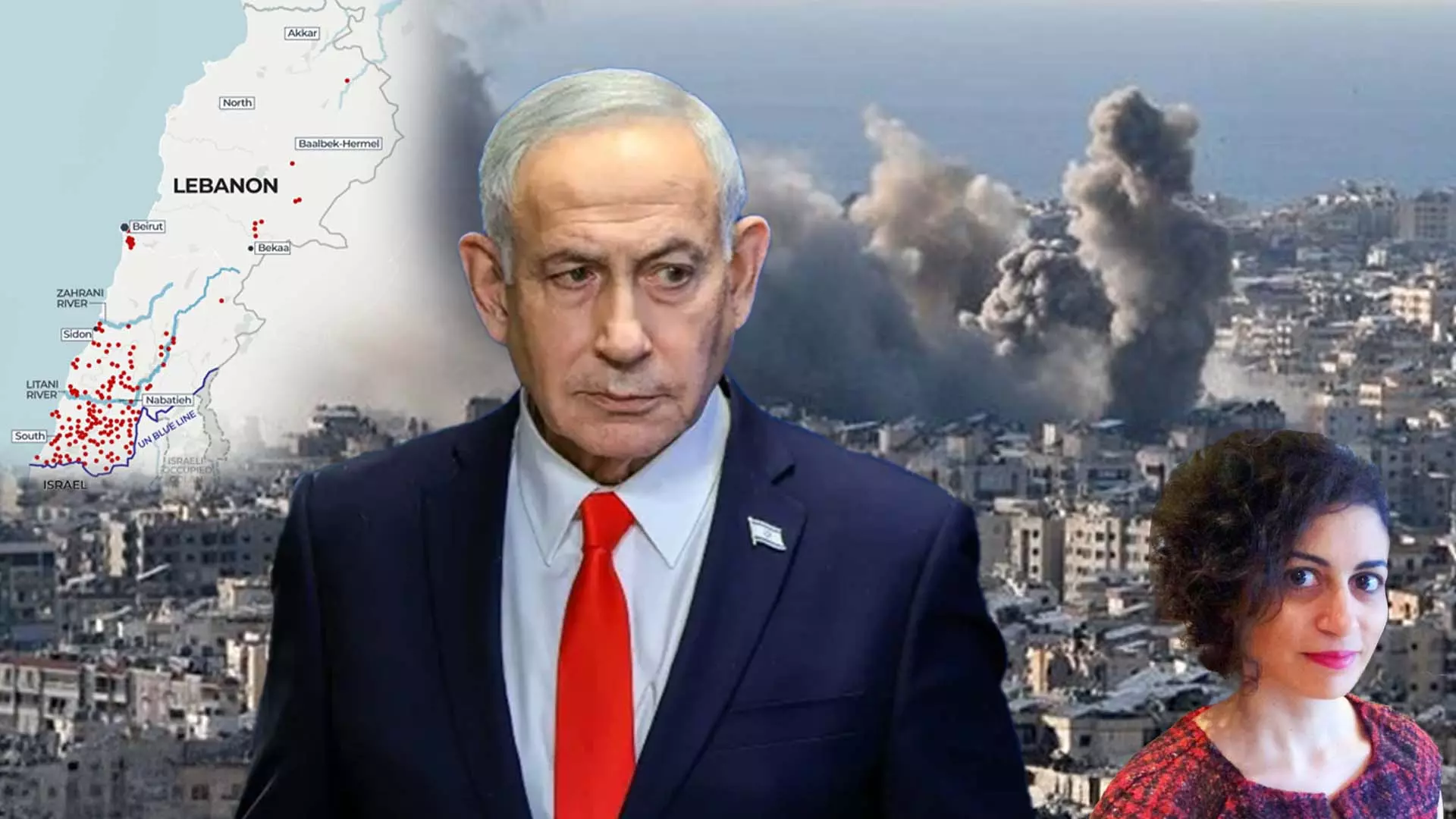
The Federal spoke to Silina Nasser, former Al Jazeera journalist, human rights researcher, former United Nations human rights officer and UN investigator, about the situation in Lebanon, the humanitarian crisis caused by the conflict, Hezbollah’s role in Lebanese society, and why many believe the Israel-Lebanon front remains far from settled.
What has been the reaction in Lebanon to the US-Iran memorandum of understanding?
People in Lebanon, especially the more than one million people displaced since March 2, are relieved. Many have already started returning to their villages and towns in southern Lebanon despite warnings from the Lebanese army and authorities not to return yet.
People in South Lebanon are deeply attached to their land and homes. Some have gone back even though their houses have been destroyed.
At the same time, there is a lot of scepticism. In November 2024, a ceasefire supposedly came into effect, but Israel continued bombing Lebanon on a daily basis afterward. Because of that experience, people are very cautious about believing this agreement will hold.
Israelis are extremely upset about the memorandum of understanding between the US and Iran and have insisted that Lebanon should not be included in it. Lebanon appears in the very first point of the agreement.
Also read: Trump may claim victory but MoU shows Iran had the last laugh
Personally, I do not believe Israel will want to comply with the memorandum. Under the agreement, the US is supposed to ensure Israel complies, while Iran is expected to ensure Hezbollah complies. We will have to see what happens, but I am pessimistic about the Israel-Lebanon front.
How has life been in Lebanon, particularly in Beirut, during the conflict?
It has been extremely difficult.
Lebanon has a population of around 5.9 million people, including large numbers of Syrian and Palestinian refugees. It is a very small country, just over 10,000 square kilometres.
Since March 2, more than one million people have been displaced. Many are living in public schools, private schools, tents on the streets of Beirut, the mountains, northern Lebanon and eastern Lebanon.
The humanitarian situation is extremely difficult. The UN requested $308 million in assistance, but by the end of May only around 60 per cent of the required funding had been secured.
Many Lebanese expatriates are sending money home to help displaced families. Even so, the situation remains very bad and highly unpredictable. I live in Beirut near the southern suburbs, an area that has been repeatedly targeted during the war. After a relatively quiet period, it was attacked again on Sunday.
I believe that particular attack was intended to jeopardise the MoU between the US and Iran. Instead, it prompted Iran to threaten retaliation, which pushed the US toward compromise and helped ensure Lebanon was included in the agreement.
Are essential supplies such as food, water and electricity available?
There is no siege, so someone like me is not directly affected in terms of access to food or water.
Also read: US-Iran peace deal: Here's full transcript of MoU
The people suffering most are the displaced. Many worked in shops, farms, businesses or the informal sector in their hometowns and villages. They have lost their livelihoods.
The destruction in southern Lebanon is enormous. Even during the ceasefire period, Israeli forces continued demolishing homes village by village in areas they occupied.
If you look at satellite imagery, the destruction resembles what we have seen in Gaza. Many people have lost their homes, shops and businesses. Others still have some savings but are struggling to pay rent because landlords have sharply increased prices.
Hezbollah leader Naim Qassem has welcomed the agreement. Could that reduce tensions?
I do not believe it will make a difference.
During the 2024 war, which ended with a ceasefire on November 27, Israel continued targeting Lebanon daily. The UN peacekeeping forces documented more than 10,000 Israeli violations between November 2024 and November 2025.
Also read: US-Iran peace deal: Here's full transcript of MoU
More than 7,500 of those were airspace violations. Others involved artillery fire and military activity.
At that time, Hezbollah was not actively retaliating. In fact, Hezbollah's opponents in Lebanon criticised it for being too passive and not responding.
Yet Israel continued bombing Lebanon throughout the ceasefire period.
Given Israel’s vocal opposition to the memorandum, particularly the Lebanon component, I do not believe Israeli compliance depends on Hezbollah’s behaviour.
Was there a period of calm between late 2024 and March 2026?
Yes. From November 27, 2024, until March 2, 2026, Hezbollah did not launch attacks against Israel.
On March 2, 2026, Hezbollah launched six rockets into northern Israel and stated that it was in retaliation for the killing of Ayatollah Ali Khamenei.
That decision was heavily criticised inside Lebanon. Some people argued that opening a front against Israel in support of Iran was wrong.
Even among some Hezbollah supporters in South Lebanon, there was frustration. They said that if Hezbollah had acted in response to Israeli violations, they could understand it. But acting because of Iran was viewed differently.
However, during the entire period from November 2024 to March 2026, Israel was carrying out daily violations, according to UN peacekeeping forces. Drone strikes in Lebanon were occurring almost every day.
What is the relationship between the Lebanese army and Hezbollah?
The Lebanese army is in a difficult position.
A significant amount of its support comes from the United States. However, the US does not provide the army with weapons capable of defending Lebanon against Israel.
That is one reason Hezbollah has historically been viewed as a resistance movement. It emerged following the Israeli invasion of Lebanon in 1982.
Successive Lebanese governments recognised a formula that viewed Hezbollah, the Lebanese army and the Lebanese people as working together.
After March 2, 2026, however, the Lebanese government made a historic decision and declared Hezbollah’s military wing illegal.
Also read: US, Iran agree over peace. What changed? Which pain points still remain?
Under the November 2024 ceasefire agreement, the Lebanese army was tasked with helping disarm Hezbollah south of the Litani River under a US-led monitoring mechanism.
There is now significant international pressure on Lebanon to disarm Hezbollah.
However, there are concerns that forcing a confrontation between the Lebanese army and Hezbollah could trigger divisions within the army itself, particularly because many soldiers come from the Shia community.
This is an extremely sensitive issue.
In short, I do not believe the Lebanese army can disarm Hezbollah. Israel has not been able to eliminate Hezbollah either. What is needed is a national dialogue.
The Shia community has legitimate concerns about defending itself against Israeli attacks, while other communities have legitimate concerns about Hezbollah remaining armed.
How strong is Hezbollah today compared to before?
Israel succeeded in killing many senior Hezbollah leaders and their replacements.
However, between November 2024 and March 2026, Hezbollah managed to recover to a significant extent.
Since the current conflict began on March 2, Hezbollah has fought fiercely against Israeli forces.
Israel currently occupies around six per cent of Lebanese territory. Hezbollah has clearly been weakened, but it has not been destroyed.
During this war, Hezbollah introduced a new type of drone that proved effective in targeting Israeli military vehicles and soldiers.
At the same time, Hezbollah has acknowledged that it cannot stop Israeli advances. Instead, its strategy has been to prevent Israeli forces from establishing permanent positions.
In recent days, Hezbollah's language has shifted. Previously, it described operations as defending Lebanon and its people. More recently, it has framed its actions as defending Lebanon and exercising a legitimate right to resist occupation.
Under international law, occupied populations have a right to resist occupation. I believe this shift reflects Hezbollah’s evolving strategy in response to Israel’s occupation of six per cent of Lebanese territory.
How much support does Hezbollah still enjoy within Lebanon?
Lebanon has always been divided over Hezbollah's weapons, especially since the Israeli withdrawal in 2000. Today, those divisions remain deep.
Some Lebanese view Hezbollah as acting on behalf of Iran and want it disarmed. Others, particularly within the Shia community, continue to support it. There are also supporters from other communities, including some Christians. The issue is deeply divisive.
I believe the divisions were worsened by the way the Lebanese government handled direct negotiations with Israel in April.
The government announced its desire for direct talks but failed to explain its objectives to the public, including the more than one million people displaced by Israeli attacks.
Because there was no communication strategy, activists and politicians began speculating. Some openly discussed normalising relations with Israel and even spoke about wanting to have a beer in Tel Aviv while large parts of Lebanese society were still under attack.
For many Lebanese, direct contact with Israelis has long been taboo and remains punishable under Lebanese law.
The government should have clearly stated that its primary goal was ending the bloodshed and protecting civilians. Instead, it left the process vague and open to interpretation.
That ambiguity deepened divisions within Lebanese society.
The content above has been transcribed from video using a fine-tuned AI model. To ensure accuracy, quality, and editorial integrity, we employ a Human-In-The-Loop (HITL) process. While AI assists in creating the initial draft, our experienced editorial team carefully reviews, edits, and refines the content before publication. At The Federal, we combine the efficiency of AI with the expertise of human editors to deliver reliable and insightful journalism.