Iran war: How India is navigating the energy crisis
The West Asia conflict remains locked in a high-stakes deadlock. Can the US and Iran reach an understanding, or are we witnessing a protracted war?

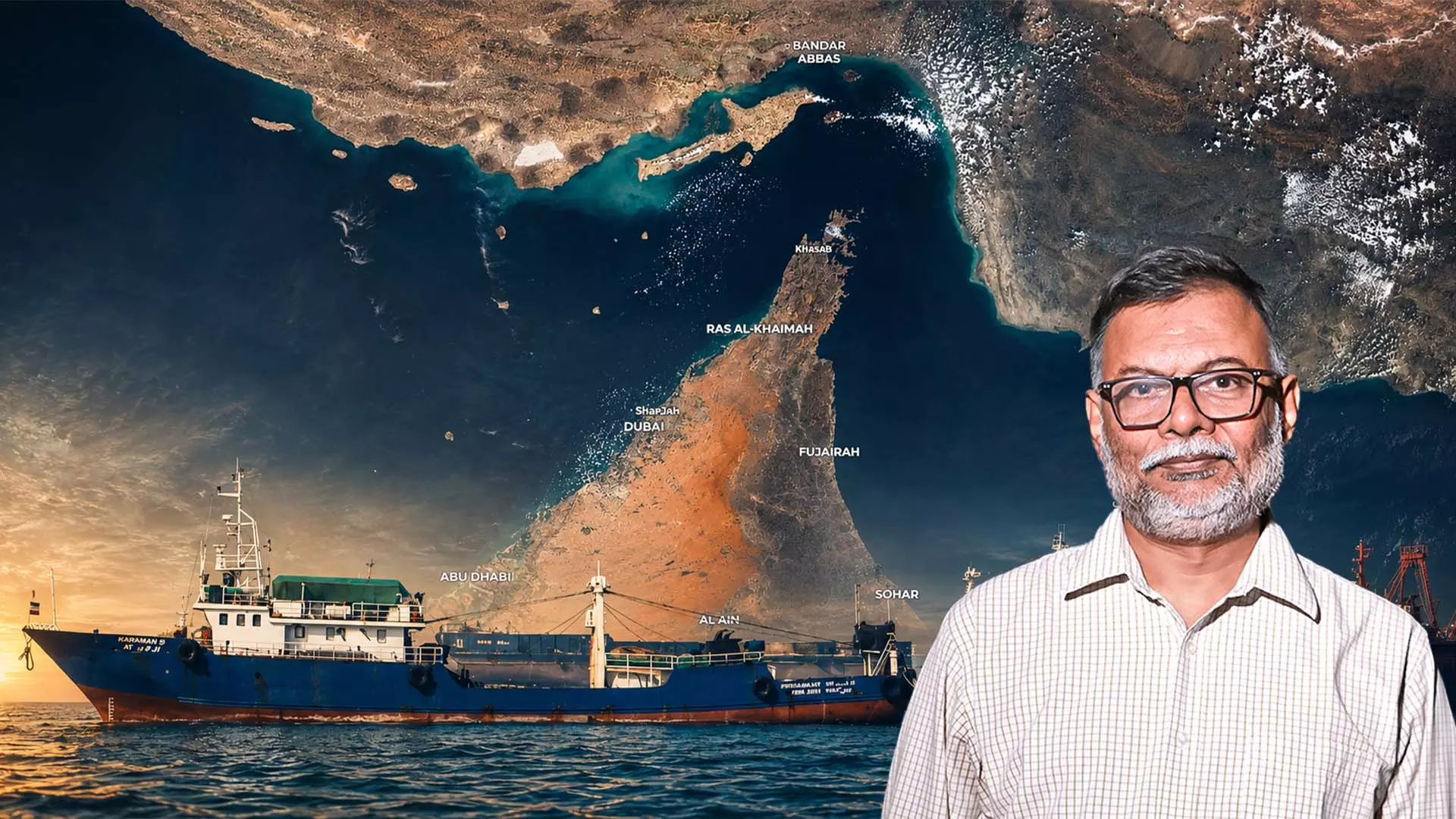
The West Asia conflict remains deadlocked as US military pressure is unable to force Iran's compliance. Iran's blockade of the Strait of Hormuz and expansion into new maritime routes threaten global trade.
As the Iran war continues, on the latest episode of Worldy-Wise, The Federal's Consulting Editor KS Dakshina Murthy, a specialist in world affairs, talks about the crisis in West Asia, the risk of a permanent maritime blockade, and India’s strategic response.
Also read: US launches retaliatory strikes on Iran after attack on American forces in Jordan
Can an all-out US military campaign force Iran into submission?
Well, to begin with, we have seen an all-out campaign when it began on February 28, when Israel and the US started attacking Iran. This was the second phase, following the first phase of attacks last June. For nearly a month, they went all out, attacking Iran's military installations, crucial nuclear facilities, and civilian infrastructure, including the assassination of Supreme Leader Ayatollah Ali Khamenei.
So, the US has already carried out heavy bombardments alongside Israel. They realised it was not heading anywhere because Iran retaliated in a manner that was completely unexpected and beyond the planning of (Donald) Trump and Benjamin Netanyahu. Iran retaliated in an unconventional, guerrilla-like manner. For instance, they blocked the Strait of Hormuz and attacked neighboring countries in the Gulf region, wherever US military bases and interest points were located. All these were targeted by Iran, which completely took Trump by surprise.
Gradually, the realisation dawned that the campaign was stalled, and Iran had the stomach to absorb these strikes. Initially, Trump and Netanyahu thought that removing Khamenei would trigger what they termed as regime change. Even that did not happen because Iran has a far more robust political structure than was known, anticipated, or completely misjudged by both the US and Israel.
So, an MoU was discussed, signed after about a month, and negotiations began. What has happened since is that the negotiations haven't worked because the US is not negotiating fairly. The Iranian leadership says the Americans are trying to arm-twist them into a deal, which they will not accept without a fair agreement.
For a short while after the MoU was signed, the Strait of Hormuz was opened by Iran, and the US was supposed to back off from its blockade. However, the Iranians realised that unblocking the strait removed their leverage, allowing the US team to use the situation to try to urge Iran into an unfavourable agreement. Consequently, Iran reinstated the blockade at the Strait of Hormuz, and the US returned to its broader blockade of the Persian Gulf.
Each time negotiations stall, fresh strikes occur, with the US hoping that renewed attacks will bend Iran to its directives. Iran has clearly refused, causing this cycle to drag on for six months.
In recent days, there has been a sudden expansion. Saudi Arabia has entered the conflict, and the Houthis, who are allies of Iran in Yemen, have also engaged. In Iraq, Iranian-sympathetic groups supported Iran by striking US targets, recently attacking a Saudi oil terminal. Saudi Arabia retaliated by directly entering the war for the first time, striking these Iraqi targets alongside the US.
Meanwhile, the Houthis have threatened to block the Bab-el-Mandeb Strait on the Red Sea side, which connects to the Suez Canal and the Indian Ocean. Though the blockade is not fully enforced yet, the threat expands the canvas of the war, showing no signs of successful negotiations due to the lack of fair play.
Also read: US and Saudi forces strike sites used by Iran-backed militias in Iraq
Is the blockade at the Strait of Hormuz becoming the new normal?
There is a big danger that this could end up being the new normal. Until military strikes started on February 28, the Strait of Hormuz had not been blocked by Iran in modern times. Previously, the primary conflict centered around Iran's nuclear programme, which Israel and the US wanted terminated on their terms.
When Iran executed the blockade, it realised it possessed a major trump card that forced global powers—including India, Southeast Asia, China, and Europe—to confront the severe economic impacts. The Americans were taken aback because they did not anticipate this move.
Now that Iran understands the potential of this leverage, it does not want to let go. Iran is indicating that it will continue regulating traffic through the strait, potentially allowing friendly nations to pass while negotiating joint traffic regulations with Oman, which shares the narrow 30-kilometre passage.
It looks like the Strait of Hormuz will not return to its pre-February 28 status of completely unregulated, free shipping. While this state of affairs contradicts the United Nations Convention on the Law of the Sea, neither Iran nor the US are signatories, meaning neither feels bound by those laws.
Regardless of when the war ends, shipping through the strait will not remain the same. Global economies, particularly across Asia and Europe, have recognised that they can no longer depend entirely on oil supplies from this region and are actively making alternative arrangements. In that sense, the blockade has effectively become the new normal.
How badly is the blockade hitting India’s energy imports?
When the strikes began, India was heavily affected, as around 40 per cent of its oil supplies passed through the Strait of Hormuz. Fortunately, Russia stepped in to assist. Russia had been supplying discounted oil to India since the onset of the Russia-Ukraine war in 2022, despite Western sanctions.
Just before this West Asian conflict erupted, India had begun reluctantly reducing its Russian oil purchases under pressure from the US, which threatened tariffs and sanctions. However, when this war broke out, India was forced to rely on Russia once again to avert a severe fuel and LPG crisis.
Beyond crude oil, the disruption affects petrochemical byproducts vital for fertilisers and pharmaceuticals worldwide. Though there were initial fears of global fertiliser shortages for agriculture, the signing of the initial MoU moderated the intensity of the conflict. While military engagements continue off and on, they have not matched the severe bombing seen between February 20 and April 8.
To secure its energy needs against threats like the Bab-el-Mandeb strait closure, India has consciously diversified its sourcing. New Delhi is now importing crude oil and LPG from South American nations like Venezuela, as well as from the US itself, exploring up to 40 different supply avenues. India also continues to purchase Iranian oil at reduced rates.
Additionally, cross-border infrastructure, such as the pipeline running from the UAE through Saudi Arabia to the Red Sea, has partially offset shipping dependencies. While the pipeline handles roughly 6 million barrels per day compared to the 20 million barrels traditionally shipped through the strait, it helps mitigate the deficit.
Internally, India has expanded its strategic petroleum reserves and instructed domestic refiners to adapt their facilities. Since Indian refineries were traditionally calibrated for Gulf crude, modifications now allow them to process different grades of crude from countries like Russia and Venezuela. Through these active adjustments, India has successfully managed its domestic fuel supplies despite the ongoing regional instability.
How is New Delhi balancing ties between Washington, Tehran, and Tel Aviv?
If you look at regional diplomacy, countries like Pakistan, Saudi Arabia, Egypt, and Turkey have actively engaged in mediation efforts between the warring parties. India, by contrast, has refrained from active mediation, prioritising internal energy security and fighting shortages that could disrupt the domestic economy.
At the same time, India has maintained working diplomatic channels across all sides. New Delhi has preserved its close ties with Israel, sustained its relationship with Washington—where trade negotiations remain ongoing—and kept lines of communication open with Tehran and Gulf nations.
However, maintaining this balance is growing increasingly complex. The US is moving towards legislation that would impose 100 per cent tariffs on countries purchasing oil from Iran and Russia. This measure directly targets major buyers like India and China. If enacted without diplomatic exemptions, these tariffs could severely impact Indo-US trade, placing India in a difficult position where refusing Russian oil could trigger internal fuel shortages.
This presents a major diplomatic challenge for New Delhi. Earlier in the conflict, Prime Minister Narendra Modi's visit to Israel two days before the strikes, alongside initial delays in issuing official condolences following Ayatollah Khamenei's death, drew scrutiny. Realising the risks of appearing aligned, India has since calibrated its stance. In UN statements regarding Palestine and broader West Asian issues, India has expressed sympathy with the Arab world and Iran, signalling a balanced and non-aligned approach as it navigates impending foreign policy challenges.