



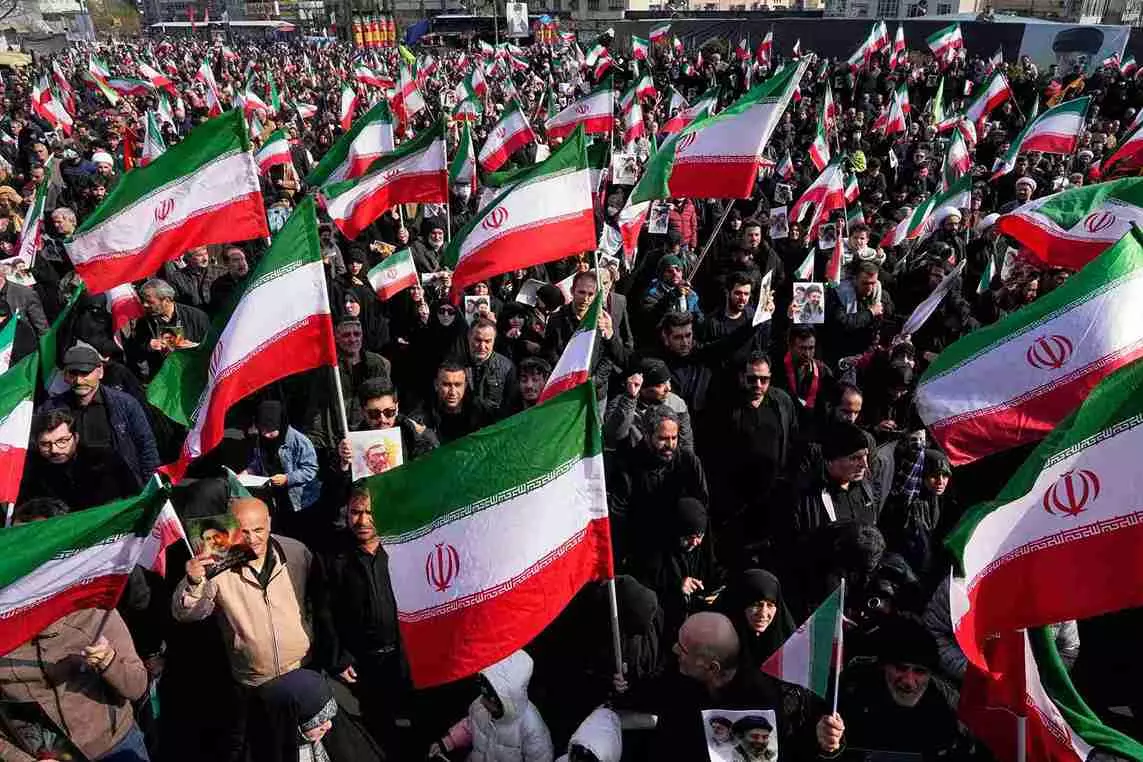
A crowd holding Iranian flags gathers during a demonstration in support of the nomination of Ayatollah Mojtaba Khamenei as successor to his late father, Ayatollah Ali Khamenei, as supreme leader, in Tehran, Iran, on Monday, March 9. AP/PTI
Iran hardliners slam leadership over US deal as West Asia conflict worsens again
The alleged sidelining of radical lawmakers and the mysterious absence of Mojtaba Khamenei fuel suspicions that Iran’s post-war leaders were abandoning revolutionary principles

As signs of renewed strain between Washington and Tehran continue to emerge, Iran appears to be facing turmoil on two fronts at once — in its foreign relations and within its own political establishment. Ayatollah Mojtaba Khamenei, who assumed leadership in March after his father, Ali Khamenei, was killed in the late-February US-Israeli strikes on Iran, cautioned Washington that it would face “unforgettable lessons” and dismissed President Donald Trump's signature on the June interim peace memorandum with Iran as “utterly worthless and devoid of credibility”.
Also read: US launches seventh straight night of attacks on Iran; bridges and water plant hit
Meanwhile, an American news outlet reported mounting evidence of an internal power struggle in Tehran, with hardline factions accusing the current leadership of engineering a "soft coup" through its dealings with the US.
Iran president, foreign minister faced backlash
CNN reported that when Iranian President Masoud Pezeshkian accompanied Ali Khamenei's casket through Tehran's streets in early July, part of the crowd dressed in mourning black turned their chants away from grief and toward him instead, saying “death to the compromiser”. Pezeshkian, who is known to be a reformist, signed the peace deal on his country’s behalf.
A little distance away, Iranian Foreign Minister Abbas Araghchi — the diplomat behind the ceasefire deal with Washington and the partial sanctions relief that followed — was pelted with stones by a crowd labelling him a “traitorous sellout” and calling for his death.
Both leaders had to leave the site abruptly.
The anger toward top officials at the funeral reflects a suspicion spreading for months among the West Asian nation’s radical factions: that the wartime leaders who signed the US agreement are quietly staging a coup against the Islamic Republic's revolutionary principles, all while the new supreme leader stays hidden — reportedly fearing for his safety, or possibly incapacitated, the report added.
Also read: Trump warns of US retaliation if Iran assassinates him, but successor would decide
Hardliners who packed the funeral believe officials chose to surrender over avenging the senior Khamenei's death, defying Mojtaba Khamenei's authority as his son and successor. The new leader also remains unseen, never publicly addressing the nation even as others govern in his name. His stern warnings against the US were seen on the social media platform X.
Hardliners suspect current leadership trying to consolidate power
Hardliners accuse Iran's visible leadership of consolidating power by suspending parliament, ignoring his directives in negotiations, and suppressing the nightly rallies that had fuelled fundamentalist strength. Lawmaker Mahmoud Nabavian, known to be a radical, asked on X days before Khamenei’s funeral whether a coup was underway. He later vowed to “stand firm against the coup”.
With Pezeshkian, Araghchi and chief negotiator Bagher Ghalibaf becoming the most visible figures running post-war Iran, and no access to the reclusive new leader, hardliners unhappy with their show have turned coup accusations against them, Iran expert Arash Azizi, who is based in the US, told the news outlet.
“Mojtaba’s continued absence means that they don’t have access to him and also that Ghalibaf and allies are effectively in charge of the country… the ultra-hardliners have thus accused Ghalibaf and Pezeshkian of plotting a ‘coup’ against Mojtaba,” he was quoted as saying.
Also read: Trump vs Mojtaba: Iran vows 'revenge' for Khamenei death as US readies '1,000 missiles'
Earlier this week, Nabavian, who has fiercely opposed the agreement and emerged as one of the most vocal figures warning of a “coup”, was stripped of his seat on parliament's National Security Commission, alongside another legislator who criticised the deal, incidents that fuelled the suspicion that the hardliners were being sidelined.
Throughout months of war and diplomacy with Tehran, Trump has called Iran “seriously fractured”, blaming internal splits for stalling any deal. Yet, despite visible rifts between new leaders and hardliners, observers say the regime stays united behind one goal: ending the war while securing sanctions relief and keeping control of the strategic Strait of Hormuz, the CNN report added.