







Why Pakistan jailed human rights lawyer Imaan Mazari for 17 years
Pakistani journalists, rights activists, and civil society groups have long opposed PECA, which has evolved into an instrument for curbing free expression

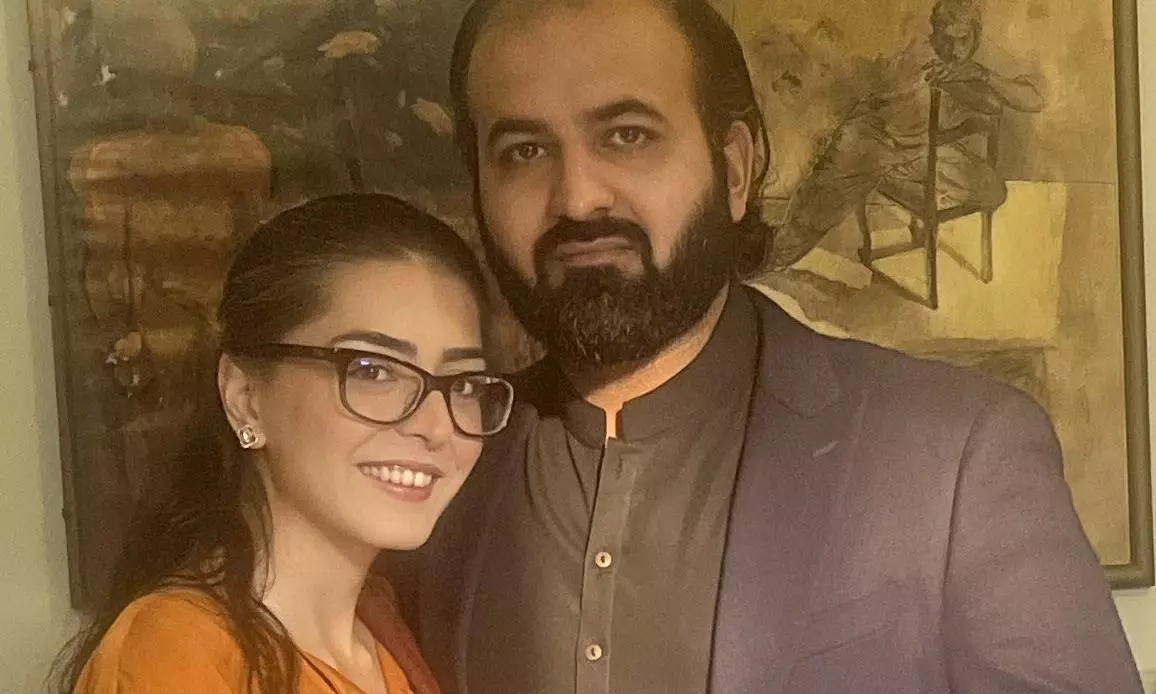
Imaan Mazari, a Pakistani human rights lawyer, and her husband Hadi Ali Chattha have been sentenced to 17 years in jail by a Pakistani court for their "anti-state" posts on social media. They were booked for "cyberterrorism" and "spreading false information" under the Prevention of Electronic Crimes Act (PECA).
The Islamabad court found the couple guilty on three charges and imposed prison terms of five, 10 and two years, all to be served concurrently.
Court ruling
According to court documents, Mazari “disseminated highly offensive” content online.
The couple maintained that the cases against them stem from their criticism of enforced disappearances and alleged human rights abuses, which were denied by Pakistan’s military.
Also read: Pakistan to hike defence budget by 18 pc amid escalating tension with India
Mazari called her imprisonment part of a broader pattern of repression. “We're not the first people who will be unlawfully incarcerated in this country,” she told AFP news agency.
Earlier this week, Mazari struck a defiant note in court, saying, “Truth seems overwhelmingly difficult in this country.” Acknowledging the risks that came with her work, she added, “But we knew that when we got into this work; we're ready to face that… We will not back down,” she told AFP.
Mazari, a vocal critic of Pakistan’s military establishment, has represented victims of human rights violations and is an outspoken critic of extrajudicial killings and abductions. She is the daughter of former Pakistan minister Shireen Mazari who had served as the Federal Minister for Human Rights under the Pakistan Tehreek-e-Insaaf (PTI) government.
Also read: Shehbaz Sharif offers talks to PTI after Imran Khan gets 17-year jail term
Hadi Ali Chattha is a criminal lawyer who represents victims accused of blasphemy. He also worked with the Asma Jahangir Legal Cell, representing victims of sexual violence, rape and enforced disappearances.
Who is Imaan Mazari?
The 32-year-old, graduating from University of Edinburgh, is one of Pakistan’s most recognisable human rights lawyers, known for taking up cases that directly challenge state institutions, as reported by AFP.
Her legal career has focused on cases relating to enforced disappearances, minority rights, press freedom and defending individuals accused under Pakistan’s stringent blasphemy laws.
She is known for representing ethnic Baloch activists, journalists facing defamation charges and even Afghan nationals who were targeted during Pakistan crackdowns.
She positions herself as a civil liberties advocate, frequently criticising the military’s role in politics and what she describes as the erosion of constitutional rights through hurried legislation and tighter state control.
Also read: Pakistan Army ready to tackle external, internal threats: Asim Munir
Her growing profile has been matched by a rising number of cases against her, including charges of “cyberterrorism” and “hate speech”.
In 2025, she received the Young Inspiration Award from the World Expression Forum for her “extraordinary courage, integrity, and impact in the struggle for the rule of law and justice,” added AFP's report.
Why was she arrested?
The case originated from a complaint filed in August 2025 by Pakistan’s National Cyber Crime Investigation Agency, which accused Mazari of disseminating content aligned with militant groups and blamed the couple for portraying security forces as responsible for disappearances in Balochistan and Khyber Pakhtunkhwa.
The Pakistan government issued a demarche to the Norwegian ambassador for attending the proceedings.
In January 2026, during a press conference, Pakistan’s military spokesperson Lieutenant General Ahmed Sharif Chaudhry cited one of her social media posts while warning about “hidden elements”. “They operate under the guise of democracy and human rights to promote terrorism,” he said.
Pakistani journalists, digital rights activists and civil society groups have long opposed the PECA, which was enacted in 2016 to tackle cybercrime but has since evolved into a key instrument for curbing free expression. The concerns intensified after amendments passed in January 2025 gave the government sweeping authority to regulate social media, further enabling intimidation and criminalisation of dissent.
(With agency inputs)