



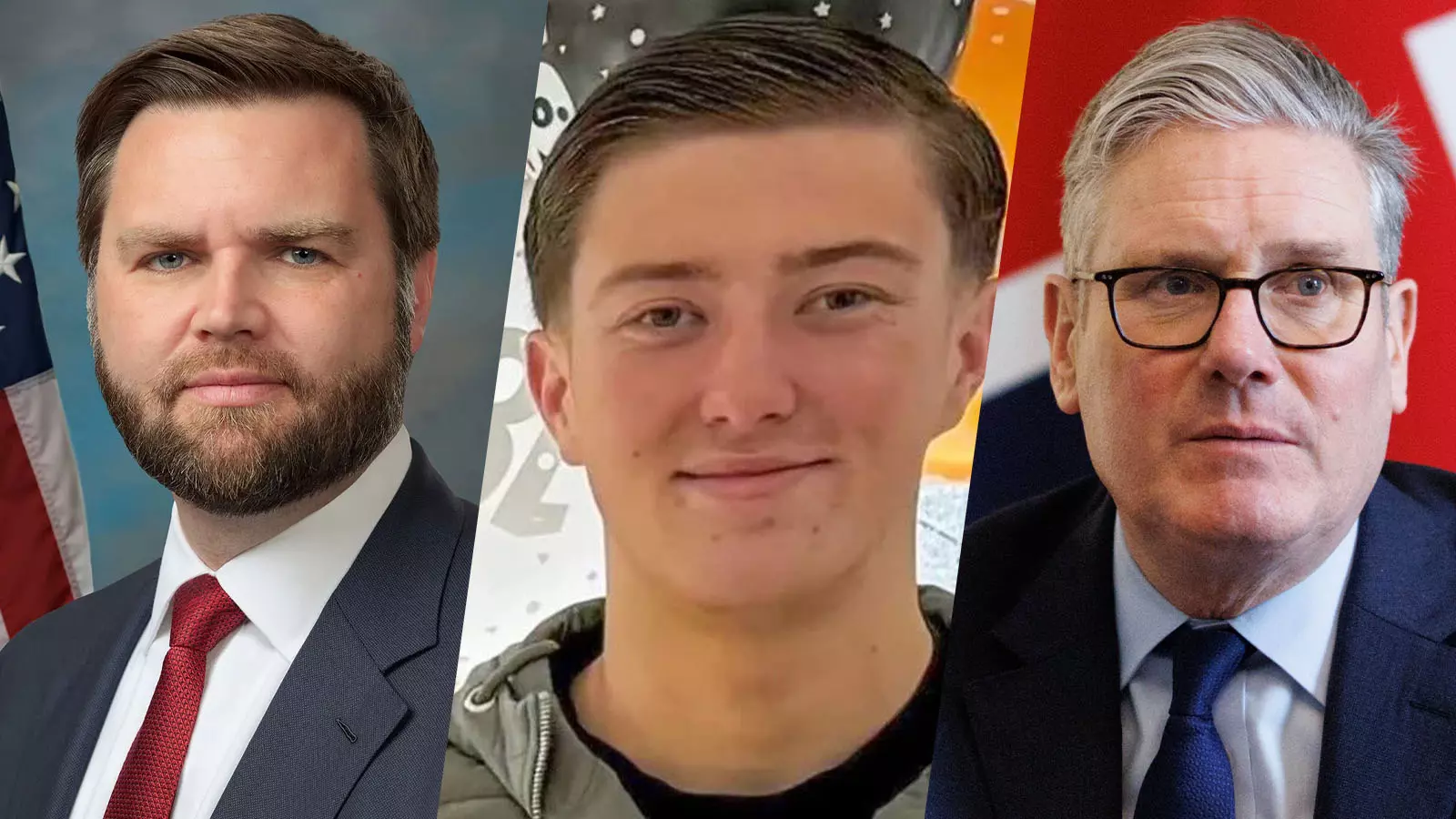
The debate escalated internationally when US Vice President JD Vance shared his opinion through a social media post. File photo of US Vice President JD Vance (left), UK teen victim Henry Nowak (center) and UK Prime Minister Keir Starmer (right).
Henry Nowak’s murder by Indian ‘immigrant’ sparks transcontinental political storm
The controversy centers on the killing of Henry Nowak, a teenager who was fatally stabbed in Southampton last year by a person of Indian origin, Vickrum Digwa

The murder of an 18-year-old British student in Southampton has sparked a political storm stretching from UK to Washington, drawing in US Vice President JD Vance, and UK Prime Minister Keir Starmer's government.
The controversy centres on the killing of Henry Nowak, a teenager who was fatally stabbed in Southampton last year by an Indian immigrant, Vickrum Digwa. The case gained public attention after bodycam footage surfaced online showing police officers handcuffing Nowak as he lay critically injured after Digwa allegedly claimed to be the victim of a racist attack.
The footage triggered protests across the UK, including Southampton earlier this week. Demonstrators questioned police conduct during the incident and demanded accountability from authorities.
Also read: Case of UK teen who died from stab wound while handcuffed by police stirs debate
The case has also drawn attention in India because Digwa is a Sikh of Indian origin. While British prosecutors have confirmed that he was born in the UK, his background has been repeatedly highlighted in online debates over immigration, identity and integration, turning a local murder case into part of a wider international political argument.
Vance’s comment
The debate escalated internationally when US Vice President JD Vance shared his opinion through a social media post. Vance described the killing as both "tragic" and "enraging" and linked it to what he called the consequences of mass immigration. He argued that Nowak's death reflected broader failures by political leaders in Europe to address concerns over migration and national identity.
His remarks immediately drew a sharp response from Downing Street, which accused of “people trying to interfere in their democracy and seeking to stir up division”. A spokesperson for Prime Minister Keir Starmer said the Nowak family had made it clear that they did not want their son's death to be used to deepen social or political tensions.
Also read: US firms face 'anti-Indian racism' as Trump tightens work visa rules: Report
"Our politics should bring people together even in the most terrible of circumstances," the Prime Minister's office said, adding that people seeking to interfere in Britain's democracy and stir division were not helping the situation.
When the debate escalated
The case has become especially controversial as Vance's comments were based on the assumption that the killing was linked to immigration. However, British authorities have stated that Digwa was born in the United Kingdom. The Crown Prosecution Service has confirmed that he was a British-born citizen, undermining claims that the case involved a recently arrived migrant.
Children and Families Minister Josh MacAlister also appeared to criticise Vance's intervention, saying Britain did not need advice from American politicians on how to conduct policing or manage domestic affairs. He warned against importing what he described as "toxic politics" into the UK.
Also read: Why South Asians, especially Sikhs, are living in constant fear in the UK
The dispute has also drawn in other prominent figures. Tech billionaire Elon Musk criticised British police and media coverage of the case, accusing authorities of mistreating Nowak in his final moments and suggesting that the incident had not received the attention it deserved.
Starmer responded by accusing Musk of attempting to "whip up division" around a deeply sensitive tragedy. Meanwhile, Conservative Party leader Kemi Badenoch has called for an independent review into the circumstances surrounding the case, arguing that questions about police actions have become a matter of public importance.
Separate investigations by the Independent Office for Police Conduct and a future inquest are already examining whether any police actions or delays contributed to the teenager's death.