



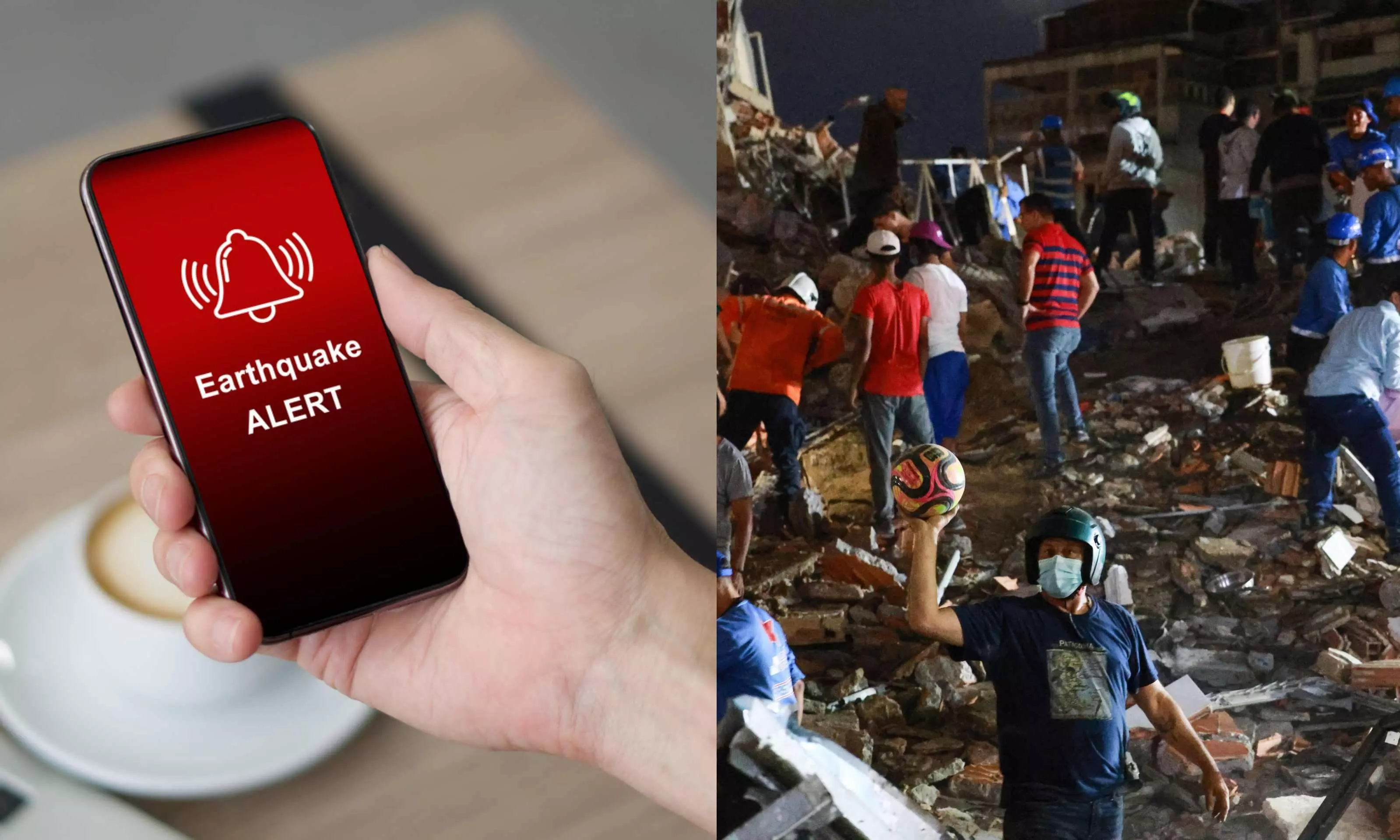
Google notified many before the devastating wave of earthquake in Venezuela. Image: iStock/PTI
Google helped millions survive Venezuela’s earthquake. Here’s how
When twin quakes struck Venezuela's northern coast, millions of Android users received alerts before the strongest shaking arrived. Here's how the system works and why it matters

Seconds before the ground began to heave on June 24, 2026, Android devices across Venezuela buzzed with a stark warning about the impending danger. Two earthquakes of magnitudes 7.2 and 7.5 struck the same area in rapid succession, causing injuries and collapsing buildings. Yet thousands of residents had already received a heads-up, enough time to dive under a table, step away from a window, or move clear of a crumbling wall. The alerts did not come from government sirens or dedicated seismic monitoring networks. They came from the phones already in people's pockets.
How the system actually works
Android's Earthquake Alerts System works differently depending on where you are. In California, Washington and Oregon, Google partners with the official ShakeAlert network, which uses 1,675 dedicated seismic sensors. Everywhere else, including Venezuela, the system relies entirely on crowdsourced phone data — a phone's accelerometer, the same sensor that rotates your screen, detects earthquake-like vibrations and sends a signal to Google's servers along with a coarse location. When enough nearby phones report similar vibrations at once, the servers confirm a real earthquake is underway and push alerts to the surrounding area.
Also Read: Over 160 dead, nearly 1,000 injured as twin strong earthquakes devastate Venezuela
The early warning works because earthquakes radiate outward in waves — fast but weak P-waves first, followed by slower, far more destructive S-waves. By detecting the P-wave first across thousands of devices simultaneously, the system can push an alert before the damaging shaking arrives. In the Venezuela case, early reports suggest residents in Caracas, located over 100 km from the epicentre, received up to 30 seconds of warning, enough time to take protective action before the strongest shaking arrived.
Did Google predict the earthquake?
No, and that distinction matters. What Google's Android Earthquake Alerts System did was detect the earthquake moments after it began and send warnings before the strongest shaking reached millions of people. The system does not forecast seismic events in advance; no technology currently can. What it does is compress the gap between when a quake starts and when the worst of it arrives, and use that gap to warn people.
Since launching in 2021, the system has expanded to nearly 100 countries and detected more than 18,000 earthquakes, issuing alerts for over 2,000 of them and sending a combined 790 million alerts worldwide. Google says the system has helped lift global access to earthquake early warning roughly tenfold, from around 250 million people in 2019 to about 2.5 billion today.
What those seconds actually do
The value of a few seconds is easy to underestimate until you consider what can happen in them. Even a brief window allows automatic braking on mass transit, the opening of fire station doors, and the shutdown of gas lines. For individuals, it means moving away from glass, getting under a table, or pulling a vehicle to the side of the road. Of over 1.5 million respondents surveyed by Google, 85 per cent found the alerts "very helpful," and the most common reported response to a Take Action alert was to drop, cover and hold on, the standard recommended earthquake safety action.
Also Read: Twin 7+ magnitude quakes rock Venezuela; buildings collapse in Caracas
Can early warnings reduce risk?
The Venezuela episode has renewed calls for expanding and standardising early warning systems globally. A global standard for earthquake detection and alerting would allow devices across different platforms and countries to speak the same language, something experts say is increasingly necessary as the economic and human costs of natural disasters continue to rise.
The broader point, though, is one of equity. Since billions of people already carry smartphones every day, systems like Google's earthquake alerts can reach large populations almost instantly without requiring new equipment or expensive infrastructure. The challenge is ensuring that the communities most vulnerable to seismic risk are also the ones with adequate smartphone penetration and network coverage to benefit from such systems.