


Indian student created pro-Trump Influencer ‘Emily Hart’ with AI, earned thousands online
An Indian student used generative AI to build a pro-Trump persona that amassed thousands of followers and steady income, until platforms shut it down

The internet has long blurred the line between reality and illusion. And that blurry line is now being redrawn by algorithms.
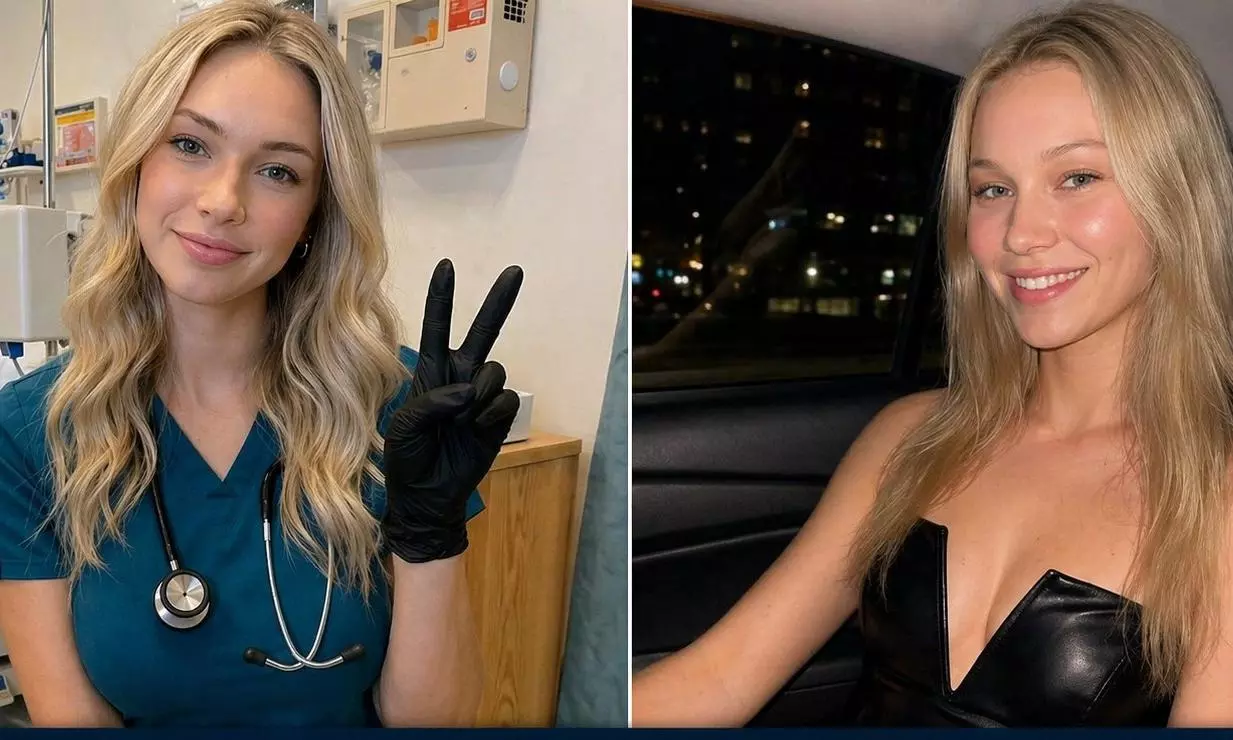
Take the recent case of “Emily Hart,” a supposed pro-Donald Trump influencer who built a strong following online with her bikini-clad photos, conservative messaging, and all-American persona. There was just one problem: she wasn’t real.
Emily Hart’s social media entry
Instead, influencer “Emily Hart” was the creation of a 22-year-old Indian medical student struggling to make ends meet. The aspiring orthopaedic surgeon, identified as Sam, used generative AI tools to design the influencer from scratch, crafting not just her appearance but also her interests and political leanings. Strongly resembling Jennifer Lawrence, the Hollywood actress, she was a typical blonde woman who supported US President Donald Trump and often posted about Christianity.
Also read: Explained: What is deepfake and how can you identify such content?
Sam began by generating images of a blonde woman, often depicted in bikinis, engaging in activities such as ice fishing, drinking beer, or posing with firearms. Her profile described her as a nurse but behind the curated feed was a carefully engineered strategy.
The algorithm game
With the help of tools like Google Gemini, Sam tailored the account to appeal to a specific audience — conservative, pro-MAGA users, particularly older men in the United States. The content leaned heavily into themes like Christianity, gun rights, anti-abortion rhetoric, and anti-immigration views.
One post, for instance, featured the AI-generated influencer holding a gun alongside a provocative caption espousing conservative talking points.
Also read: AI-generated faces look more real than real ones, but your brain can tell the difference
“The algorithm loved it,” Sam said in an interview with WIRED. “Every reel I posted was getting 3 million views, 5 million views, 10 million views.” Within a month, the account had crossed 10,000 followers.
How it was monetised
And then came the monetisation!
Using another platform, Fanvue, an alternative to OnlyFans, Sam began posting more exclusive, AI-generated content behind a paywall. For that, he even turned to X’s chatbot Grok to generate more explicit images. And the result was a steady stream of income, reportedly amounting to a few thousand dollars a month.
“Not bad for 30 to 50 minutes of daily work. I was basically doing nothing, and it was just flooded with money,” he admitted.
Also read: Meet Raul John Aju, teen prodigy building India’s next big AI tool
While debates rage over artificial intelligence taking away jobs, here it seems to have created a new one: full-time fake influencer.
Sam said he initially started the experiment while struggling financially during his studies and trying to save enough to move to the US. What began as a quick way to earn money online soon turned into a highly-optimised digital operation that combined psychology, politics, and platform algorithms.
Not everything is real
But the illusion didn’t last forever.
Emily Hart’s Instagram account was taken down in February for fraudulent activity. Following the expose by WIRED, her Facebook presence was also removed, bringing the curtain down on one of the internet’s more unusual success stories.
Also read: Google’s Gemini Nano Banana AI goes viral, generating 3D Figurines
Still, the episode raises a larger question: in an age where AI can generate faces, voices, and entire personalities, how much of what we see online is real and how much is just very convincing fiction?
For now, one thing is clear: on social media, even your favourite, good looking influencer might just merely be a very clever line of code, with a surprisingly good content.