



Trump threatens to bring in legislation as US SC upholds birthright citizenship
Supreme Court rules that under the 14th Amendment, any person born on American soil is a citizen; Trump calls it 'too bad' for the US, says he can introduce legislation

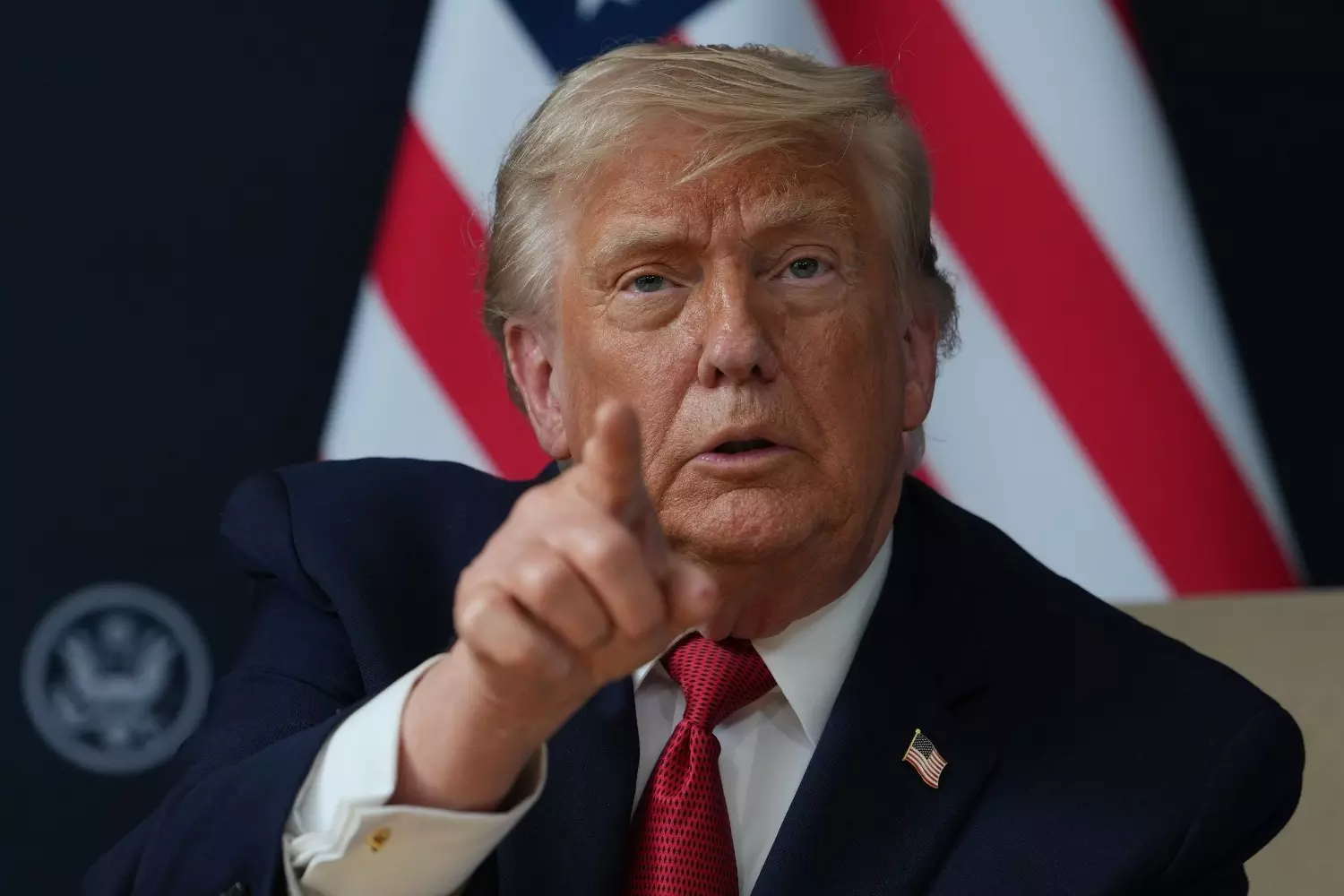
US President Donald Trump has dismissed the Supreme Court’s order to strike down his executive order restricting birthright citizenship, calling it “too bad” for America. Trump has also said that he is ready to introduce legislation to “easily make it up” in Congress instead of resorting to the “long and unwieldy Constitutional Amendment”.
Expensive and unfair to US: Trump
“The Supreme Court upheld Birthright Citizenship, which is too bad for our Country, but we can easily make it up in Congress through Legislation, with the support of the President, that has now been determined during this process. No long and unwieldy Constitutional Amendment is necessary,” he wrote on Truth Social soon after the US Supreme Court gave its order.
Also read: US: Trump plans to axe birthright citizenship; can he do it? Will it impact Indians?
“Congress should start TODAY to work on ending expensive and unfair to our Country, Birthright Citizenship. They will have my Complete and Total Support,” he said.
Supreme Court ruling
Earlier on Tuesday (June 30), the US Supreme Court, while striking down Trump’s executive order restricting birthright citizenship, upheld that any person born on American soil is a citizen.
The Supreme Court ruled that the 14th Amendment guarantees birthright citizenship to children born in the US, including those whose parents are in the country unlawfully or only temporarily.
"Citizenship, then and now, was the right to have rights to freely participate in our political community," Chief Justice John Roberts wrote in the 5-4 majority ruling.
"Children born in the United States to parents unlawfully or temporarily present are 'subject to the jurisdiction' of the United States and are citizens at birth under the Fourteenth Amendment's Citizenship Clause," it said.
Trump’s executive order
Hours after assuming office for the second term in January last year, Trump issued an executive order that aimed to limit birthright citizenship to people who have at least one legally present parent in the US.
Trump had described the birthright citizenship policy as "a disgrace", while Vice President JD Vance called it "the dumbest immigration policy in the world".
On April 1, Trump was present in the Supreme Court to hear the oral arguments in the birthright citizenship case, a first such instance for a sitting president.
Also read: Are Indian Green Card holders hit by Trump’s new scrutiny rules?
Ratified in 1868, the 14th Amendment states that all persons born or naturalised in the US, and subject to the jurisdiction thereof, are citizens of the US and of the State wherein they reside.
It's the second major Trump second-term policy struck down by the court, following the tariffs ruling in February.
Who benefits from SC ruling?
In a dissenting opinion, Justice Clarence Thomas said, "(B)oth the Civil Rights Act and the Citizenship Clause guaranteed citizenship to persons born and domiciled in the United States regardless of their race." "Because many potential applications of the President's Order are consistent with the original public meaning of the Citizenship Clause, I respectfully dissent," he wrote.
If the court had upheld Trump's order, it would have affected the legal status of nearly 250,000 babies born each year in the US, requiring families to prove the citizenship status of their newborns.
Several members of Trump's close circle, including Secretary of State Marco Rubio, FBI Director Kash Patel, and Second Lady Usha Vance, are children of immigrants who benefited from birthright citizenship.
Also read: What is 'Trump’s Gold Card visa' – the new US visa scheme for skilled migrants?
"Today's ruling is a profound affirmation of who belongs in America," said Chintan Patel, Executive Director of civic organisation Indian American Impact.
"Indian and South Asian immigrant families are among those most directly threatened by Trump's executive order — communities navigating long visa backlogs and uncertain immigration timelines, where children are often born here long before their parents have a clear path to permanence. Today, the Supreme Court looked at those families and said: your children are American. They belong here," he said.
(With inputs from agencies)