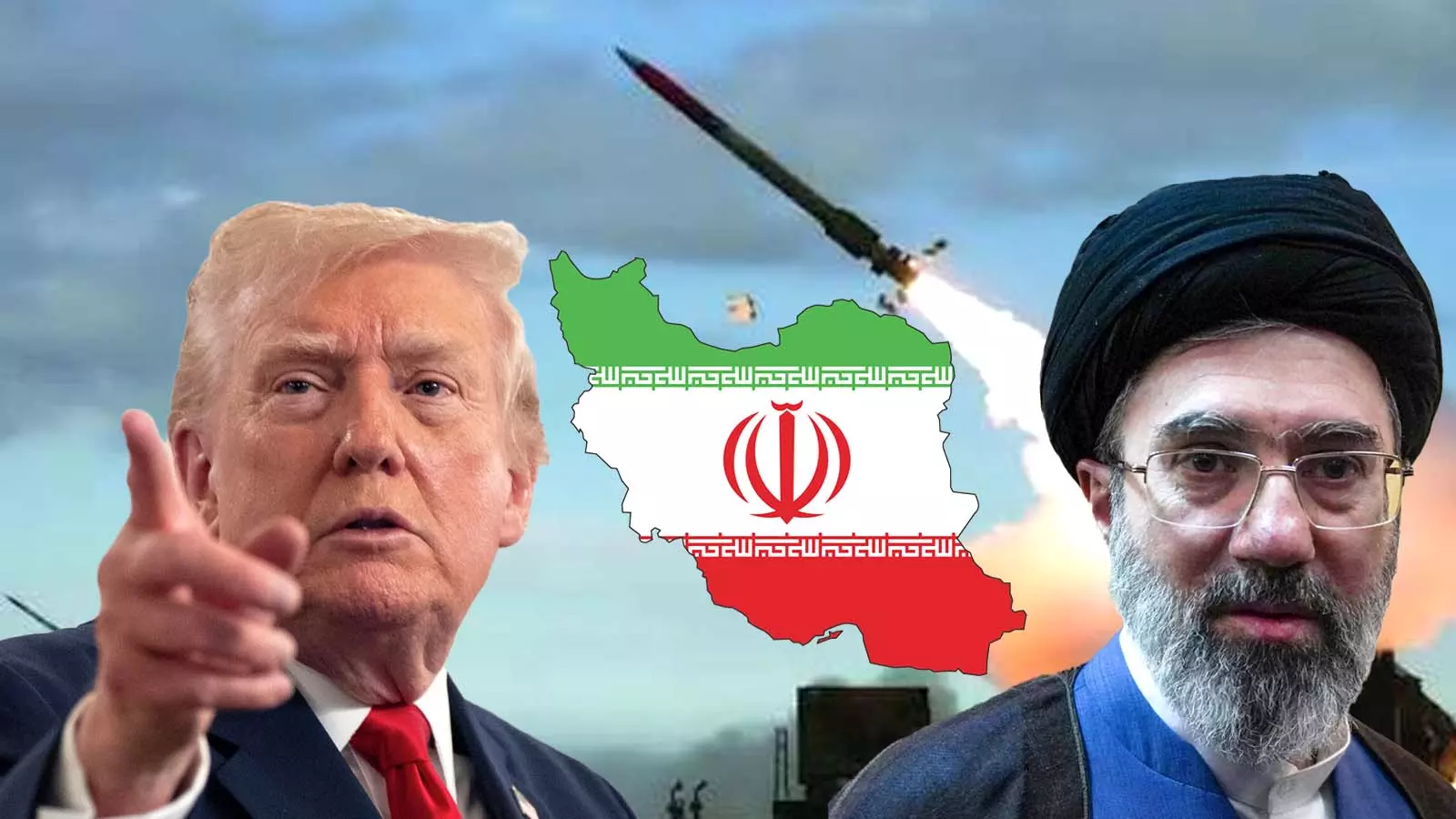
Another US-Iran escalation in the offing as Trump weighs next move?
Indirect talks continue through Qatari mediators as the US reinforces its military presence, while political calculations in the US and Israel complicate the path ahead

As the war on Iran, launched by Israel and the US, enters its eighth month, pieces of the West Asia puzzle are multiplying, but the picture remains fuzzy.
Though indirect US-Iran talks continue through Qatari mediators, Washington is reinforcing its military presence in the region. Up to 50,000 US troops are already stationed in and around the Persian Gulf, with another 9,000-10,000 troops and a third aircraft carrier now being deployed.
War faces political headwinds
The buildup indicates preparations for a possible escalation, even as President Donald Trump talks of resuming bombing after the US midterm elections. He has threatened to target oil infrastructure, electricity, desalination plants, bridges and military installations. The hawks in his administration appear to have gained the upper hand, with Defence Secretary Pete Hegseth and Secretary of State Marco Rubio leading the charge.
Also read | Iran awaits US response after Trump rejects Strait of Hormuz reopening deal
Yet the war remains deeply unpopular in the US. A recent AP-NORC poll found that 71 per cent of Americans disapprove of Trump’s handling of Iran and 69 per cent believe the war has not been worth fighting. With Trump’s ratings under pressure and Netanyahu also facing elections later this month, the political calculations in Washington and Jerusalem are impossible to ignore.
Trump looks for closure
Trita Parsi, the Iranian-Swedish scholar and executive vice president of the Washington-based Quincy Institute, said recently that Trump is looking for a “last chapter” in the war on Iran — an ending that makes going to war look worth it and becomes part of his presidential legacy.
Trump believes the blockade of Iranian ports has worked and that Iran is more vulnerable than it was when the war began on February 28. But Iran is not Venezuela, and any attempt at a decisive military victory, particularly if ground troops are involved, could turn into a long-drawn conflict.
War clouds gather again
The pieces, meanwhile, continue to move. The Houthis have struck again and Saudi-backed Yemeni forces have responded with attacks on Houthi areas. An escalation could happen before the midterms, even though the war is unpopular with American voters. Some analysts also believe Iran could launch a pre-emptive strike if Tehran concludes that a resumption of the war is inevitable.
Also read | Trump rejects Iran’s 7-day ceasefire plan, US strikes may resume: Report
Are the threats and military deployments part of a strategy of maximum pressure on Iran, or preparations for a return to full-scale war? With diplomacy making little headway and countries across the region weighing their options, the next move remains difficult to read.