



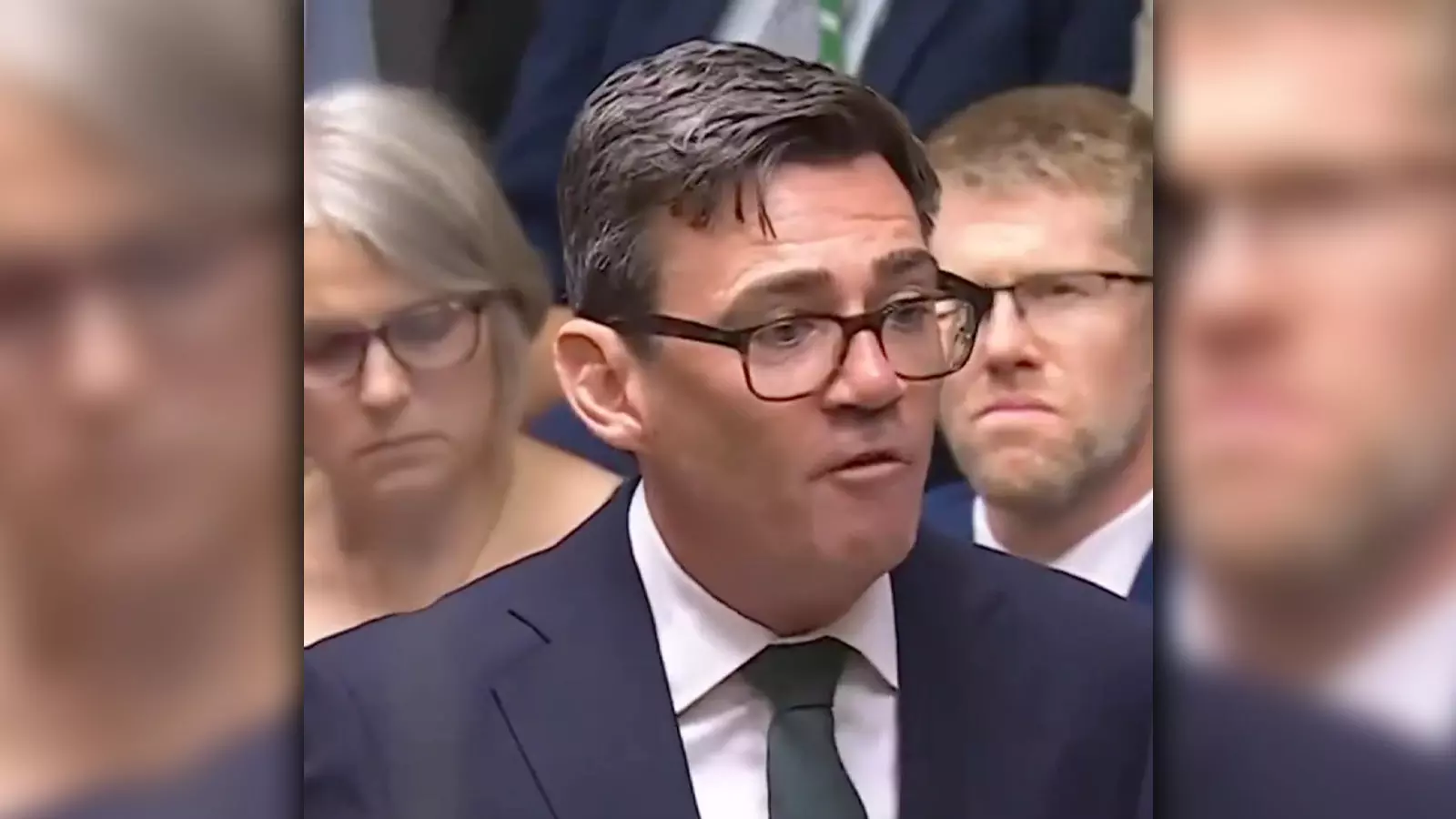
Andy Burnham confirmed as Britain’s next PM, says will give people 'hope back'
The former Manchester mayor, who will succeed Keir Starmer on July 20, seeks to challenge a political culture and economic model that don't help ordinary public

Britain is set to get a new prime minister, the seventh in a decade, in Andy Burnham, who was confirmed as the new leader of the country’s governing Labour Party. He will succeed the outgoing premier, Keir Starmer, on Monday, July 20.
The 56-year-old leader, who served as the mayor of Greater Manchester for nearly a decade between 2017 and June this year, pledged to give “hope back” to the people in his acceptance speech. He also vowed to take on a political culture and economic model he felt doesn’t work much for the ordinary public.
'Will give them hope back'
“We’re going to give them hope back. This is a proud moment you have given me and my family today, and an emotional one, but it is one for which I am ready,” Burnham said. The leader, however, added that he had not yet made up his mind about what his top team would look like.
Also read: Policy moves, U-turns that drove Keir Starmer's resignation as British PM
“I haven’t made any decisions yet about who will be in that top team. But I will soon, and when I have, you will see it reflects all parts of our party, all communities,” he said.
Although Burnham's rise to the top was only officially confirmed on Friday (July 17), he had, in effect, been Labour's leader-in-waiting since winning a pivotal by-election last month in Makerfield, which returned him to the British parliament and set up his challenge to Starmer.
Burnham has been supported by 349 MPs, which helps him eclipse any other probable contender in the race to the top spot.
On his role as the new leader of the Labour Party, he said on X, "It’s the honour of my life to be Leader of the Labour Party. I will be a leader for every region and nation in this great country, and this Party will be unashamedly Labour in our priorities and in the decisions we take. Together, we will set Britain on a new path."
Burnham's rise after Labour's May local poll disaster
The stage for the transition was set following Labour’s debacle in the local elections in May, which was viewed as a warning sign of what might unfold if Starmer — deeply unpopular despite his landslide win in 2024 — remained at the helm for the next national election.
Burnham, then working as Greater Manchester's mayor, surfaced as the party’s strongest alternative in its search for new leadership. It became easier for him after Starmer quit on June 22, four days after the former won the by-election.
Also read: Keir Starmer announces resignation as UK PM and Labour leader amid party pressure
Shabana Mahmood, Labour Party's National Executive Committee chair, made the announcement of Burnham’s ascension at a special party conference in London.
“There was only one nominated MP… hardly a nail-biter,” she remarked.
King Charles III will invite the prime minister-designate to form a new government.
Labour's Reform challenge
Since winning the Makerfield seat last month and returning to parliament, Burnham has given one speech, kicking off a four-week process to oust Starmer — whose deep unpopularity turned Labour lawmakers against him.
In it, Burnham outlined plans for the “biggest rebalancing of power” from London to the UK’s other regions, aiming to ease inequality and counter “left-behind communities” drifting toward Nigel Farage's Reform UK, which the Labour leaders fear might throw a tough challenge at them in the 2029 general elections.