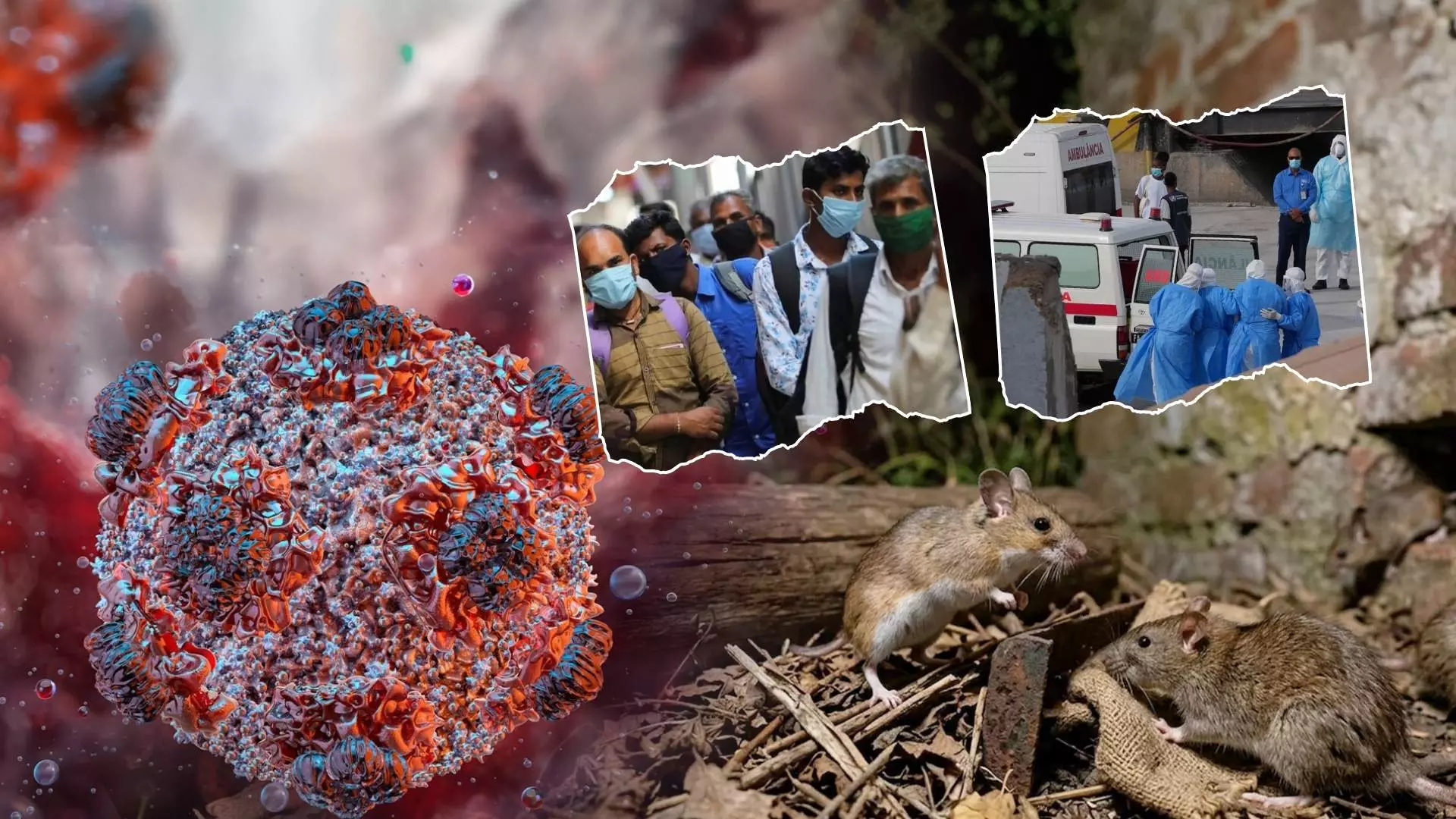
Hantavirus myths busted: What you need to know
Eight cases on the MV Hondius and a surge in Argentina have sparked global panic. But is Hantavirus really the next pandemic — or just the next big scare?

A luxury cruise ship outbreak and a surge in Argentina have put hantavirus back in global headlines. Eight cases were identified aboard the MV Hondius, while Argentina has reported over 100 infections since June 2025 — nearly double the usual number. But amid the panic, experts say the virus is widely misunderstood.
Here is what the science actually says.
Myth vs reality
Myth 1: It spreads easily between people
In most cases, it does not. Hantavirus typically spreads when people inhale airborne particles from infected rodent urine, saliva, or droppings — particularly in closed, dusty spaces like sheds, cabins, or storerooms.
There is one notable exception: the Andes strain, found in South America, can spread between humans. But even then, it is extremely rare and usually requires very close, prolonged contact — such as sharing a room or caring for an infected person.
This is not a virus that spreads casually in public spaces or through brief contact.
Also read: ICMR on hantavirus cases: No immediate threat to India
Myth 2: Only a wilderness risk
You do not have to be hiking through forests to be exposed. Any area where rodents are present can become a risk zone — homes, garages, barns, campsites, storage rooms, and yes, even ships.
The real danger lies in exposure to contaminated, poorly ventilated spaces. A dusty storeroom that has not been opened in weeks could pose a greater risk than being outdoors.
The Argentina surge has been largely linked to increased rodent activity driven by climate conditions — a reminder that urban and semi-urban environments are not immune.
Also read: How a rare Hantavirus outbreak on a cruise ship triggered a global health probe
Myth 3: It is easily treatable
Early detection matters enormously with hantavirus — and that is the problem. Early symptoms closely resemble a common viral infection: fever, body pain, fatigue, headaches, and muscle aches. Many people dismiss the warning signs initially.
In severe cases, the infection can rapidly affect the lungs and breathing, sometimes becoming life-threatening within days.
There is currently no specific antiviral cure or approved vaccine for hantavirus. Treatment is primarily supportive care, and serious cases may require ICU admission and oxygen therapy.
Myth 4: Sweeping droppings is safe
How to clean safely
Many people instinctively sweep or vacuum rodent droppings — but this is exactly the wrong approach. Dry sweeping sends contaminated particles into the air, where they can be inhaled.
Experts recommend wet-cleaning instead. If you find rodent droppings, wear gloves, spray the area with a disinfectant, let it sit for a few minutes, and then wipe it with wet wipes or disposable towels. Avoid all dry sweeping or vacuuming.
Where possible, ventilate the area thoroughly before beginning any cleaning.
Myth 5: The next pandemic threat
Pandemic potential
Experts say this is highly unlikely. Unlike Covid-19, hantavirus does not spread efficiently from person to person. The vast majority of infections stem from direct exposure to infected rodents or contaminated environments.
Even the Andes strain — the one exception capable of limited human-to-human spread — requires close and prolonged contact to transmit. There is currently no evidence that hantavirus has the ability to spread globally in the way a pandemic virus does.
The World Health Organization (WHO) has assessed the current public health risk as low and has stated that a large epidemic is not anticipated.
The key takeaway is straightforward: Hantavirus is serious and deserves attention. But awareness, not panic, is what is called for. Understanding how it spreads — and how it does not — is the most effective tool we have.
(The content above has been transcribed from video using a fine-tuned AI model. To ensure accuracy, quality, and editorial integrity, we employ a Human-In-The-Loop (HITL) process. While AI assists in creating the initial draft, our experienced editorial team carefully reviews, edits, and refines the content before publication. At The Federal, we combine the efficiency of AI with the expertise of human editors to deliver reliable and insightful journalism.)