







‘Mogging’ is Collins’ Word of 2026: What does it mean and how did it originate?
Usage of the word jumped 210% this year, per Collins. Fuelled by Gen Z and Gen Alpha on social media, it has now gone mainstream

Do you use the word ‘mogged’ often these days? Or is this the first time you've heard it? Either way, the good news is that ‘Mogging’ has officially been named Collins Dictionary’s Word of the Year 2026.
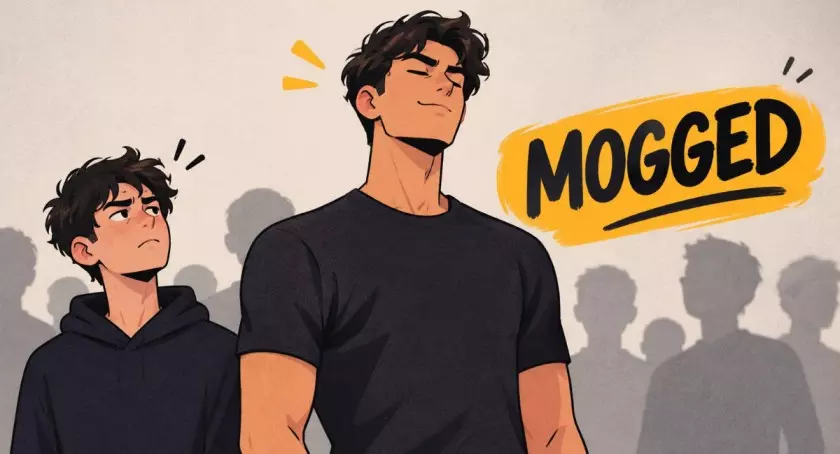
In simple terms, mogging refers to outshining, outperforming or overshadowing someone else, often making them look inferior by comparison. It could be about physical appearance, confidence, social status or even performance.
For instance, imagine standing next to someone considerably taller and more muscular than you in a photograph. You could say that the person has ‘height-mogged’ you. Similarly, if your colleague delivers a significantly better presentation than yours, you could say they ‘mogged’ you.
The term is no longer restricted to comparisons between people. A new smartphone with a far better camera could be said to have ‘mogged’ an older model. Even a colleague’s perfectly presented PowerPoint could mog the one you spent hours putting together.
Essentially, if someone or something makes you look less impressive by comparison, you’ve been mogged.
According to Collins, the word witnessed a 210 per cent increase in usage this year. Its growing popularity among Gen Z and Gen Alpha, particularly on social media, has helped it enter mainstream conversations.
Where did the word ‘mogging’ originate?
While the word may seem like a recent internet invention, its origins trace back nearly a decade.
Mogging is believed to have originated from the abbreviation AMOG, which stands for ‘Alpha Male of the Group’. The term began circulating around 2016 in bodybuilding communities, where it was used as a noun to describe the most physically dominant man in a group, particularly someone who stood out because of his height, muscular build or appearance.
It subsequently evolved into a verb and found its way into the manosphere, a network of online communities discussing masculinity, male identity and relationships.
Within these communities, mogging was primarily associated with physical attractiveness and dominance. It was also closely linked to the growing internet subculture of ‘looksmaxxing’.
Looksmaxxing refers to attempts to maximise one’s physical attractiveness through measures such as grooming, fitness and, in some cases, cosmetic procedures. Within this subculture, people frequently compare physical features such as jawlines, facial symmetry, height and muscularity.
One personality associated with bringing this terminology to a wider online audience is Braden Peters, popularly known as Clavicular.
A controversial looksmaxxing influencer and livestreamer, Clavicular became popular for his content centred on physical appearance, attractiveness and male dominance. Clips from his livestreams, in which he compares his appearance with that of other men, have circulated widely on TikTok and Instagram.
Also read: Why a section of Gen Z is choosing to swipe right on the self
Although he did not invent the term, his popularity has helped introduce its vocabulary to audiences beyond the original online communities.
Over time, the meaning of mogging has also evolved. What began as a term rooted in competitive bodybuilding and appearance-conscious online communities is now frequently used by younger generations in a humorous and ironic manner.
Collins’ previous Words of the Year
Every year, Collins Dictionary selects a Word of the Year to reflect the changing language, cultural trends and developments that have shaped society.
Here are the dictionary’s selections over the past five years:
Vibe coding (2025)
The term refers to using artificial intelligence tools and natural language prompts to generate computer code. It gained popularity as AI-powered coding tools became increasingly accessible, allowing even people with limited programming knowledge to create software.
Brat (2024)
Popularised by British singer Charli XCX’s album of the same name, ‘brat’ came to represent a confident, independent and unapologetic attitude. The term became a major cultural phenomenon, particularly on social media.
AI (2023)
Artificial intelligence was selected as the Word of the Year amid the rapid growth of generative AI tools. The widespread adoption of platforms such as ChatGPT brought artificial intelligence into everyday conversations.
Permacrisis (2022)
A combination of ‘permanent’ and ‘crisis’, the word describes an extended period of instability and insecurity. It reflected a year marked by geopolitical tensions, economic uncertainty, the continuing effects of the pandemic and the cost-of-living crisis.
NFT (2021)
Short for non-fungible token, NFT refers to a unique digital identifier associated with ownership of a digital asset. The term gained considerable attention during the cryptocurrency and digital collectibles boom.