How a simple plate of khichuri became a symbol of Bengal’s Durga Puja
Served to everyone at community pujas, bhoger khichuri embodies the egalitarian spirit of sarbojonin Durga Puja and the traditions passed down through generations

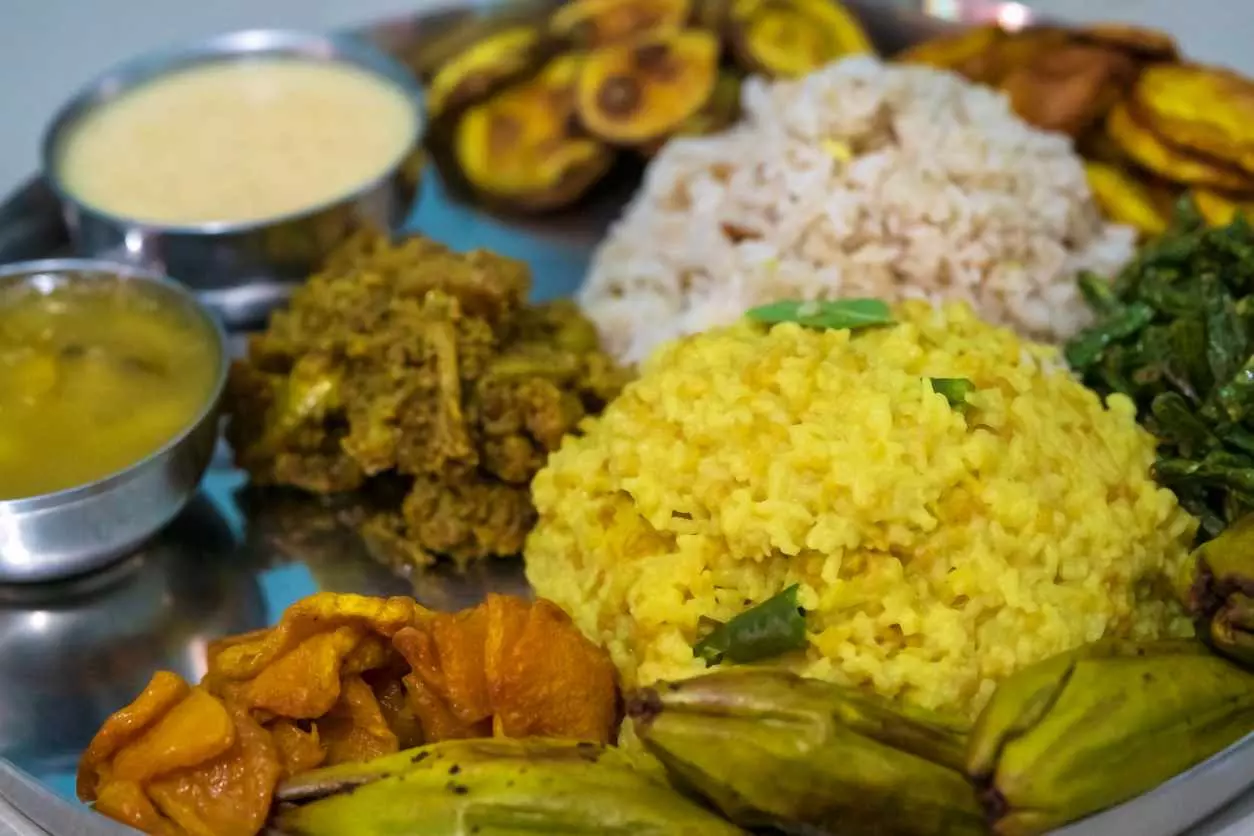
Bhoger khichuri is proof that food does not need complexity to become culturally significant.
As Durga Puja approaches, few foods carry the emotional weight of Ashtami quite like bhoger khichuri. Made with Gobindobhog rice, roasted moong dal, and seasonal vegetables, this humble dish becomes something far greater when offered to the goddess — a taste of autumn, memory, devotion, and the unmistakable warmth of Bengal.
When kash phool begins to sway in feathery white clusters, and shiuli scatters its delicate fragrance across quiet autumn mornings, Bengal knows that the goddess is on her way. Durga Puja arrives with its familiar sensory cues — the smell of incense, the rhythmic beat of the dhak, new clothes, crowded pandals, and the anticipation of reunion. Yet amid all the spectacle, there is one ritual that remains beautifully uncomplicated: sitting down to eat bhog. And on Ashtami, that means bhoger khichuri.
Also read: Why West Bengal appears to be witnessing a more unidimensional political messaging this Durga Puja
Served piping hot, often on sal leaves or plates, accompanied by labra, fried vegetables, chutney and payesh, the khichuri is perhaps one of the most democratic foods of the festival. It does not distinguish between the devotee who has been fasting since morning and the volunteer who has spent hours organising the puja; between the child impatiently waiting for a second helping and the elderly visitor who has eaten the same bhog every year for decades. Everyone waits for the same plate.
Perhaps that is precisely why bhoger khichuri has become the heart of Ashtami celebrations. It is food, certainly. But it is also ritual, memory, community and belonging—served one ladle at a time.
From humble dish to sacred offering
Khichuri is hardly an elaborate dish. Across India, variations of rice and lentils cooked together have long been associated with simplicity, nourishment and comfort. It is often considered food for difficult days: something quick to prepare, easy to digest and capable of feeding many.
But Bengal gives khichuri another identity. On Ashtami, the everyday becomes ceremonial. The rice is carefully chosen, the dal is roasted patiently, vegetables are selected with care and the cooking is undertaken within the strict parameters of sattvik food. Onion and garlic are kept out. The dish is prepared as an offering to the goddess before it becomes food for the community.
“I think we first need to understand what khichuri truly represents,” says hospitality entrepreneur Samrat Banerjee. “Interestingly, khichuri—or khichri, as it’s known across India— has many identities. In Bengal, khichuri holds a special place at the heart of celebrations.” It is this transformation—from humble staple to sacred offering—that makes the dish so fascinating.
The making of a bhoger classic
The magic begins long before the first serving is ladled into a plate. For the traditional Bengali Bhaja Muger Daal Khichuri, the moong dal is dry-roasted until it takes on a golden hue and releases its characteristic nutty aroma. Gobindobhog rice, prized for its small grains and fragrant quality, forms the other essential component. Together, rice and dal create the foundation. Then come vegetables, potatoes, cauliflower, peas, carrots and other seasonal produce, depending on the household or puja tradition.
There is generous ghee, warming spices and the slow melding of ingredients into something soft, fragrant and comforting. Unlike the austere khichdi that might be prescribed as a simple meal, bhoger khichuri is not shy about richness. The ghee gives it depth; the roasted dal brings nuttiness; the Gobindobhog rice contributes fragrance; and the vegetables lend sweetness and texture.
Also read: How women are claiming their place in both the spiritual and celebratory aspects of Durga Puja
It is simple food treated with extraordinary care. And perhaps that is the first lesson of bhog: sacredness does not necessarily come from extravagance.
Why the ingredients matter
In Bengali kitchens, ingredients have always carried meaning beyond flavour. For bhog, the emphasis is particularly strong. “The belief is that the best of ingredients are bought for making bhog and it is also cooked with utmost care and often by the best cooks,” explains food historian and researcher Tanushree Bhowmik. “While the ingredients are simple everyday ones, the quality and care go a long way in ensuring the consistency and taste of bhog.”
This attention to quality is part of what differentiates a festive khichuri from an everyday preparation.
There is also something deeply seasonal about the dish. Durga Puja arrives at the cusp of autumn, when the monsoon is receding, and the landscape is beginning to change. The vegetables, rice, and lentils used in bhog become an edible reflection of that transition.
Bhoger khichuri, in many ways, is Bengal’s ode to autumn. It brings together the bounty of the season in one pot and turns it into an offering before it becomes a communal meal.
The plate that everyone waits for
There is a particular rhythm to Ashtami. The morning begins with pushpanjali. Devotees gather before the goddess, flowers held between their palms, and repeat the sacred mantras. For many, it is also a morning of fasting. After the offering, fruits are distributed as prasad. But the real anticipation builds as afternoon approaches.
At neighbourhood sarbojonin pujas, giant cauldrons of khichuri simmer away as volunteers prepare to feed hundreds, sometimes thousands. The aroma travels through the pandal, mixing with incense and the unmistakable sounds of Puja.
Then comes the moment everyone has been waiting for.
The khichuri is served with labra or torkari, beguni or begun bhaja, tomato chutney and payesh. Sometimes there is a crispy fried accompaniment; sometimes the menu varies from one puja to another. But the khichuri remains the centre.
The meal is rarely eaten ceremoniously in silence. There is conversation, laughter, the clatter of plates and the familiar negotiation over second helpings. This is where bhog moves beyond ritual. It becomes social.
Food as the great social glue
“Barowari or community pujo in Bengal itself is steeped in a history of creating a sense of bonding and community,” says Bhowmik. “We know that there is hardly any social glue stronger than the act of sharing food.”
That observation perhaps explains why bhoger khichuri feels so different from eating the same dish at home. The food is not merely being consumed. It is being shared in a sacred space, with strangers and friends alike, under the gaze of Maa Durga.
Also read: How Kumartuli clay crisis has cast a shadow on Durga Puja tradition and economy
Banerjee describes it as a powerful moment of belonging. “We love Ma Durga and the divine every day, yet in the busyness of life, gratitude often fades. But on Ashtami, the anjali becomes a powerful epicenter of devotion,” he says. “A simple sal patta filled with khichuri, bhajas, chutneys, and labra is more than just food—it is nostalgia, love, and community served together.”
And nostalgia is perhaps the most potent ingredient of all. For Bengalis who have grown up with Durga Puja, the taste of bhog can transport them instantly—to childhood pandals, crowded neighbourhoods, new clothes, the sound of dhak, afternoons spent waiting for the food to arrive and the familiar voice of someone asking, will you have some more?
A meal without hierarchy
There is something remarkably egalitarian about the Ashtami bhog. The same khichuri is served to everyone. It is not plated individually by a chef. There is no hierarchy of ingredients, no elaborate garnish and no restaurant-style presentation. A volunteer ladles food onto a sal leaf or plate, and the meal begins.
The simplicity is precisely what makes it powerful. In a festival often associated with grandeur—elaborate pandal installations, new clothes, jewellery, food, music and social gatherings—bhoger khichuri brings everyone back to the essential idea of nourishment. It also reflects the very nature of sarbojonin Durga Puja: a celebration created for the community.
Khichuri itself is a fitting metaphor. Rice, lentils and vegetables lose their individual separateness in the cooking pot and become one harmonious dish. Similarly, the community gathered around the bhog becomes a temporary collective, united by ritual and food.
Why bhoger khichuri tastes different
Ask a Bengali why bhoger khichuri tastes better at a puja pandal and the answer may involve everything from the type of rice to the quantity of ghee.
But the real answer is more elusive. It tastes different because anticipation is part of the meal. There is the hunger from fasting. There is the smell of roasting dal. There is the sight of enormous cooking vessels. There is the excitement of seeing friends. There is the knowledge that the food has first been offered to the goddess. And then there is the memory of every bhog eaten before it. Bhowmik believes that the reverence with which bhog is prepared and consumed is fundamental to its character. “Besides, the reverence and happiness with which it is partaken makes it sacred and special,” she says.
In other words, the recipe alone cannot reproduce bhoger khichuri.
The ritual is part of the flavour. Food traditions survive because they are repeated. Every year, another generation of children waits for the khichuri. Another group of volunteers stands over enormous pots. Another grandmother insists that the dal must be roasted properly. Another family returns to the same neighbourhood puja because the bhog tastes exactly as it did when they were young.
This is how culinary memory works—not through cookbooks alone, but through repetition, participation and the emotional associations built around a dish.
Bhoger khichuri carries all of that. It is the taste of Ashtami afternoons, of autumn sunlight and crowded pandals. It is the comfort of Gobindobhog rice and roasted moong dal, the sweetness of seasonal vegetables, the richness of ghee and the sharp contrast of chutney. It is the crispness of beguni against soft khichuri, the cool sweetness of payesh at the end.
And, perhaps most importantly, it is food that is meant to be shared.
More than bhog
Durga Puja may change with time. Pandals become more ambitious, menus become more experimental, and the ways in which people celebrate continue to evolve.
But the Ashtami plate remains reassuringly familiar. Bhoger khichuri is proof that food does not need complexity to become culturally significant. Sometimes, it is precisely the simplicity that allows a dish to carry so much meaning.
It feeds the body, but it also feeds memory.
It connects the present to childhood, the individual to the community, and the everyday to the divine. In that sense, bhoger khichuri is much more than an offering to Maa Durga. It is an offering to Bengal itself—a celebration of its seasons, its kitchens, its rituals and its enduring belief that the greatest celebrations are best shared around a plate.
When the dhak begins to beat, the shiuli blooms and the goddess arrives; Bengal knows that autumn has begun. And when that first ladle of hot khichuri lands on the plate, Ashtami has truly arrived.