Who was Gopal ‘Pantha’ — ‘saviour of Hindus’ during 1946 riots, whose name is now on a Kolkata street
Owner of a goat meat shop in Kolkata (hence the nickname 'Pantha', goat meat in Bengali), Gopal Mukherjee is said to have marshalled an armed resistance group during the 'Great Kolkata Killings' of 1946. A 'saviour' for Hindus, he was branded a 'butcher' by Muslims. Kolkata Municipal Corporation renamed the city's Suhrawardy Avenue after him last month.

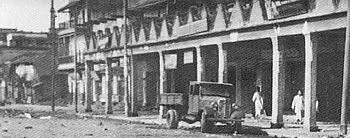
A deserted Kolkata during the 'Great Kolkata Killings' of 1946. Photo: Wikimedia Commons
This goat meat shop at the crossing of Bowbazar and College Street in north Kolkata stood out from the others on account of its significantly larger floor space, the elegantly tiled walls, the cement bench that ran along the breadth of the establishment, the effigy of the Hindu deity Kali and more significantly, the sign that read: ‘Bangalir Panthar Dokan’ (Bengalis’ goat meat shop). It was adjacent to the city’s Premchand Boral Street, where Bowbazar’s red light district begins, next to which stands a Shiva temple. Many remember the long queues that would form in front of this shop on Sundays. The shop closed about five years ago.
In common parlance, the legend on the signboard had turned into “Bangali Panthar Dokan”, meaning, shop where Bengali goats are sold. This tongue-in-cheek tweak was not completely unjustified, since the shop was once owned by Gopal “Pantha” Mukherjee, a man who had earned the status of “saviour of Hindus” during the “Great Calcutta Killings” of 1946, and after whom the Kolkata Municipal Corporation renamed the city’s erstwhile Suhrawardy Avenue last month.
After Independence, like many others of his ilk, Mukherjee, popularly known as ‘Gopal Pantha ’, is recalled to have become a political henchman, allegedly stooping to crime — thefts, bank robbery and other forms of larceny — as a means of earning a living. It is said he was close to Dr Bidhan Chandra Roy, the eminent physician and second Chief Minister of West Bengal, whose house is a landmark of Raja Subodh Mallik Square in central Kolkata. A Kolkata resident, whose grandfather was an ardent follower of the Hindu Mahasabha, remembers Mukherjee as a benign, bearded grandfatherly figure who wore his hair in a top knot.
‘Savior’ for some, ‘butcher’ to others
Insanity prevailed during the Great Calcutta Killings of 1946 and both Hindus and Muslims butchered each other in a mindless frenzy spurred by fear, panic and the instinct of self-preservation. Mukherjee is said to have marshalled a well-armed resistance group, some history sheeters included, to counter the violence unleashed on Hindus. So if he was regarded as a “saviour” by Hindus, Muslims branded him a “butcher”. Though few and far between, there are also well-documented cases of Muslim families and Muslim “goondas” or thugs acting as protectors of helpless Hindus, and vice versa. Writer Nabendu Ghosh’s book Phears Lane is one such account. The actual Phears Lane is located in what was once Kolkata’s Chinatown, contiguous to Bowbazar.
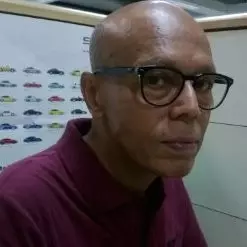
Gopal Mukherjee, popularly known as Gopal 'Pantha'. Photo: Wikimedia Commons
The years following Independence have turned Mukherjee into an urban legend, making it impossible to separate fact from fiction and exaggeration.
Gopal “Pantha” and many others of a similar felonious persuasion were spawned by the swadeshi movement that promoted physical culture and the ‘akhadas’ operated by members of the Bengali gentry like Gobar Goho and Bishtu Ghosh. These temples of physical culture attracted Bengali youths who were willing to dedicate their strength to the nation’s service. Violence was an integral part of their radical activities and allegedly only a thin line separated some freedom fighters from criminals.
A Kolkata resident in his ‘60s, speaking on condition of anonymity, recounts how his father, who had been a part of a resistance group in Belgachhia in north Kolkata, would snatch guns and bullets from snoozing Bihari havildars. Such was their bravado.
Mukherjee’s uncle was the well-known revolutionary Anukul Chandra Mukherjee, who had masterminded the 1914 Rodda & Company arms heist in the BBD Bag area of central Kolkata, says Dr Sankar Kumar Nath, a physician who researches urban history. The firearms thus acquired were said to have been used by radical freedom fighters. A memorial to four revolutionaries, including Anukul Mukherjee, stands in front of a triangular patch of green at the Raja Subodh Mallik Square end of the city’s Ganesh Chandra Avenue. It’s a stone’s throw from the house where Gopal “Pantha” once lived.
The ‘mastans’ of Kolkata
Sumanta Banerjee in The Wicked City: Crime and Punishment in Colonial Calcutta wrote how the “goondas” of Kolkata joined the ranks of the freedom fighters. “This intermingling of the underworld and public anti-colonial agitation was to acquire a political character in the second decade of the twentieth century, when the Congress-led nationalist movement entered the phase of open confrontation with the colonial rulers (e.g. in the 1921-22 non-cooperation movement),” wrote Banerjee.
Another well known “goonda” or “mastan” of the area was Bhanu Bose.
In a conversation about two decades ago, a then elderly resident of Creek Row, one of the streets that lead to Raja Subodh Mallik Square, had been all praise for Bhanu Bose and Jaga Bose, notwithstanding their reputation as desperadoes, for keeping the marauders at bay during the 1946 riots. Bhanu had been a trusted lieutenant of Mukherjee, although later they parted ways.
Like Mukherjee, Bhanu was a devotee of the Hindu deity Kali and worshipped with much showy splendour. His Kali puja was famous for the ‘jalsas’ or musical soirees organised as a part of the festivity. Both Tollywood (as the Bengali film industry is popularly known) stars and even those from Bollywood are said to have performed at them gratis. Stories abound about his physical prowess and daredevil nature.
Another of the desperados, locally known as ‘Fatakesto’, whose actual name was Krishna Chandra Dutta, was the terror of the Raja Ram Mohan Sarani (formerly Amherst Street) and College Street areas. He emerged on the crime scene in the 1970s and as a political henchman he is said to have had a hand in quelling the reign of terror unleashed by the Naxalite movement. He was famous for organising a spectacular Kali puja and glitzy ‘jalsa’ in the city’s Sitaram Ghosh Street.
Hemen Mandal, also a member of the then ‘mastan’ brigade, had gained notoriety in the Gouribari and Shyambazar areas of north Kolkata in the 1980s. He was a mafia boss who controlled cinema halls, the local black market and extortion rackets. Then one day, exasperated local residents, led by women, cornered Hemen and forced the police to arrest him.
These are some of the hoods who operated in Kolkata in the past. The renaming of Suhrawardy Avenue after Gopal ‘Pantha’ has brought them back into focus and public recall.