Why Bengalis eat a dish of 14 seasonal greens, or Choddo Shaak, on the eve of Kali Puja
For Bengalis, Diwali is also the time to celebrate Kali Puja. But the day before is equally important. Known as ‘Bhoot Chaturdashi’, it is a night of remembering departed ancestors and protecting the home from wandering spirits. Bengalis observe it by lighting fourteen lamps and eating a dish of fourteen seasonal greens.

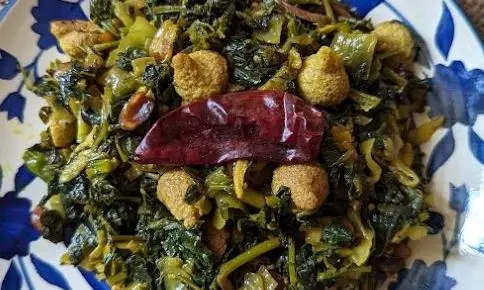
Traditionally, the greens are cooked together, often with mustard oil, green chillies and nigella seeds. Some households add radish, brinjal and fried bori, or dried lentil dumplings. The preparation is generally uncomplicated, allowing the flavours of the different leaves to come through. Photo: Ayandrali Dutta
What Halloween is to the West, Bhoot Chaturdashi is to Bengalis. Bengal observes Bhoot Chaturdashi on the eve of Kali Puja (which in turn coincides with Diwali celebrations across India). For Bengalis, Bhoot Chaturdashi is a night of remembering departed ancestors and protecting the household from wandering spirits. The tradition finds expression in fourteen flickering earthen lamps, prayers for the forefathers and a special preparation of fourteen seasonal greens, bringing together folklore, faith and food.
Bhoot Chaturdashi is observed on the fourteenth day of ‘Krishna Paksha’ (the second fortnight of the lunar month) in the Hindu month of Kartik. It precedes Amavasya, or new moon day, when Kali Puja is celebrated. According to Bengali belief and folklore, on the night of Bhoot Chaturdashi spirits of departed family members return to their ancestral homes. The customary response involves two rituals: lighting fourteen earthen lamps, known as Choddo Prodeep (choddo is Bengali for fourteen), and preparing a meal of Choddo Shaak (saag) or fourteen different greens. Cooked together, the greens are served with a side of rice. While one custom is intended to illuminate the home and guide ancestral spirits, the other is associated with protection, purification and well-being.
For generations, these traditions have been observed in Bengali homes, with recipes and rituals passed down through family kitchens. The greens may be humble, but the stories attached to them are anything but ordinary.
Fourteen greens and the memory of ancestors
The number 14 is central to the observance. Popular belief associates it with fourteen generations of ancestors who are remembered on Bhoot Chaturdashi (Chaturdashi is also the 14th day of the waxing or waning period of the moon in the Hindu lunar calendar). Lighting fourteen lamps is considered a way of showing them the path home, while eating Choddo Shaak is believed to protect the household from unwelcome spirits and negative influences.
Food writer and culinary chronicler Amit Sen explains that the occasion is traditionally associated with the belief that the divide between the living and the departed becomes less distinct on this night. The fourteen lamps and the preparation of fourteen greens are therefore seen as symbolic gestures of remembrance, welcome and protection.
The spirit element is also what makes this occasion distinctly Bengali. The state's folklore is populated by ghostly figures that have been part of bedtime stories, village anecdotes and family conversations for generations. There is the Mechho Bhoot, a spirit said to have an appetite for fish, and the Gechho Bhoot, believed to reside in trees. The Nishi is particularly intriguing, as folklore describes it as a spirit that calls out to unsuspecting people in the voice of someone they know. The Petni, the ghost of an unmarried woman, Shakchunni, the spirit of a married woman (yes, the Bengalis segregate the married and unmarried even in death) and Brahmadaitya, a Brahmin ghost, are other familiar characters in this fascinating world of Bengali ghosts.
These tales give Bhoot Chaturdashi an atmosphere that is equal parts mysterious and familiar. For children, it often means listening to ghost stories; for elders, it is an occasion to uphold customs that have been part of the family calendar for generations.
What makes the fourteen greens special?
There is no universally prescribed combination of fourteen greens for Choddo Shaak. The selection is often influenced by local produce, regional food habits and family preferences. Some households follow a traditional list closely, while others make substitutions depending on what is available in the market. The custom is as much about remembering those who came before us as it is about eating with the seasons.
A commonly used combination includes Brahmi (Indian Pennywort or Water Hysop), Helencha (Marsh Herb), Kulekhara (Marsh Barbel or Hygrophilia), Laal Shaak (Red Amaranth), Lau Shaak (Bottle Gourd leaves), Methi (Fenugreek leaves), Mulo Shaak (Radish leaves), Pui Shaak (Malabar Spinach), Palong (Spinach), Potol Shaak (Pointed Gourd leaves), Punarnava (Spreading Hogweed), Shorshe (Mustard Greens), Shaluk (Water Lily) and Shushni (Water Clover).
Leafy vegetables have traditionally been an important part of regional diets, providing dietary fibre, vitamins and minerals. Combining several varieties in one preparation also means bringing together different textures, flavours and nutritional properties. Photo: Ayandrali Dutta
For someone unfamiliar with Bengal's leafy vegetables, this combination offers an interesting introduction to the region's diverse edible greens. From the slightly bitter notes of mustard leaves to the soft texture of Malabar spinach, each ingredient contributes a distinct character to the dish.
Recipe developer and food blogger Debjani Roy points out that the preparation is also a celebration of the variety of greens that form part of Bengal's traditional food culture. The ingredients are not chosen merely to complete a numerical requirement; they reflect the relationship between local produce, seasonal availability and everyday cooking.
Traditionally, the greens are cooked together, often with mustard oil, green chillies and nigella seeds. Some households add radish, brinjal and fried bori, or dried lentil dumplings. The preparation is generally uncomplicated, allowing the flavours of the different leaves to come through. Many families also avoid onion and garlic while making this ritual dish.
The beauty of the dish lies in its flexibility. There is no elaborate plating or complicated technique involved. Its importance comes from the ingredients, the occasion and the memories associated with preparing it.
An older understanding of seasonal eating
Beyond folklore and religious observance, Choddo Shaak offers an interesting glimpse into the food wisdom of traditional Bengali households. The ritual takes place around the transition from autumn to winter, when seasonal changes influence what grows and what finds its way into the kitchen.
Leafy vegetables have traditionally been an important part of regional diets, providing dietary fibre, vitamins and minerals. Combining several varieties in one preparation also means bringing together different textures, flavours and nutritional properties.
Roy observes that many of these greens are traditionally valued for their health-supporting qualities, including their association with anti-inflammatory, immunity-building and cleansing properties. Their inclusion in seasonal cooking reflects the way earlier generations relied on locally available ingredients to shape everyday meals. They also provide the body with essential vitamins, minerals, iron and antioxidants. Their fibre content supports digestion. Together, they make Choddo Shaak a wholesome seasonal preparation, particularly after the rich festive meals of Durga Puja (and ahead of the heavy-duty mutton dishes often associated with Kali Puja.
Choddo Shaak fits into this larger culinary philosophy. Rather than being a dish created for indulgence, it is a ritual preparation that places seasonal greens at the centre of a significant festive occasion.
A tradition that continues beyond generations
For many Bengali families, the preparation of Choddo Shaak is an annual reminder of home and the people who shaped their food memories. The ritual of visiting the local market to source fourteen different greens, sorting them at home and cooking them together often becomes a shared family activity.
MasterChef Oindrila Bala, in one of her social media videos, draws an interesting parallel between Bhoot Chaturdashi and Halloween. Both occasions have an association with spirits and the supernatural, although their cultural and religious contexts are quite different. She highlights the significance of lighting fourteen lamps and preparing Choddo Shaak as ways of remembering ancestors and seeking protection during the festive period.
The ritual has also survived changing lifestyles and food habits. While younger generations may not always know the names of all fourteen greens, the preparation continues to find a place in many Bengali kitchens, sometimes through ingredients sourced from neighbourhood vegetable markets and sometimes through recipes carefully preserved by older family members.
There is something particularly meaningful about a tradition that makes seasonal greens the centrepiece of an occasion associated with remembrance. Choddo Shaak is not simply about eating fourteen greens because custom demands it. It is about preserving a relationship with the land, the seasons and the generations that came before us.
As Bengal prepares to welcome Maa Kali, the fourteen lamps illuminate homes while the familiar aroma of mustard oil and freshly cooked greens fills the kitchen. In that simple meal lies a story of faith, folklore and food — one that continues to bring generations together, one Bhoot Chaturdashi at a time.
This connection between food and the seasons is particularly interesting in Bengal, where the culinary calendar has long been influenced by agricultural cycles, weather patterns and the availability of fresh produce. From notun gur (freshly collected palm sap) in winter to ilish (Hilsa) during the monsoon, food traditions often carry a strong sense of time and place.