How a Musafirkhana for Hajj pilgrims came to be associated with Mumbai’s infamous D-Company
The Haji Ismail Haji Habib Musafirkhana is remembered by many as the nerve centre of Dawood Ibrahim's criminal empire. As the building faces demolition — the Bombay HC has put a temporary stay on the work — a crime reporter who entered its heavily guarded compound in the 1990s recalls the building that shaped Mumbai's underworld.

In 1986, then deputy commissioner of police D Soman raided the Haji Ismail Haji Habib Musafirkhana, said to be Dawood Ibrahim's South Mumbai stronghold, hoping to capture the elusive gangster. He reportedly missed him by minutes.
Inside, an air conditioner was still running, a half-smoked cigarette lay in an ashtray, and a sofa cushion bore the impression of someone who appeared to have just risen. Dawood had escaped before the police could close in.
I reconstructed this dramatic episode in my book Dongri to Dubai and it subsequently found its way into screen portrayals of Mumbai's underworld. The scene epitomised Dawood's uncanny ability to evade the law. But the building he left behind had a history as extraordinary as the man himself.
For decades, the Musafirkhana was more than a residential address. It was a fortress, a command centre and a repository of illicit wealth. Behind its formidable iron gate, the foundations of D-Company were laid.
Now, with its demolition — the Bombay HC put a stay on the work earlier this month as it hears a petition claiming the building to be a waqf property — much of (reportedly about 60 per cent) one of Mumbai's most notorious underworld landmarks has disappeared.
A fortress hidden in plain sight
I began my career as a crime reporter in Mumbai in 1994, when the city was still reeling from the 1993 serial bomb blasts. Gangland shootings, police crackdowns and retaliatory killings had become part of its troubled landscape.
Reporting on the underworld meant spending long hours in the congested lanes of Dongri, Nagpada, Pydhonie and Masjid Bunder. Information travelled through whispers at tea stalls, conversations with shopkeepers and the guarded confidences of neighbourhood residents. Outsiders were quickly noticed, and indiscreet questions could invite trouble.
Also read: Why Indian audiences have always had a liking for Pakistani dramas
The streets were unmistakably Bombay (the city was renamed Mumbai in 1995). Wholesale spices mingled with diesel fumes and the aroma of frying bhajiyas. Premier Padmini taxis edged past handcarts, while clotheslines stretched between ageing balconies. Paan shops and Irani cafés doubled as informal intelligence networks.
Amid this crowded urban maze stood Musafirkhana, a two-storeyed building near Crawford Market that had acquired an almost mythical reputation.
In the mid-1990s, I was among the few journalists who managed to enter its heavily guarded compound. Access came only after months of groundwork, repeated visits and the intervention of local elders willing to vouch for me.
What I encountered was a world apart from the bustling streets outside.
From pilgrims' rest house to criminal headquarters
Musafirkhana's origins were far removed from the criminal empire it eventually came to be associated with.
Built during the colonial era, it originally served as a transit rest house for Hajj pilgrims arriving in Bombay from across the Indian subcontinent. Before air travel became commonplace, pilgrims stayed there while awaiting ships bound for Jeddah (Mecca, Saudi Arabia).
Its corridors once echoed with prayers and farewells. Decades later, those same walls would come to be linked with smuggling, violence and gangland intrigue.
The transformation began when families displaced from structurally unsafe chawls in neighbouring Temkar Mohalla were relocated to Musafirkhana.
Among them was Ibrahim Kaskar, a head constable attached to the Mumbai Police's Crime Branch, who moved in with his wife Amina and their children, including a young Dawood Ibrahim.
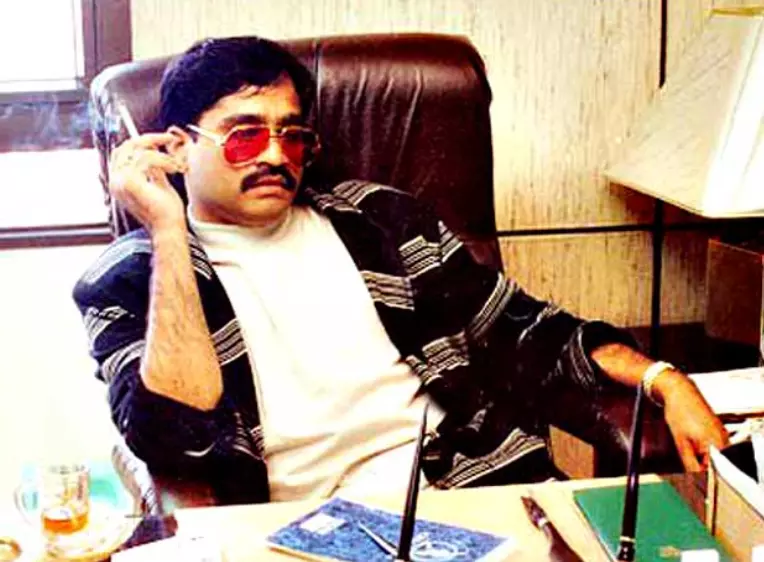
Dawood became a most wanted terrorist after the Mumbai blasts of the '90s. Photo: PTI file photo
Within years, the Kaskar brothers are said to have transformed their allotted accommodation into the headquarters of an expanding criminal network.
During the late 1970s and 1980s, gold smuggling from Dubai became a major source of underworld wealth. Consignments landed along the coastline before entering Mumbai's bullion markets.
Musafirkhana purportedly became an important hub in this trade. Accounts from the period claim smuggled gold was concealed in cavities within its thick walls and stored in guarded ground-floor godowns before reaching traders in Zaveri Bazaar.
The former pilgrims' rest house had reportedly become a place where money, muscle and criminal authority converged.
The iron gate that guarded an empire
When I entered Musafirkhana in 1994, its most imposing feature was its enormous iron gate.
Heavy and reinforced, it resembled the entrance to a fortress rather than a residential building. It marked an invisible boundary between the crowded streets outside and an enclave where the Kaskar family's authority remained palpable.
Security had tightened dramatically after the murder of Dawood's elder brother, Sabir Kaskar, at a petrol pump in Prabhadevi on February 12, 1981. The killing, attributed to the rival Pathan gang led by Amirzada and Alamzeb, intensified one of Mumbai's bloodiest underworld rivalries.
Thirteen years later, the atmosphere of vigilance remained unmistakable.
Young men lingered near parked scooters and cigarette stalls along the approach road, discreetly scrutinising pedestrians and vehicles. Visitors needed a legitimate reason to approach the gate. Nobody simply wandered inside.
Beyond the entrance, the noise of the streets faded into dim corridors, heavy wooden doors and an enclosed courtyard. Ceiling fans turned lazily in the humid air. Men seated on plastic chairs and wooden benches watched visitors with quiet concentration.
Tea was served with customary Bombay hospitality, but beneath the domestic calm lay an unmistakable discipline.
There were no ostentatious displays of weapons or theatrical threats. The watchful silence conveyed enough.
The night Khalid Pahelwan saved the Kaskars
Musafirkhana was also the setting for one of the most consequential confrontations in Mumbai's gangland history.
On the night Sabir Kaskar was murdered, the rival Pathan gang allegedly planned a second, more devastating strike: an assault on Musafirkhana intended to eliminate Dawood and his surviving brothers.
As I documented in my book Dawood's Mentor, the attackers are believed to have hoped to exploit the confusion following Sabir's killing and destroy the Kaskar syndicate before it could regroup.
Standing in their way was Khalid Pahelwan.
A formidable wrestler and influential figure in South Mumbai's akhadas, Khalid is said to have mentored Dawood and his brothers during their formative years. His reputation rested on physical strength, street authority and an ability to command loyalty.
According to available accounts, Khalid organised Musafirkhana's defence that fateful night, positioning lookouts and using the compound's restricted entrances to counter the advancing Pathans.
The attackers encountered fierce resistance. Khalid and his men held their ground, preventing the compound from being overrun and buying the Kaskar brothers crucial time to recover from Sabir's murder, regroup and eventually retaliate.
Had the assault succeeded, Mumbai's underworld history might have unfolded very differently.
During my visits in the 1990s, the building's architecture helped me understand how the defenders could have resisted a larger force. Its thick masonry walls, narrow approaches, heavy doors and enclosed courtyard offered substantial defensive advantages.
What began as a sanctuary for pilgrims had become a fortress built for survival.
An empire outgrows its headquarters
By the time I entered Musafirkhana, the criminal empire linked to it had already expanded far beyond South Mumbai.
Dawood's network had moved into international operations. Dubai had become an important base, while Karachi later figured prominently in accounts of his whereabouts following the 1993 serial blasts.
The business of organised crime had also changed. Gold smuggling was no longer its sole financial engine. Hawala networks, overseas financial arrangements and real estate interests had transformed the scale and structure of the enterprise.
Also read: ‘Mogging’ to ‘Human’ — the what, why & how of dictionaries’ ‘Words of the Year’
The Kaskar family had been scattered by violence, arrests, deportations and imprisonment. Yet Musafirkhana remained standing.
Its operational importance, as per accounts, diminished, but its symbolic power endured.
The walls weathered, the plaster peeled and the building gradually decayed. Still, it remained a reminder of an era when Mumbai's gangsters exercised power from identifiable neighbourhoods, family compounds and heavily guarded buildings.
Musafirkhana was the address where Dawood Ibrahim's rise had acquired a physical form.
The end of an underworld landmark
The demolition of Musafirkhana might appear to be another episode in South Mumbai's continuing redevelopment, the removal of an ageing structure that had outlived its usefulness.
But few buildings have witnessed such a remarkable transformation.
Musafirkhana began as a shelter for pilgrims embarking on a sacred journey. It later housed families displaced from unsafe tenements, including that of a police head constable whose son would become one of India's most wanted fugitives.
It purportedly served as a gold-smuggling hub, survived violent gang rivalries and became the headquarters of a criminal network whose influence eventually extended across international borders.
For me, its most enduring image remains that enormous iron gate.
The building's real significance lay not merely in its walls or its armed defenders, but in the authority those walls represented: an underworld capable of challenging the state's presence in its own city.
Today, the gate is gone. The corridors that once sheltered pilgrims and later came to be associated with smugglers have vanished. So has the courtyard where Khalid Pahelwan is said to have defended the Kaskar family against a rival gang.
Yet Musafirkhana survives in police records, court proceedings, neighbourhood memories and the accounts of those who witnessed Mumbai's underworld at its most violent.
I remember walking through its iron gate, entering that guarded compound and seeing firsthand the place where D-Company's early history had taken shape.
The fortress is gone. Its history remains.