



Babban Khan obit: Creator of Adrak Ke Panje, custodian of Dakhani wit and humour
The creator of Urdu-Dakhani one-man play, Adrak Ke Panje, which entered the Guinness Book of World Records in 1984, turned everyday struggle of Hyderabadi life into enduring satire

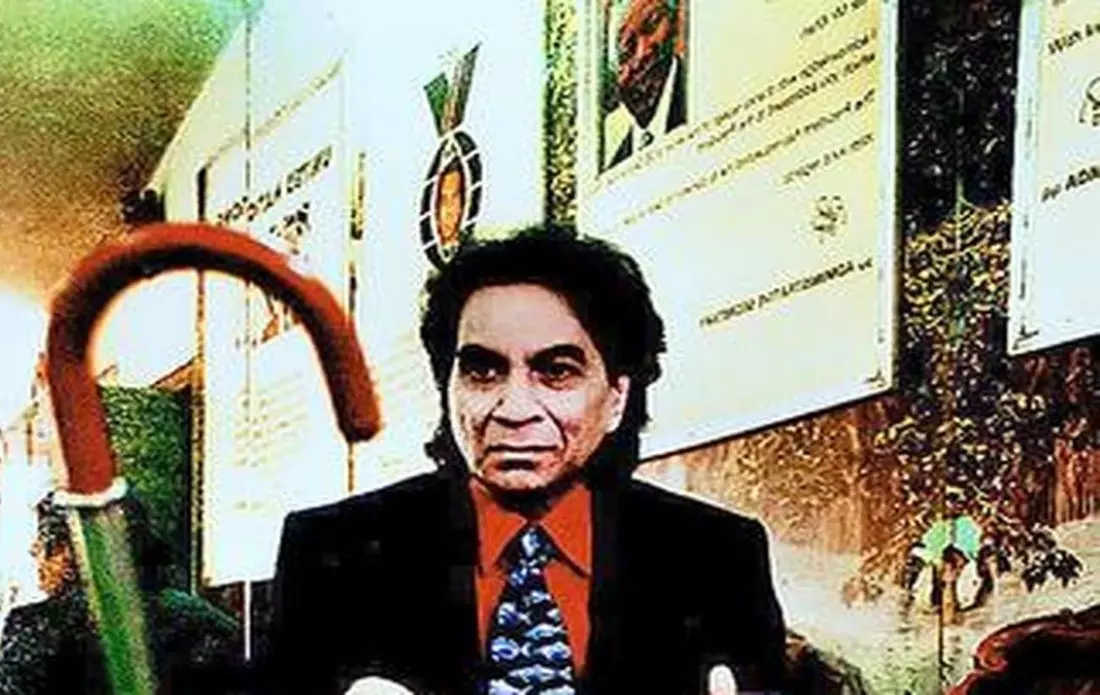
Hyderabad’s theatre legend Babban Khan, creator of one of the longest-running one man shows, Adrak Ke Panje (Offshoots of Ginger), has passed away at the age of 83. He grew up in the narrow lanes of Aghapura, a densely populated residential neighbourhood tucked away between Nampally and Mehdipatnam and named after Sufi saint Agha Muhammad Dawood Abul Ulai, in the 1940s and early 1950s. His family lived in House No. 24 at Charkhandil. His father, Ghouse Khan, was a poorly paid clerk in the fire service department, and the household was mired in poverty: seven of Babban’s siblings had already died young from malnutrition and lack of medical care.
The family had no electricity, and his parents were so worried he might not survive that they didn’t officially name him until he was 10 (they just called him “Babban”). The hardscrabble days he witnessed as a child inspired the everyday struggles he portrayed so sharply in his historical Urdu and Dakhani drama, Adrak Ke Panje. He was the last custodian of a distinctly Deccani wit that had conquered 60 countries, 27 languages, and an estimated three crore hearts.
The Dakhani cadence
In August 1965, when he wrote the play under a streetlight on Independence Day in a feverish three hours, he was a 22-year-old penniless young man. A graduate, he would wander the galis trading lateefas (jokes) for a cup of chai at roadside stalls. He moonlighted on All India Radio’s short plays before his breakthrough play, whose title itself was a savage pun: “ginger’s offshoots,” mocking the unchecked sprouting of children in a family that could barely feed itself.
He pawned his mother Sughraunissa Begum’s gold pendant for Rs 275: Rs 200 for the Ravindra Bharati hall, and the rest for tickets and ration. The first show on September 22, 1965, was a financial disaster. Undeterred, he borrowed Rs 500 and tried again. What followed is history: a one-man, two-and-a-half-hour monologue that ran for 10,180 performances until February 11, 2001. It entered the Guinness Book of World Records in 1984 after 5,169 shows, and outlasted Agatha Christie’s The Mousetrap and Michael Bennett’s A Chorus Line, based on the book by James Kirkwood Jr. and Nicholas Dante.
Also read: Asha Bhosle obit: The unstoppable voice of Hindi playback singing that refused to be typecast
On stage, Khan became Ramtoo (or Rumsu), the harried middle-class clerk forever dodging creditors: the milkman Gowli, the Nawab landlord demanding rent and peddling dubious Unani tonics, and the schoolmaster lamenting little Chunnu’s artistic incompetence. The dialogue crackled with pure Dakhani, the rolling, earthy Hyderabadi Urdu cadence that elites once dismissed as “bazaar speech.” Khan used it to the hilt. His one-liners always landed: when his wife protested using cold cream at her age, he deadpanned that only old shoes need polishing.
Tragedy and hope sat shoulder to shoulder in his production; the final curtain always carried the family-planning slogan “chota parivar, sukhi parivar.” Khan held up a cracked mirror to 1960s Hyderabad and let the audience laugh at its own reflection. He was known for his simplicity. His sherwani costume, stitched by a tailor in exchange for two free tickets, lasted the entire 35-year run. Similarly, his props were minimal: a broken chair, oil tins, and an empty birdcage.
‘A funny way of being serious’
British actor Rex Harrison once said that Western theatre had been glorifying drama while Khan was living it. The play travelled from dusty mofussil towns to New York theatres. Margaret Thatcher, Nelson Mandela, Queen Elizabeth II, Indira Gandhi, and Francis Ford Coppola all praised its power. Autograph books in Washington placed Khan’s signature beside those of Michael Jackson and Frank Sinatra. But he never upgraded the props or changed his accent. Authenticity was the only luxury Khan allowed himself.
Also read: Why all Indians, irrespective of caste, owe BR Ambedkar something
Adrak Ke Panje made Dakhani a part of the global theatrical language, proving that a dialect with roots in the Deccan’s syncretic culture could carry universal truths about poverty, debt, domestic friction, and resilience. Off-stage, Khan remained the same Aghapura boy. He lived quietly in Shantinagar, later Masab Tank, in a house eventually named after the play itself. Wife Shaila and daughters Nazneen and Zareen occasionally joined the cast; comedy, he liked to say, was “a funny way of being serious.”
After 2001, he founded the Babban Khan Acting Academy at Shaila Villa, admitting only eight students a year. He toyed with a sequel, Gumbad-ke-Kabutar, a satire on corruption, but the world had already moved on, the attention spans had got shorter and there were distractions of cinema. Two cult Hyderabadi comedy films — Angrez (2006) and Hyderabad Nawabs (2007) — owed their street humour and Old City dialect to the “Babban Khani style.” But Khan himself never chased fame of the silver screen.
In his play, Khan showed the rent collector’s cruelty, the schoolmaster’s condescension and the wife’s justifiable exasperation without villainising anyone. When Urdu theatre tended to gravitate toward melancholy or progressive sermonising, Khan chose the middle path: the absurdities of the clerk’s kitchen-table. He proved that the most political act in theatre can be making the powerless recognise themselves and still chuckle.