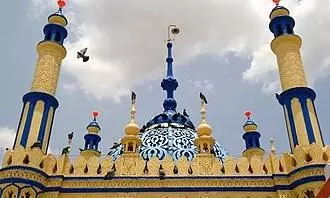
Kadapa Amin Peer Dargah: 300-year-old Sufi shrine where boundaries dissolve
From film stars to pilgrims to religious locals, thousands gather at the historic Sufi shrine for its annual Urs, in a shared search for peace

The Ameen Peer Dargah in Kadapa — known across the region as the Pedda Dargah (the ‘Big Dargah’) — offers a rare kind of peace to everyone who walks through its gates. Here, no one asks about your caste or religion.
Often called the ‘Ajmer of South India’, it is among the most revered Sufi centres in the south. Its Urs celebrations began on October 24, and the crowds that gathered are a reminder of why the dargah matters.
The faithful come from every background, and so do the famous. Among its famous visitors from Bollywood are the Bachchans — Amitabh, Jaya, Abhishek and Aishwarya Rai. Chiranjeevi, Ali, Ram Charan, Rajinikanth and AR Rahman are known to have visited the shrine, too.
Why does a dargah in Kadapa, a tier 2 city in Andhra Pradesh, draw such famous people, and why do they bow their heads here?
The Sufi way
The story begins in 1683, when Hazrat Khwaja Syed Shah Peerullah Hussaini, a descendant of Prophet Muhammad, travelled to Kadapa from Bidar in Karnataka. He settled in the region and began preaching the Sufi way of love and peace. Soon, he won the affection of the people around him, goes the lore.
His influence reached even the ruling class. The Nawab of Siddhavatam, Nek Nam Khan, was so moved by the saint’s teachings that he renamed the region Nek Nam Abad. Over the centuries, the name softened into the Kadapa we know today.
Peerullah Hussaini died here in 1716, and the dargah was built in his memory. His spiritual lineage has continued unbroken. Tradition holds that his successor, Hazrat Sufi Sarmastani, the third head of the seat, performed severe penance and displayed many spiritual miracles.
Here, harmony is part of daily practice. Hindus, Muslims and Christians all come to offer a chadar, and the heads of the dargah and their disciples wear saffron robes and caps. It is a visible sign of the unity that the shrine stands for.
Amin Peer Dargah in Kadapa, Andhra Pradesh
Urs rituals
The dargah today is led by its 11th Sajjada Nashin, Hazrat Khwaja Syed Shah Arifullah Hussaini Al Jeelani Saheb, under whose supervision the Urs is held each year. This year’s Urs ran from October 24 to 29, with special rituals every day.
Sandal Sharif: A procession carrying sandalwood paste leaves the residence of the dargah’s head and makes its way to the shrine. After special prayers, the paste is offered on the tombs.
Chadar offerings: Devotees bring colourful floral chadars and silk cloths, laying their wishes before the saint.
Qawwali nights: Renowned singers from across the country perform Sufi qawwali until midnight.
The final day: The Urs closes with a wide distribution of sandalwood prasadam and a langar, a free community meal open to all.
Visitors begin with wudu, washing their hands and feet before they enter. They then carry a plate of flowers, cardamom, sugar and lemons, along with a silk chadar, into the dargah premises.
There, the head of the dargah or one of the mujawars (caretakers) drapes the chadar over the tomb and leads a special dua, or prayer. Devotees then receive prasadam and sandalwood paste, which they touch to their foreheads.
Famous devotees
AR Rahman is among the shrine’s most devoted admirers. He is said to come often, particularly when he begins work on a new film score or receives an award. Rajinikanth has accompanied him on several visits and joined in the special prayers. Others have followed, including Sai Srinivas and a long list of well-known singers.
For most pilgrims, the draw is a feeling rather than a famous name. As one line associated with the dargah puts it, “what a person needs most is peace, and peace of mind above all.” At the Kadapa Pedda Dargah, where the boundaries of caste and religion fall away, that is what the Urs offers every year.
This article was originally published in The Federal Andhra Pradesh.