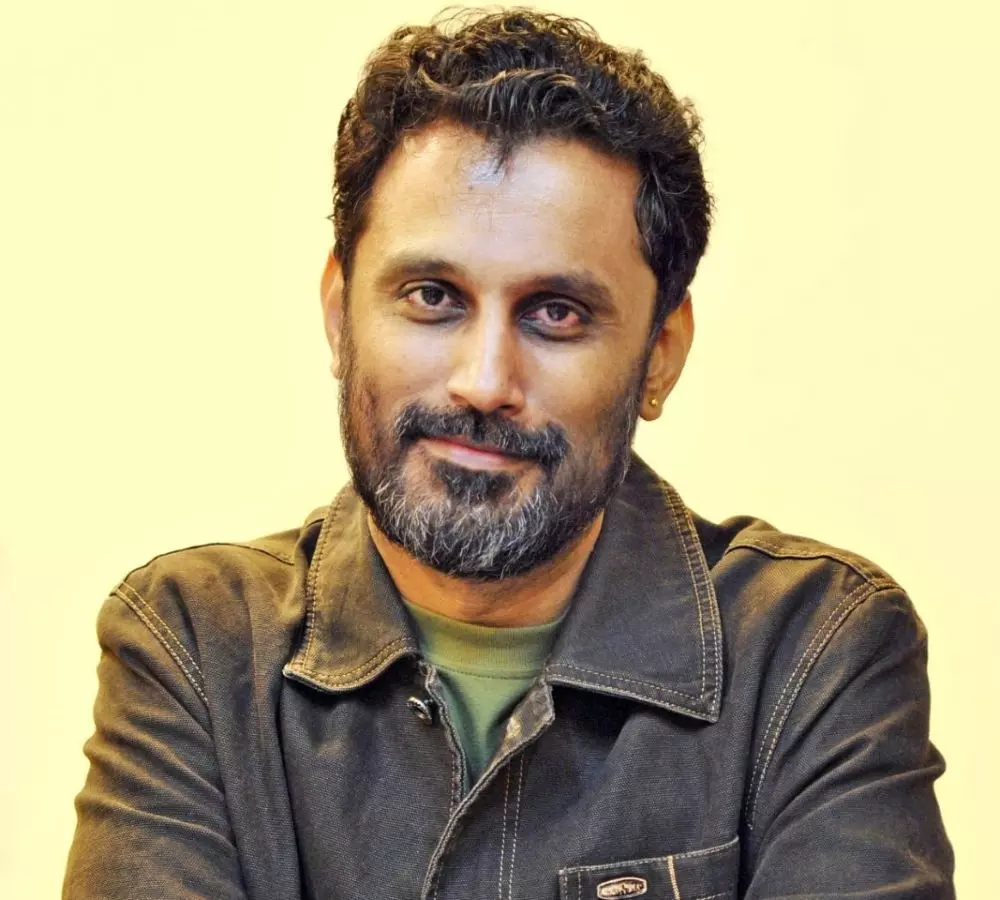
Why this former CEO & author feels people shouldn’t allow AI to make them ‘feel ordinary’
Former HCL Technologies CEO Vineet Nayar, whose new book Humans First, Machines Second insists the real AI threat is not machines replacing humans, but humans losing faith in what makes them unique, explains what the future of workforce optimisation should look like.

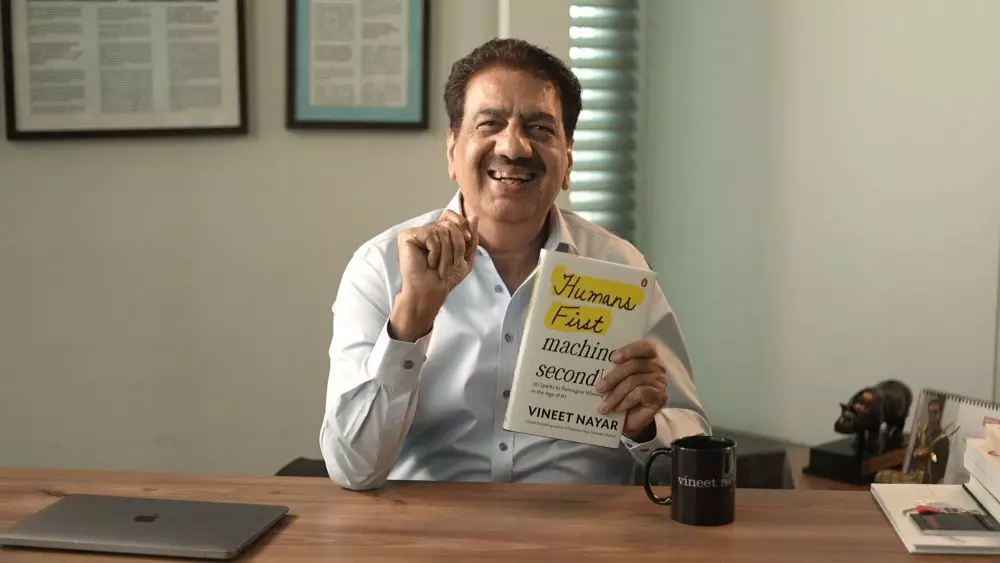
Vineet Nayar, whose new book Humans First, Machines Second argues for a people-first approach to AI, believes the technology should make humans more capable rather than make companies more efficient at eliminating them.
The AI revolution is increasingly being sold as an efficiency story. Billion-dollar companies with tiny workforces. Software doing the work of entire teams. Employees becoming more productive, or simply becoming fewer.
Vineet Nayar thinks that is the wrong way to frame the future.
The former HCL Technologies CEO, whose new book Humans First, Machines Second (published by Penguin Business) argues for a people-first approach to AI, believes the technology should make humans more capable rather than make companies more efficient at eliminating them.
“Every competitor will eventually have access to similar technology,” Nayar says. “Doing the same thing with fewer people may make you more efficient, but it doesn't necessarily make you different.”
For him, the more interesting question is what employees can imagine and build once AI takes away some of the routine work that fills their days.
“The ambition of AI should not be how few humans we need. It should be how much more humans can achieve.”
That distinction matters because companies are already beginning to measure the success of AI through familiar corporate metrics: productivity, costs and headcount.
Nayar is sceptical of that approach.
“Some jobs will disappear. We should be honest about that. Every major technology revolution has eliminated tasks and jobs,” he says. But he questions organisations that make job cuts their first measure of AI success. “That is not transformation. That is an old cost-reduction programme wearing new clothes.”
His alternative is simple. If AI can do half of somebody’s work, companies can eliminate half the people. Or they can use the freed-up capacity differently.
“If AI can do 50 per cent of someone’s work, you can remove half the people. Or you can ask what those people, with 50 per cent of their capacity freed and extraordinarily powerful technology in their hands, could now create.”
The first approach, he says, produces a productivity story. The second could produce something much more valuable: “your future”.
What 2008 taught him
The real test of Nayar’s leadership came when a global financial crisis hit in 2008. Faced with the familiar pressure to cut costs and protect profits, he challenged a deeply ingrained corporate instinct: treating employees as the first expense to be sacrificed when times get tough.
Instead, he backed an initiative called “No Employee Left Behind”; rather than respond to uncertainty with fear, the organisation would give its people a reason to pull together. If employees felt that the company stood by them in difficult times, they would be more willing to take responsibility for its survival.
Also read: How a bouquet of recent & upcoming publications is drawing attention to Bengal’s terracotta temples
The response, Nayar recalls, proved the point. Employees stepped forward to identify savings, protect customer relationships and generate ideas that no management directive could have produced on its own. The people who might otherwise have been seen as costs to be cut became active participants in solving the crisis.
“When you treat people as a cost in bad times, don't expect them to behave like owners in good times,” he says.
For Nayar, this was more than a lesson in crisis management. It reinforced a conviction that had shaped his leadership for years: organisations cannot ask employees to think and act like owners while keeping them at a distance from the decisions that matter. His approach sought to reverse that equation, making leadership more accountable to employees, increasing transparency and pushing decision-making closer to the people who understood customers best.
It also shaped how he viewed success. Nayar is reluctant to cast business transformation as the achievement of a single leader, preferring to credit the people whose ideas, commitment and daily decisions made growth possible.
“The credit for that growth belongs to the people who made it happen, not to me,” he says.
The deeper lesson is one that extends well beyond a financial downturn. Companies often search for transformation in new strategies, structures and leadership mandates, while overlooking the potential already within their own walls. Nayar believes the starting point is to create an environment in which people feel trusted enough to challenge convention, take responsibility and act.
“Your people and your culture hold the key to transformation. Create the right environment, trust your people and they will give you more than you ever thought possible.”
The danger is inside our heads
That belief leads to what may be Nayar’s most provocative argument about AI. The biggest danger, he suggests, may not be technological at all. According to him, it may be psychological.
He worries about what happens when young people enter adulthood surrounded by messages that machines can write better, code faster, analyse more data and increasingly perform tasks that once required years of human expertise.
Imagine being 20 today, he says, and constantly hearing that AI can outperform you.
“I meet young people already asking, ‘What should I study if AI is going to do everything?’ That question worries me.”
His concern is less about whether AI really will do everything than about what such a belief does to ambition. “Because what we believe about ourselves determines what we attempt.”
A young person who enters the workforce believing that machines are inherently smarter and more capable may become less willing to take risks, experiment or attempt something that has no obvious precedent.
For Nayar, that is where the AI debate needs to move beyond jobs. “The greatest danger is not that machines start believing they are humans. It is that humans start believing they are merely inferior machines.”
Don’t compete with AI at being AI
So what should young people do?
Nayar’s answer is blunt: stop trying to beat machines at what machines are good at.
“Don’t compete with a machine at being a machine. You will lose. Let it win.” Instead, he suggests using AI to create time and space for distinctly human forms of thinking.
Nayar points to examples that have little to do with artificial intelligence. “A high jumper deciding to go over the bar backwards. Mahendra Singh Dhoni developing the helicopter shot. Mahatma Gandhi imagining resistance to an empire without matching its violence. Steve Jobs asking how technology could feel different in a human hand.”
He underlines how “these were not better answers to old questions. They were whole new questions.”
That distinction, for him, is central to the future of work. He admits AI can process enormous amounts of information and can recognise patterns, produce drafts and perform increasingly sophisticated tasks. “But human progress has often come from someone questioning the premise itself.”
The challenge is therefore not to preserve every task humans currently perform. “It is to use AI to create the conditions for humans to do more of the things that demand curiosity, judgement, imagination and courage.”
Explode the 30%
That brings Nayar to another familiar question in the AI debate. “If AI can perform 70 per cent of someone’s job faster and more cheaply, what happens to the remaining 30 per cent that requires human judgement, curiosity or empathy?”
He challenges the premise that the human contribution should simply remain a fixed 30 per cent. “Why assume it should remain 30%?” he asks and goes on to answer that in a deliberately provocative manner. “For decades, we filled talented people’s days with routine work and then complained that they were not innovative. Now AI can take much of that work away. Wonderful.”
The opportunity, therefore, he points out, is to expand the human part of the job rather than merely protect it. “Don't protect the remaining 30 per cent. Explode it.”
That could mean giving employees more time with customers, allowing them to experiment, encouraging them to challenge assumptions and putting them in situations where there is no predetermined answer.
Nayar’s argument ultimately comes down to a deceptively simple test.
If AI allows companies to do the same work with fewer people, they may have become more efficient. If it allows ordinary people to attempt things they could never have attempted before, they may have discovered what the technology is really for. And if the technology makes humans feel smaller, less capable and increasingly ordinary, Nayar believes we will have missed the point.
“If AI makes humans feel ordinary, we have failed.”