



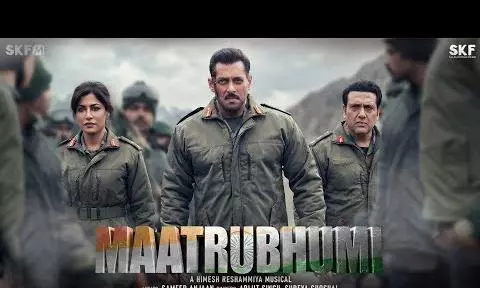
Salman Khan's Battle of Galwan renamed Maatrubhumi amid thaw in India-China ties
The move to rename the film and add the subtitle "May War Rest in Peace" suggests a shift toward a more philosophical narrative amidst easing India-China tensions

Salman Khan upcoming film titled Battle of Galwan has had a name change. Directed by Apoorva Lakhia, this war drama has changed the name of the movie to Maatrubhumi: May war rest in peace.
According to reports, this change in title comes amid thaw in India-China relations.
Alongside the title drop, Salman Khan Films unveiled a striking new poster centered on the film’s poignant tagline: “May war rest in peace". The poster shows Salman Khan peering from behind a blood-stained wooden log wrapped in a spiked chain.
Real-life hero portrayal
In the film, Salman Khan steps into the boots of Colonel Santosh Babu, the real-life hero and Commanding Officer of the 16 Bihar Regiment. The narrative follows his courageous leadership during the 2020 standoff, where he led Indian troops with steely resolve while strictly enforcing a critical disengagement agreement at the border.
Also read: Salman Khan celebrates 60th birthday with family and friends
While the film draws its inspiration from the 2020 Galwan Valley clashes between Indian and Chinese forces, the creators are steering clear of a standard historical retelling. Instead, Maatrubhumi: May War Rest in Peace seeks to broaden the lens, exploring the emotional and philosophical toll of combat.
Release date?
According to production insiders, the new title underscores a narrative priority of advocating for the sanctity of peace. Though currently slated for an April 17 release, industry buzz suggests a strategic shift to mid-August, likely to capitalise on the Independence Day holiday.
While the makers have not officially confirmed the change, such a move could set up a major box-office clash with Lahore 1947, starring Sunny Deol, which is slated to release on August 13, 2026, around the Independence Day weekend.
Diplomatic friction
Even before its theatrical debut, the project had sparked diplomatic friction.
On the Chinese social media platform Weibo, the film's teaser triggered a wave of condemnation, with users accusing the production of misrepresenting the 2020 Galwan Valley clash. Many posts disputed the film’s depiction of the battlefield and reiterated territorial claims over the region.
Beyond social media, Chinese state media outlets joined the fray, labeling the film a vehicle for Indian nationalism and accusing the makers of distorting historical facts. However, Indian government sources have remained unfazed, dismissing the criticism as a predictable response to a sensitive narrative.