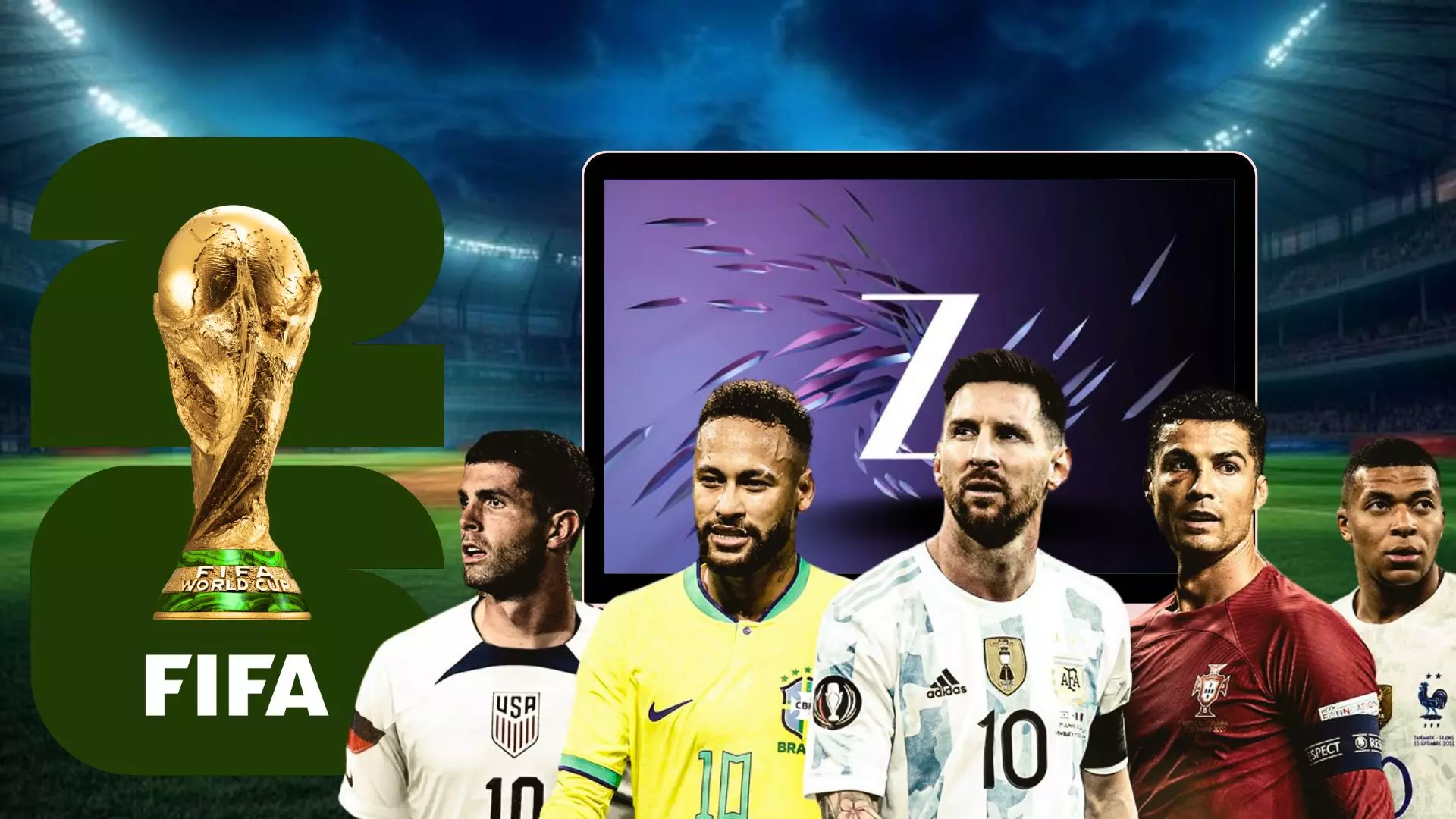
Zee sports bets: From ICL failure to 10-year FIFA rights pivot
Two decades apart, Zee moved from building its own cricket league to licensing FIFA tournaments. The shift reveals a major change in sports business strategy—ownership vs rights. Will this new play finally deliver success in India’s cricket-dominated market?

Zee has taken two very different bets on sports over the last two decades—first by building its own cricket league and later by acquiring global football broadcasting rights. The shift from the Indian Cricket League (ICL) to FIFA tournaments shows a fundamental change in strategy, from owning a sports ecosystem to licensing global content.
ICL gamble
In 2007, the Essel Group launched the Indian Cricket League (ICL) with an investment of around Rs 100 crore. This was not just a broadcast deal as Zee aimed to build an entire sporting ecosystem with teams, academies, player contracts, and infrastructure.
Also read: FIFA World Cup 2026 to be telecast live in India, streamed on Zee5 app
The telecasting giant Zee was building an entire sports product. The company absorbed full financial and operational risk in creating the league from scratch.
But the league faced a critical setback when the Board of Control for Cricket in India (BCCI) refused to recognise it.
IPL impact
The launch of the Indian Premier League (IPL) in 2008, backed by the BCCI, changed the entire landscape. The IPL was fully legitimised and quickly became the dominant cricket league in India.
The BCCI even offered ICL players amnesty to return. This move gutted Zee’s roster. Within two years, the ICL folded.
When you own the product, but the governing body is your opponent, you have nothing.
Following the failure of the ICL, Zee exited the sports telecasting segment entirely.
For years after that, Zee remained absent from major sports ownership or broadcasting plays, marking a complete pause in its earlier ambition to build a parallel cricketing universe.
FIFA pivot
Fast forward to the present, Zee has re-entered sports through a completely different approach—this time focusing on global football rights. It has secured Indian broadcasting rights for nearly a decade of FIFA tournaments.
The anchor event is the 2026 FIFA World Cup, the first 48-team edition, which will feature more matches and prime-time slots than previous tournaments. Ahead of this, Zee has launched four Unite 8 sports channels to support its sports expansion strategy.
While financial details were not officially disclosed, reports suggest FIFA initially sought around USD 100 million for the 2026 and 2030 tournaments, and later reduced to about USD 60 million (approximately Rs 573 crore).
Rights model shift
Unlike the ICL, where Zee built and owned the entire sporting ecosystem, the FIFA deal represents a licensing model.
Now, Zee is licensing the world’s most-watched sporting event and FIFA tournament organisers are on its side.
This shift reduces operational risk while giving Zee access to a global product already established in the sports market.
In India, cricket continues to dominate sports advertising, accounting for nearly 70–80 per cent of the market. However, IPL broadcasting rights remain locked with competitors who have significantly deeper financial resources.
This makes FIFA eminently good sense for Zee’s business.
Zee is also betting on digital expansion through its OTT platform Zee5, expecting football fans to convert into paid subscribers, creating a long-term revenue stream beyond advertising.
New strategy
The core idea behind Zee’s FIFA move is not to challenge cricket but to build a parallel sports identity. The focus is on an underserved urban, young, and advertising-friendly audience.
A decade-long FIFA partnership gives Zee a sports identity without building a single piece of infrastructure.
Unlike the ICL era, where Zee carried full risk, the current model positions it as a rights holder of global content rather than a creator of a new sporting ecosystem.
In 2007, Zee attempted to build a cricket league from scratch, taking on the full burden of infrastructure, players, and governance conflict.
In 2026, the company is instead focusing on owning India’s access point to global football. This is a different ball game altogether. We have to wait and watch whether this lower-risk, high-reach model will finally deliver sustainable success.
Will Zee’s global rights strategy succeed where its homegrown league failed?
(The content above has been transcribed using a fine-tuned AI model. To ensure accuracy, quality, and editorial integrity, we employ a Human-In-The-Loop (HITL) process. While AI assists in creating the initial draft, our experienced editorial team carefully reviews, edits, and refines the content before publication. At The Federal, we combine the efficiency of AI with the expertise of human editors to deliver reliable and insightful journalism.)