



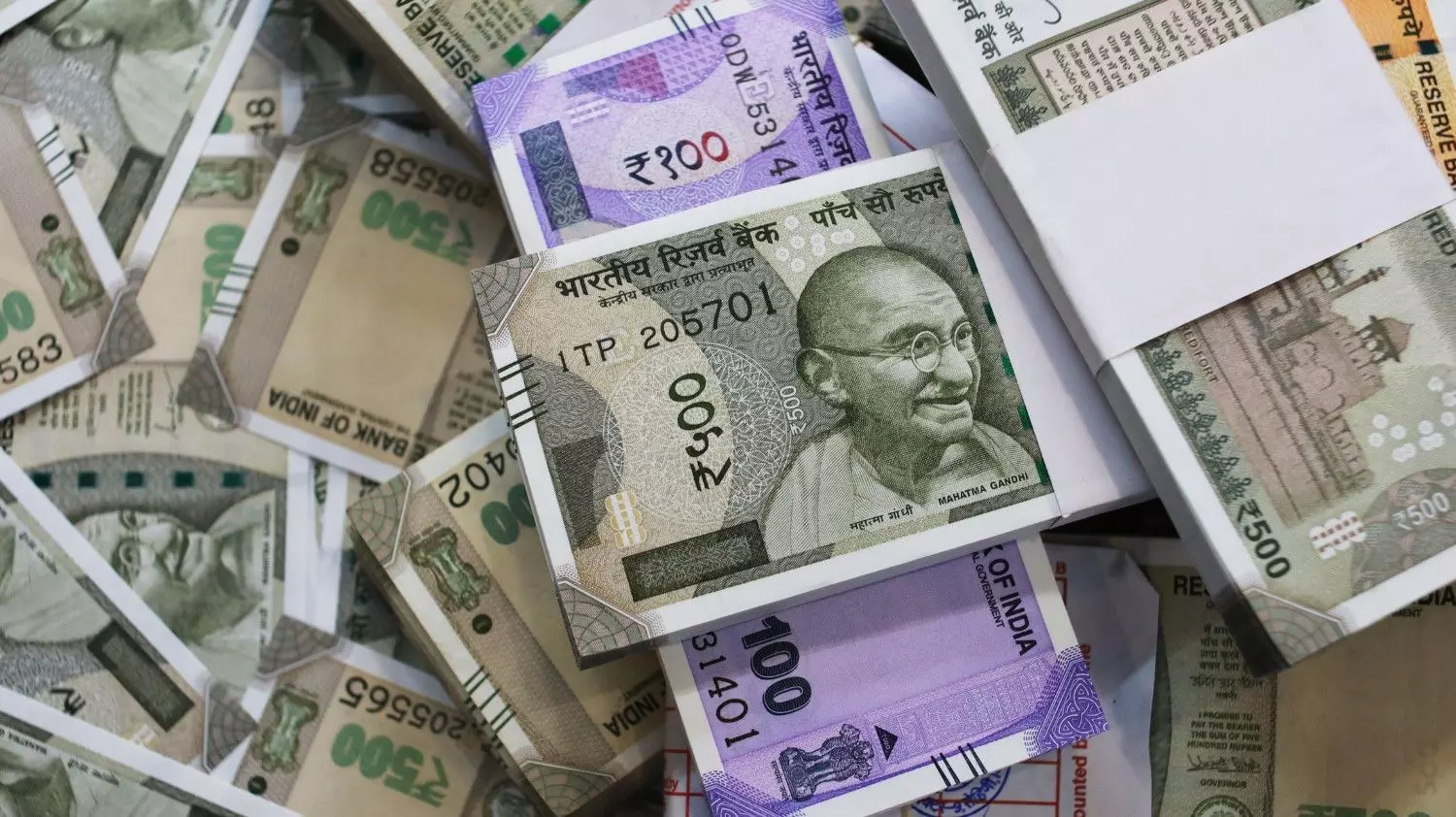
Why RBI is considering polymer banknotes and how they differ from paper currency
The central bank may pilot ₹10 and ₹20 polymer notes. Here’s how plastic currency works, why it is being considered, and what happened when India tested it before

The Reserve Bank of India (RBI) is once again examining the possibility of introducing polymer banknotes, reviving an idea that was first explored more than a decade ago.
The move is being driven by data that points to two persistent challenges: rising expenditure on printing banknotes and the rapid deterioration of currency in circulation. According to RBI annual report figures, both trends have remained significant despite the growing adoption of digital payments.
The central bank is expected to announce a pilot project in the coming months, according to a report by Business Standard. The proposal has reportedly been discussed during the RBI’s last two board meetings, held in Patna and Mumbai. Lower-denomination notes, particularly ₹10 and ₹20 notes, are likely to be included in the initial trial because they are handled most frequently and tend to wear out faster than higher-value notes.
Also read | India worried as fake currency routes reopen after Bangladesh regime change
Before assessing what such a move could mean for India, it is worth understanding how polymer notes differ from conventional paper currency.
Polymer banknotes are printed on a thin, flexible plastic substrate instead of the cotton-based paper used for conventional currency. Although often described as “plastic notes”, they are not rigid like credit or debit cards. They remain lightweight, foldable and easy to handle, making them broadly similar to paper notes in day-to-day use.
Their biggest advantage lies in durability. Polymer notes are more resistant to dirt, moisture and tearing, allowing them to remain in circulation for much longer before they become too damaged to use. This is particularly relevant in a country like India, where notes are exposed to a wide range of climatic conditions and intensive handling.
Another major benefit is security. Polymer banknotes can incorporate sophisticated anti-counterfeiting features such as transparent windows, micro-optic holograms and specialised security inks. These features are generally more difficult to replicate than those found on conventional paper notes.
Although polymer notes are more expensive to produce initially, their longer lifespan can reduce replacement costs over time. For many central banks that have adopted them, this reduction in the frequency of reprinting has been a key reason for making the switch.
Why is the RBI looking at polymer notes again now?
The RBI’s renewed interest comes against the backdrop of rising costs associated with currency management.
According to Business Standard, expenditure on printing currency notes increased to ₹6,372.8 crore in the financial year ending March 2025, compared with ₹5,101.4 crore in the previous year. The increase was largely attributed to higher demand for banknotes.
At the same time, the number of damaged and soiled notes being withdrawn from circulation has continued to rise. During FY25, around 23.8 billion soiled banknotes were removed from circulation, up 12.3 per cent from 21.24 billion notes in the previous financial year. Among these, ₹500 notes accounted for the largest share, followed by ₹100 notes.
The overall volume of cash in circulation has also continued to expand. Currency in circulation reached a record ₹42.86 trillion as of May 15, representing an annual increase of 11.5 per cent. This suggests that physical cash remains widely used despite the rapid growth of digital payment systems.
India has tested polymer notes before. Why did the earlier plan stall?
This is not the first time India has explored polymer currency.
In 2012, the government approved a field trial involving one billion ₹10 polymer notes. The experiment was conducted across five cities selected to represent different geographical and climatic conditions: Kochi, Mysore, Jaipur, Bhubaneswar and Shimla.
At the time, the primary objective was to increase the lifespan of banknotes rather than tackle counterfeiting. However, the project did not progress beyond the trial stage.
The initiative ran into several technological and operational challenges. There were difficulties related to handling the notes, and many ATMs were unable to reliably identify and dispense polymer-based currency. These issues ultimately contributed to the proposal being shelved.
Also read | Currency in circulation rose in value, volume during 2022-23: RBI
As per reports, those technological limitations have since been addressed. Modern currency-processing systems and ATM technologies are now capable of handling polymer notes more effectively, reducing the concerns that existed during the earlier experiment.
Which countries have already adopted polymer currency?
Polymer banknotes are no longer an experimental concept globally. More than 60 countries have introduced them either fully or partially into their currency systems.
Australia pioneered the technology, issuing the world’s first polymer ten-dollar note in 1988. Since then, several countries have followed suit, including Canada, the United Kingdom, Singapore, Malaysia, Thailand, Indonesia, Romania, New Zealand and Vietnam.
Romania became the first European country to adopt polymer banknotes in 1998, while Canada introduced its polymer series in 2011.
Experiences from these countries have generally highlighted three key advantages: longer durability, lower replacement costs and stronger protection against counterfeiting. While some nations have completely transitioned to polymer notes, others continue to use a combination of polymer and paper currency depending on denomination and usage patterns.
The United States remains an exception among major economies. US dollar notes continue to be printed on a specialised cotton-linen blend rather than polymer.
Could polymer notes eventually replace all paper currency in India?
A nationwide replacement of paper currency is not currently on the table.
The RBI is expected to begin with a limited pilot project and evaluate its performance before considering any broader rollout. Lower-denomination notes such as ₹10 and ₹20 are considered the most likely candidates because they circulate extensively and tend to deteriorate quickly.
Any future expansion would depend on multiple factors, including the outcome of the pilot project, operational feasibility, infrastructure readiness and public acceptance.
In recent years, the RBI has also attempted to encourage greater use of coins in place of low-value banknotes. However, those efforts have had only limited success. The total number of coins supplied increased from about 1.2 billion in FY24 to 1.5 billion in FY25. Among them, ₹5 coins accounted for the largest share, with around 800 million pieces supplied.
Media reports suggest that the latest push for polymer notes is primarily aimed at reducing long-term currency management costs while extending the usable life of notes in circulation.
How much does India spend on printing and replacing currency?
The cost of printing currency in India remains substantial, even though it varies from year to year.
RBI data shows that expenditure on printing banknotes rose to ₹6,372 crore in FY25 before declining to ₹4,875 crore in FY26. Earlier, costs had climbed to ₹7,965 crore in FY17, largely because of demonetisation and the large-scale printing of newly designed currency notes.
However, printing costs tell only part of the story.
Also read | From King’s face to Mahatma Gandhi: Tracing 78 years of the rupee
A more significant challenge is the constant need to replace damaged and soiled notes. RBI data on note disposal shows that heavily used denominations account for most of the currency withdrawn from circulation each year.
According to the latest available figures, ₹500 notes accounted for about 598.3 crore pieces removed from circulation during FY26, while ₹100 notes accounted for around 581.1 crore pieces. Together, these denominations represent the bulk of the replacement burden faced by the currency management system.
For now, the RBI appears focused on testing whether polymer notes can reduce replacement costs and improve durability. The outcome of the pilot project will help determine whether India eventually joins the growing list of countries that have shifted from paper to polymer banknotes.