







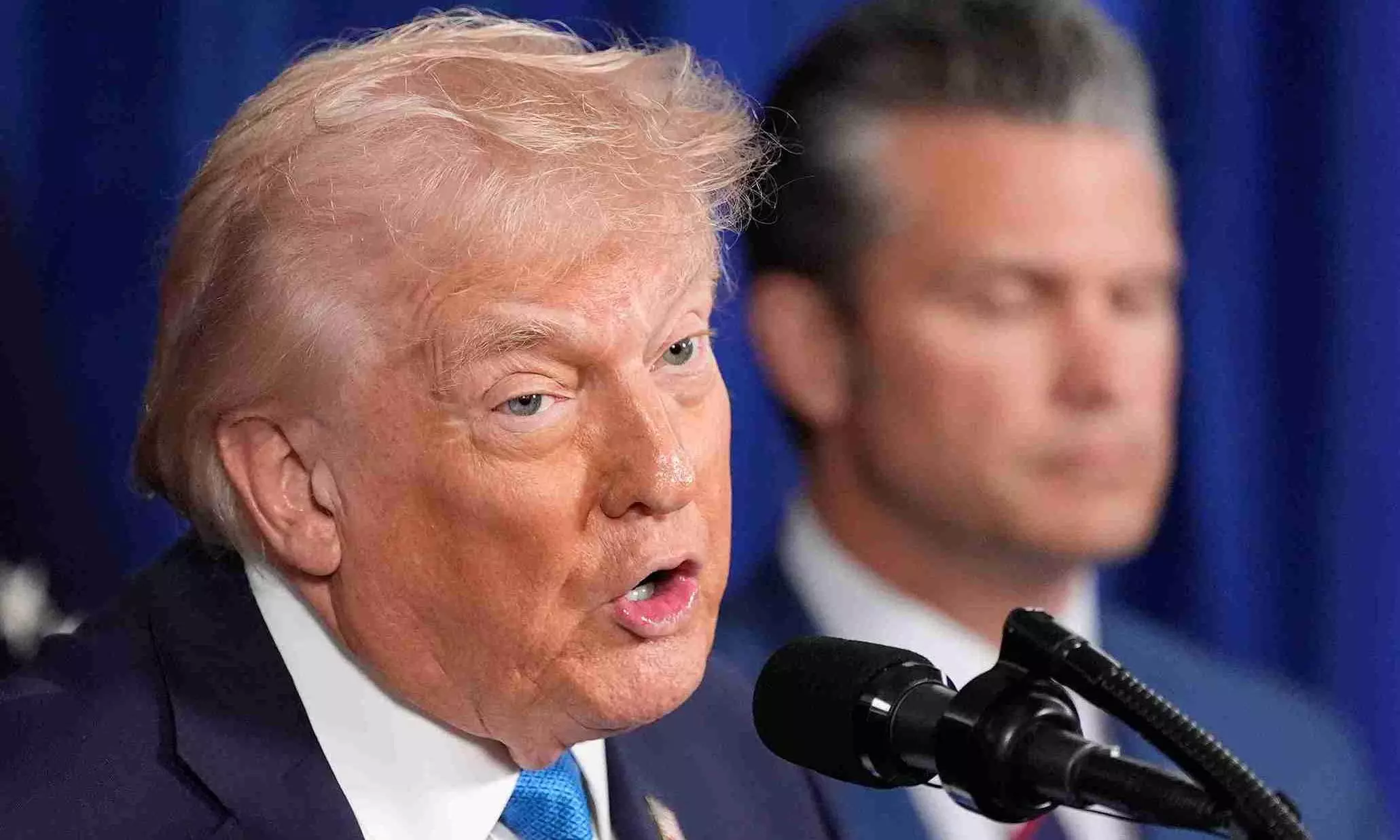
US-India trade deal | Trump's claim raises doubts over scope and timelines: GTRI
GTRI cautions against celebration as Trump’s announcement lacks clarity on tariffs, products and India’s alleged $500 billion US purchase pledge

US President Donald Trump’s claim of a sweeping trade deal with India has triggered several questions, with trade experts urging caution until official details emerge.
The Global Trade Research Initiative (GTRI), in a statement on Monday (February 2, said the announcement, made by Trump on his Truth Social platform, should be seen as a political signal rather than a concluded agreement.
What Trump said
Trump said he had reached a trade deal with India following a phone call with Prime Minister Narendra Modi. He claimed that India had agreed to stop purchasing Russian oil, boost imports from the US and Venezuela, and significantly raise “Buy American” commitments. In return, Trump said the US would immediately reduce its so-called reciprocal tariff on Indian goods from 25 per cent to 18 per cent.
Also read: Budget 2026-27: India slashes aid to Bangladesh, skips Chabahar port funding
However, GTRI pointed out that even the basic contours of the announcement remain unclear. “The Truth Social post leaves major questions unanswered — what products are covered, what the timelines are, and whether India has really agreed to zero tariffs and zero non-tariff barriers, especially in sensitive areas like agriculture and regulated imports,” said Ajay Srivastava, founder of GTRI, in comments included in the press release.
Trump also claimed that India would slash tariffs and non-tariff barriers on US products to zero. But the post did not specify the number of products or sectors involved. India has historically resisted opening up sensitive areas such as food grains, genetically modified products and other regulated imports, raising doubts about the feasibility of such a sweeping commitment, the statement said.
Russia and Venezuela oils
There was also confusion over the tariff reduction promised by the US, it added. Trump’s post linked the tariff cut to India stopping purchases of Russian oil, which had earlier been associated with punitive tariffs. This created uncertainty over whether tariffs were being cut from 25 per cent or from a higher level. The US later clarified that tariffs would indeed be reduced from 50 per cent to 18 per cent.
The GTRI noted that the US has already offered reciprocal tariffs ranging from 10 per cent to 20 per cent to several trading partners, including the UK, the European Union (EU), Japan, Bangladesh and Vietnam, under trade deals concluded between May and October 2025. These tariffs are generally imposed over and above existing most-favoured-nation rates, with limited exceptions for the EU.
'Caution, not celebration, needed'
Even after any deal, GTRI said, several key US tariffs would remain untouched. Section 232 tariffs of 50 per cent on steel, aluminium and copper, as well as 25 per cent duties on certain auto components, would continue. At the same time, zero tariffs for pharmaceuticals, aircraft and parts, and some mechanical and electronic components are already in place and would remain unchanged.
Another headline claim — that India would buy more than US dollars 500 billion worth of US energy, technology, agricultural products and other goods — also drew scepticism. India’s current annual imports of goods and energy from the US are under $50 billion. “Reaching $500 billion would likely take more than 20 years, suggesting this is more a long-term aspiration than a firm near-term commitment,” the GTRI release noted.
“Until there is a joint statement, negotiated text, and clarity on enforcement, this should be seen as a political signal — not a final deal,” Srivastava said. “Caution, not celebration, is needed.”