



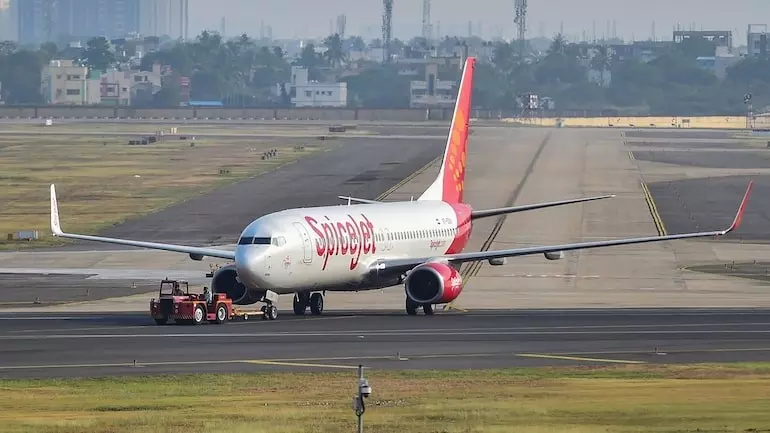
SpiceJet seeks emergency funds amid salary delays, shrinking fleet
The airline is seeking up to Rs 1,500 crore as it deals with mounting liabilities, shrinking fleet and tax demand notice

The financial troubles at SpiceJet appear to be deepening, with reports claiming that the airline has failed to pay salaries to several pilots and employees since March amid an acute cash crunch.
The latest report comes as the budget carrier is seeking emergency financial support under the government's Emergency Credit Line Guarantee Scheme (ECLGS), hoping to secure a loan of up to Rs 1,500 crore to stabilise operations and address mounting liabilities.
Unpaid salaries
According to Reuters, several pilots and senior employees have not received their salaries on time since March, with some facing delays of up to 15 days. While lower-paid staff have reportedly been paid, senior personnel continue to experience staggered disbursements.
Also read: Air India, IndiGo, SpiceJet approach Centre, seek duty cut on ATF
The airline has informed employees that salaries are being released in a "graded format" due to cash-flow constraints.
Although the management has assured staff that pending salaries will be cleared, employees have expressed concerns over the absence of a clear payment timeline.
Mounting challenges
The salary issue is only the latest challenge confronting SpiceJet, which has been battling operational disruptions, legal disputes and regulatory scrutiny over the past several months.
In late May, tax authorities issued a demand notice of Rs 124.65 crore to the airline. Following repeated delays and non-compliance in filing GST returns, authorities also initiated proceedings to cancel the airline's GST registration, adding to its regulatory troubles.
Also read: SpiceJet told to pay Rs 55,000 for serving only burger, fries during 14-hour delay
The financial pressure has been reflected in the company's market performance as well. SpiceJet's stock has fallen nearly 60 per cent since the start of 2026. The airline also reported a consolidated net loss of Rs 261.38 crore for the quarter ending December 31, 2025, reversing a brief return to profitability.
Shrinking fleet
Operationally, the airline has been grappling with a shrinking fleet and reduced flight schedules. The return of several wet-leased aircraft and persistent maintenance challenges have sharply reduced its capacity.
The reduced fleet availability has resulted in frequent flight cancellations and delays across multiple airports, triggering passenger complaints and operational disruptions at major hubs including Mumbai and Pune.
Also read: SpiceJet faces fresh trouble as lessors, ex-pilot file insolvency pleas
Industry estimates suggest that only 12 to 14 aircraft from SpiceJet's fleet are currently operational, while several others remain grounded because of maintenance delays, spare-part shortages and lease payment issues.
Operational challenges
The airline has also scaled back its network, discontinuing services to multiple domestic destinations and planning further route exits in the coming months.
Also read: Akasa, SpiceJet aircraft collide at Delhi Airport during taxiing
Under Indian aviation regulations, airlines require a minimum of 20 active aircraft to retain international flying rights. With its operational fleet falling below that threshold, SpiceJet has increasingly relied on costlier wet-leased and damp-leased aircraft to sustain overseas operations.
Revival measures
SpiceJet is also facing pressure from aircraft lessors, several of whom have reportedly issued payment default notices. Separately, former promoter Kalanithi Maran continues to pursue legal action over an unpaid interest dispute worth Rs 144 crore, despite the airline offering a Gurugram land parcel as collateral.
To manage costs, the airline has reportedly implemented aggressive austerity measures. In a bid to strengthen capacity, the airline announced on Monday (June 8) that it plans to induct three Airbus A320 aircraft on a damp-lease basis from July.