



India's trailer industry is a 'ticking time bomb,' warns SATRAC chief
MC Bantwal of SATRAC says unregulated, low-quality trailers pose grave safety risks even as India braces for a manufacturing surge

India's body-building and trailer industry is dominated by unorganised players churning out substandard products — and without tougher enforcement, the consequences could be fatal. That is the blunt assessment of MC Bantwal, Managing Director of SATRAC, who has spent decades supplying superstructures to the country's logistics, construction and mining sectors.
As SATRAC, a trailer and truck body manufacturer, prepares to ship its next 50,000 units in roughly a quarter of the time it took to deliver the first, Bantwal is simultaneously betting big on automation, EV-ready designs and exports — while warning that India's manufacturing ambitions will remain unfulfilled until quality stops being negotiable.
In an exclusive interview with The Federal, Bantwal said India is headed for an “explosion” in manufacturing activity over the next 5-10 years, driven by rising logistics, construction and mining demand, even as companies ramp up automation and digitalisation to stay competitive.
Edited excerpts:
You recently said 50,000 units are now on the road. How has production capacity changed compared to five years ago?
These 50,000 units have been supplied over around 25 years. However, the last five years are when growth really accelerated. The next 50,000 units are expected to be delivered within four to five years. Production has increased year on year.
Also Read: Maruti Suzuki enters EV segment with e Vitara
The last couple of years were flat because the Bengaluru plant had reached maximum capacity. The new flagship plant has an installed capacity of around 800 units per month, which can be scaled up to 1,200 units per month.
In what time frame do you expect to reach 1,200 units per month?
Within around 30 months, production is expected to increase by another 30 per cent and reach 1,200 units per month.
Are there CapEx expansion plans in the next three to five years?
While a three-year roadmap cannot be specified yet, the company plans to invest another ₹70 crore over the next couple of years to further automate its lines. The tipper line is already automated, and trailer and cargo body lines will also be automated. Automation levels will increase across all stages of production.
Are you moving into EV-compatible products?
There is already a range of products designed specifically for EVs. Since electric vehicles are heavier because of batteries, lighter superstructures help compensate for the extra weight. Additionally, EV-focused products are designed to be more aerodynamic, increasing vehicle range. The company aims to address two major EV challenges — weight and range.
What percentage of revenue comes from standard trailers versus customised builds?
In reality, every trailer is customised. There is no completely standard product. The company works in two ways: adapting a standard product to customer requirements or building an entirely new product from scratch. Currently, about 70 per cent of business comes from customer adaptations and 30 per cent from completely new builds.
You import about 20 per cent of components. How exposed are you to steel price volatility?
Rising dollar and euro rates pose challenges, particularly for imported steel. The company is working with Tata Steel, JSW and ArcelorMittal to develop these products locally. While full localisation may take a few years, there is confidence that Indian mills will meet the requirement.
Can you explain the level of automation at this facility?
The plant has a high level of automation, though it is not fully automated. The strategy is to automate most processes over time. Automation helps mitigate manpower challenges and ensures high-quality, consistent output.
Is trailer demand changing with electrification?
Electrification itself is not changing trailer demand significantly, but there is visible penetration of electric trucks, especially in short-haul segments. Government initiatives promoting electric fleets are also boosting demand. EVs are more viable for short hauls of around 100 km, rather than long-haul operations due to range limitations.
How do you see India’s manufacturing sector in the next 5-10 years?
There will be a surge in manufacturing activity. The sector is maturing rapidly. The company’s customers are largely from logistics, construction and mining — all of which are expanding. Heavier trucks and higher load capacities are creating opportunities in specialised segments.
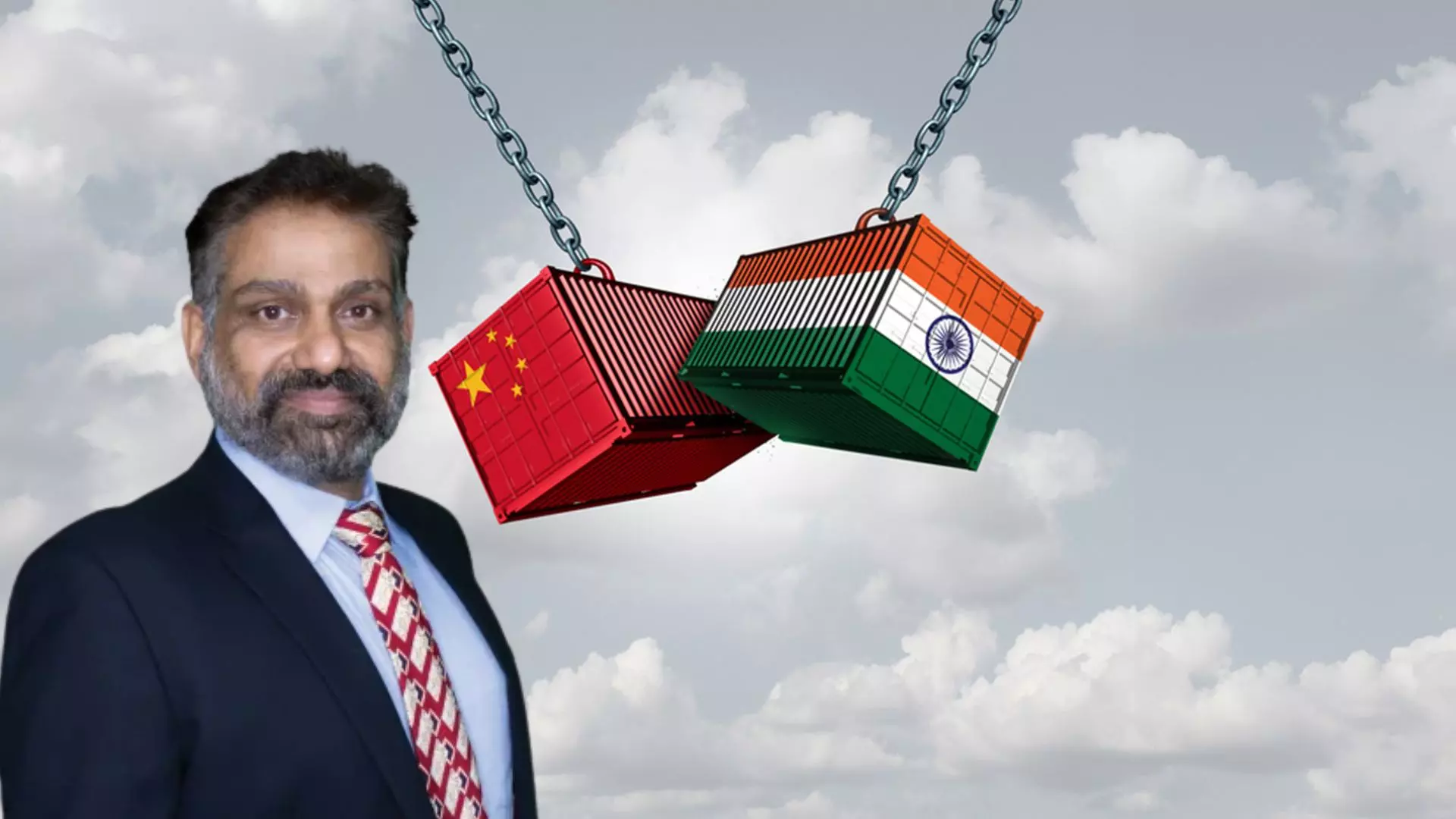
What structural advantages does India offer compared to China or other Asian countries?
India cannot be directly compared with China because the markets differ significantly. The company focuses on Indian requirements and specialises in improving productivity and truck performance. Its products deliver tangible benefits by improving uptime and reducing operational losses due to breakdowns.
Will you export from the Chennai plant?
Yes. The Chennai location was chosen due to its proximity to the port. A batch is already being shipped to Australia, and exports are planned to several countries.
What are the biggest obstacles you face in India?
The trailer and body-building industry is still largely controlled by the unorganised sector. Low-quality trailers on roads pose safety risks. While policy intent exists, stricter implementation is needed to prevent accidents. The issue is described as a ticking time bomb.
How effective has GST been?
GST has been beneficial, especially for organised players. The industry was previously prone to tax evasion. GST credits provide customer benefits and increase transparency across the sector.
How resilient is your supply chain?
The company has a small percentage of imported materials and is not significantly affected by import restrictions or disruptions.
Are Indian factories tech-ready? Is automation a necessity or a competitive edge?
The company focuses on automation and digitalisation, Industry 4.0 and 4.2, which must run together. Most processes will be automated within 24 months. The entire value chain, from sales and manufacturing to accounting and after-sales service, is digitalised.
Also Read: Urban Challenge Fund: Will India avoid repeating its city infra failures?
Vehicle history can be accessed instantly by scanning a barcode, including details about materials used, welders, quality checks, service costs and maintenance records.
What trade or logistics barriers affect export growth?
The product’s bulky nature is a major challenge in exports. However, there are opportunities in supplying semi-knocked-down (SKD) units to overseas markets.
What is your biggest operational risk right now?
Manpower remains a challenge. The company is hiring locally and investing in skill development, with confidence that workforce capability will improve.
How prepared is Indian manufacturing for future global shocks?
India is positioned strongly, with unique strengths in manufacturing processes and products. However, improvements in process discipline and quality standards are essential. Once these challenges are addressed, Indian manufacturing can match China.
What are those challenges in more detail?
The primary issue is mindset. A non-compromising approach to quality is needed. Investments in technology, machinery and infrastructure are essential for producing high-quality output. Progress is visible, particularly in advanced manufacturing hubs like Chennai.
The content above has been transcribed from video using a fine-tuned AI model. To ensure accuracy, quality, and editorial integrity, we employ a Human-In-The-Loop (HITL) process. While AI assists in creating the initial draft, our experienced editorial team carefully reviews, edits, and refines the content before publication. At The Federal, we combine the efficiency of AI with the expertise of human editors to deliver reliable and insightful journalism.


