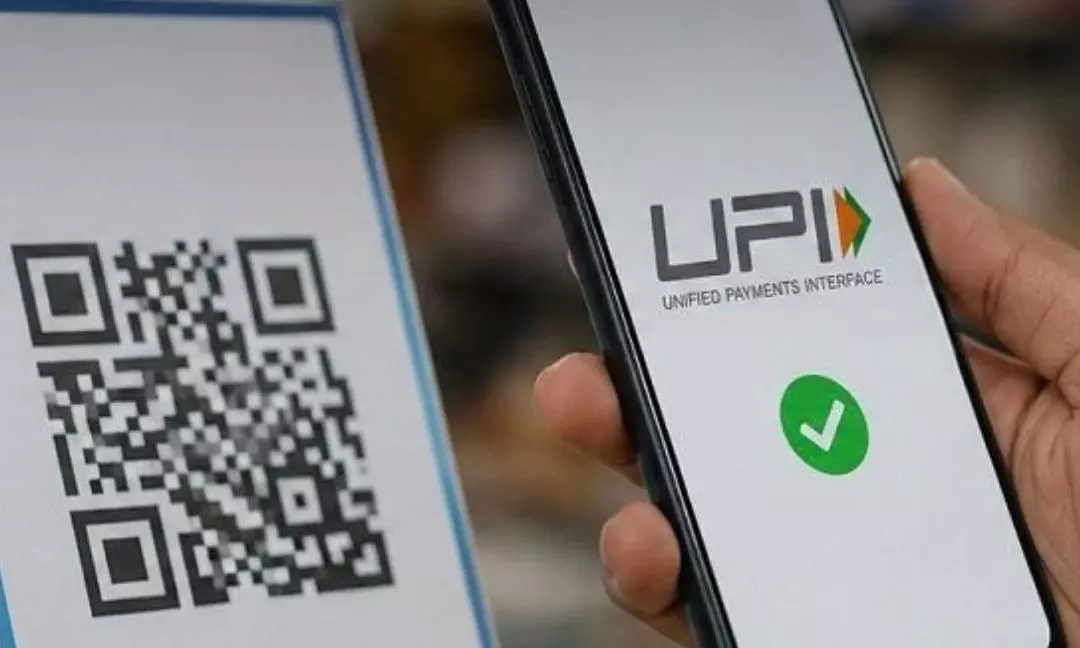
Rs 1 lakh cr a day: Record UPI volumes mask uneven growth in digital payment ecosystem
UPI hits fresh records in October, driven by festive demand, but slower growth in IMPS and AePS raises questions about financial inclusion and infrastructure

India’s digital payments boom is increasingly becoming a measure of how consumers, businesses and financial institutions interact with the economy.
In October, the Unified Payments Interface (UPI) processed transactions worth Rs 31.53 lakh crore, averaging Rs 1,01,707 crore every day, according to data released by the National Payments Corporation of India (NPCI).
The milestone, driven partly by festive-season spending, underlines the growing dependence of India’s retail economy on instant digital payments.
However, the numbers also reveal an important distinction: While digital transactions are expanding rapidly, growth is not uniform across payment platforms.
UPI sets new records in festive season
UPI processed 25.47 billion transactions in October, compared with 24.07 billion in September, registering month-on-month growth of 5.8 per cent. Transaction value increased 7.4 per cent to Rs 31.53 lakh crore from Rs 29.37 lakh crore.
Average daily transaction volume rose to 822 million from 802 million in September, while average daily transaction value increased from Rs 97,913 crore to Rs 1,01,707 crore.
Also read: UPI MDR rollout likely to be deferred to Jan 1, but Centre yet to take a final call
This confirms that the October surge was not simply the result of the month having an additional day.
On a year-on-year basis, transaction volume grew 23 per cent, while transaction value increased 16 per cent.
For comparison, UPI processed 20.7 billion transactions worth Rs 27.28 lakh crore in October 2025.The festive calendar, including Navratri, Durga Puja and major e-commerce sales, supported higher payment activity.
Increased spending on shopping, dining and everyday consumption contributed to the record performance.
The faster growth in transaction volume compared with value also suggests that UPI is increasingly being used for frequent, relatively smaller-value payments, although the platform continues to facilitate larger purchases.
FASTag accelerates
The performance of other NPCI-operated payment systems presents a mixed picture.
FASTag processed 454 million transactions worth Rs 8,085 crore in October, compared with 418 million transactions worth Rs 7,377 crore in September.
This represents month-on-month growth of 8.6 per cent in volume and 9.6 per cent in value. NPCI reported year-on-year growth of 12 per cent and 17 per cent, respectively.
The system’s expansion reflects the continued adoption of electronic toll collection and digital payments across India’s highway network.
Also read: Imports drive 23 pc GST surge in Oct as domestic revenue engines lag
NPCI also reported that 11.07 million annual passes had been issued till date.
However, the year-on-year FASTag growth percentages require clarification. October 2025 reporting by ETBFSI cited 361 million transactions worth ₹6,686 crore.
Compared with those published figures, October 2026 growth would be approximately 25.8 per cent in volume and 20.9% in value, rather than NPCI's reported 12 per cent and 17 per cent.
The historical comparison therefore needs reconciliation.
IMPS and AePS face structural questions
IMPS, meanwhile, processed 375 million transactions worth Rs 7.63 lakh crore in October.
While transaction value increased 19 per cent year-on-year, transaction volume declined 7 per cent.
Compared with September, however, volume increased from 354 million and transaction value rose from Rs 7.06 lakh crore. This divergence suggests that IMPS continues to support substantial interbank fund transfers, even as transaction frequency faces pressure. However, the data alone does not establish whether UPI is directly responsible for the decline.
Also read: Demat accounts hit 237.7 million: Charges every investor should know about
AePS presents another concern. Transactions increased to 102 million in October from approximately 95.78 million in September, but remained 8 per cent below the year-ago level. Transaction value reached Rs 25,555 crore, registering a 16 per cent annual decline.
Since AePS supports Aadhaar-based banking services, including cash withdrawals and assisted banking, particularly in rural areas, its declining annual numbers warrant attention.
However, further data on active users, geographical coverage and transaction types would be necessary to establish the reasons.
What numbers mean for India’s economy
The expansion of digital payments reflects the increasing formalisation and digitalisation of India’s retail economy.
Faster settlements, reduced dependence on cash and improved payment convenience can benefit consumers, merchants and small businesses.
However, higher transaction values should not be interpreted as equivalent growth in GDP or consumption. Digital payments increasingly replace cash transactions, meaning part of the increase represents a shift in payment methods rather than entirely new economic activity.
The contrasting performance of UPI, IMPS and AePS also highlights the importance of strengthening the broader financial infrastructure, particularly services supporting rural banking and interbank transfers.
What lies ahead?
The next challenge for India’s digital payments ecosystem will be sustaining growth beyond seasonal spending while strengthening transaction security, fraud prevention, system reliability and merchant participation.
Also read: Repo rate up, stocks down: Should equity investors worry? History offers hope
UPI’s record-breaking performance demonstrates the scale of India’s digital payment infrastructure.
But ensuring that the benefits extend to underserved communities, assisted banking networks and smaller businesses will be equally important.
October’s numbers offer a strong signal of India’s digital economic transformation.
The real test will be whether record transaction volumes translate into deeper financial inclusion, resilient payment infrastructure and more widespread participation in the formal economy.