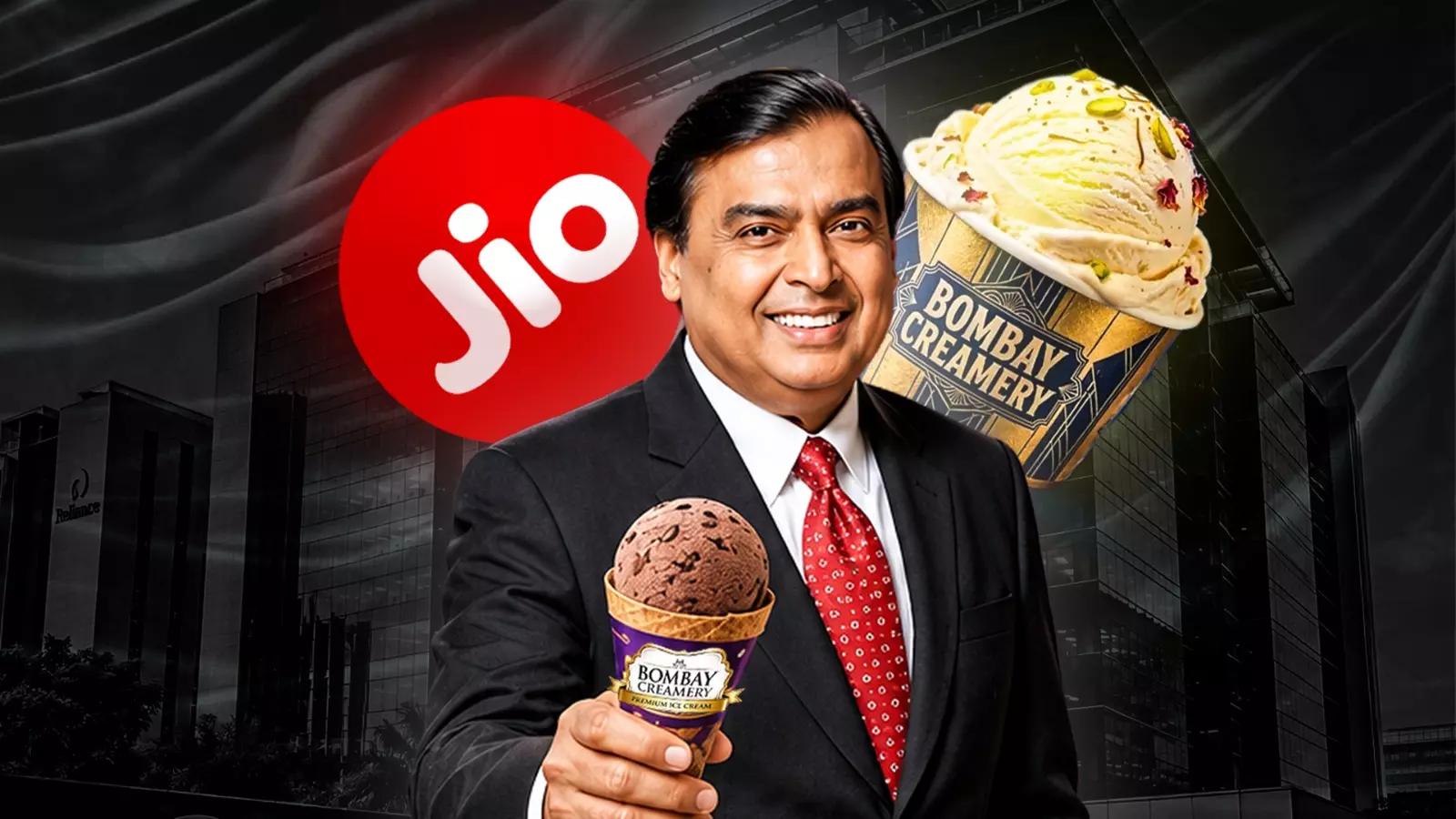
Reliance’s ice cream entry may be bigger than the scoop
Bombay Creamery isn't just about scoops at 10 rupees — it could be Reliance's next big cold chain play, built on lessons from Campa Cola

Reliance has entered India’s ice cream market with a new brand, Bombay Creamery, with prices starting at Rs 10 a scoop.
While the move marks its entry into another large consumer category, industry observers say the bigger play could be the company’s expanding cold-chain infrastructure.
The strategy bears similarities to Reliance’s approach in other consumer businesses, particularly its entry into telecom through Jio and the revival of Campa Cola in the soft drinks market, where scale, distribution and competitive pricing have been central to its expansion.
Also read: ‘Sahi hai’? Why mutual funds may not always be safe and the right investment for you
India’s ice cream market is currently valued at around Rs 37,000 crore, according to a study by IMARC for Tetra Pak. Industry estimates suggest the market could cross Rs 57,533 crore by 2033, implying annual growth of around 11 per cent, aided by rising demand for premium and indulgent flavours, including chocolate.
The Campa Cola connection
Reliance’s existing beverage distribution network could give its ice cream business an advantage, according to N Chandramouli, CEO of TRA Research.
“They bought the Campa Cola brand at Rs 22 crore. And last quarter, they did Rs 4,700 crore in that aerated beverage market, out of the total Reliance consumer portfolio of Rs 22,000 crore,” Chandramouli said.
He pointed to the infrastructure already created for Campa Cola, including distributors, retail outlets and refrigeration equipment.
Also read: PM Modi pitches India as trusted chipmaking hub at SEMICON 2026
“Campa Cola sells through 5,000 distributors, millions of outlets, and it sells with a refrigerator behind it. They've already invested that capital into those coolers. What else goes very well into a cooler? Ice cream,” he said.
According to Chandramouli, the infrastructure can potentially be adapted for frozen products, although ice cream requires storage at lower temperatures.
A capital-intensive category
Unlike packaged beverages, ice cream presents significant logistical challenges. A Fortune India report estimates that an ice cream manufacturer may need to spend Rs 300-400 crore to deploy one lakh freezers. The product must be maintained at around minus 18 degrees Celsius from the factory to the retail shelf, while distribution costs can be roughly twice those of conventional packaged goods.
Saurabh Sinha, marketing director, Tetra Pak South Asia, said Reliance’s entry could accelerate the growth of the category, but scaling up geographically would require significant investment.
The capital-intensive nature of the business has contributed to the fragmented nature of India’s ice cream market. Vadilal and Havmor have strong positions in the west, while Arun and Ideal are prominent in the south. Creambell and Mother Dairy have a significant presence in the north. Amul is among the few brands with a truly national footprint.
Can Reliance’s scale crack the market?
Reliance’s scale and pricing power may provide an initial advantage, but building consumer loyalty in ice cream could prove more difficult, Chandramouli said.
A low price may encourage trial, but it does not guarantee repeat purchases, he added.
Reliance’s experience across consumer businesses has also been mixed. Reliance Jewels has faced challenges competing with established local and regional jewellers, while its investment in quick-commerce company Dunzo ended with a reported Rs 1,645-crore write-off.
Some other ventures, including Reliance Timeout and its health insurance business, have also been discontinued. Its proposed acquisition of Future Retail ultimately collapsed after prolonged litigation.
More than an ice cream play?
For Chandramouli, however, the significance of Reliance’s entry lies beyond ice cream.
“If Reliance enters ice cream, you must understand, they've really entered the entire cold chain. In this case, the vegetarian cold chain, they're very conscious of that. That's a big business, including frozen vegetables and everything else,” he said.
Whether Bombay Creamery can establish a national consumer franchise remains to be seen. For now, its launch signals Reliance’s intent to test yet another consumer category where distribution, pricing and scale could reshape the competitive landscape.