




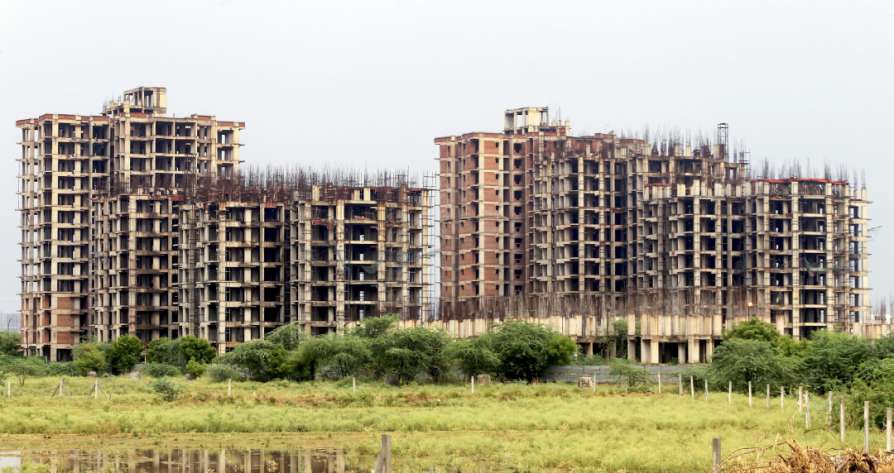
Real estate deals slump 69 pc: What it means for homebuyers and investors
The decline in deal value does not necessarily indicate a broad-based weakening of demand for real estate

India's real estate sector recorded 24 deals worth USD 705 million (Rs 6,693.66 crore appx) in the July-September quarter of 2026, with transaction value falling 69 per cent sequentially as the absence of large acquisitions weighed on activity, according to the Q3 Real Estate Dealtracker.
Deal volumes declined 38 per cent quarter-on-quarter, while transaction value fell from USD 2.3 billion (Rs 21,837.47 crore appx) in the April-June quarter. The slowdown reflects a more selective investment environment, with investors favouring income-generating commercial properties and residential development platforms over large, capital-intensive transactions.
Excluding initial public offerings (IPOs) and qualified institutional placements (QIPs), mergers and acquisitions (M&A) and private equity (PE) activity accounted for 22 transactions worth USD 647 million (Rs 6,142.97 crore appx).
Also Read: One in five Indian college students has started a business: IIT survey
The decline in deal value does not necessarily indicate a broad-based weakening of demand for real estate. Instead, the figures point to fewer large-ticket transactions and a shift towards smaller deals, amid continued macroeconomic and geopolitical uncertainty.
Private equity drives deal value
Private equity remained the largest contributor to real estate deal value, recording nine transactions worth USD 555 million (Rs 5,269.48 crore) appx, or nearly 79 per cent of the quarter's total.
Brookfield India Real Estate Trust's acquisition of a Grade-A office asset in Mumbai's Bandra-Kurla Complex (BKC) for USD 179 million (Rs 1,699.52 crore appx) was the largest investment during the quarter. Nexus Select Trust's USD 168 million (Rs 1,595.08 crore appx) investment in a retail and hospitality asset in Guwahati was another significant transaction.
Four PE transactions exceeding USD 50 million (Rs 474.73 crore appx) each accounted for 91 per cent of total private equity deal value, highlighting the concentration of investment in a handful of large transactions.
M&A activity, meanwhile, comprised 13 deals worth USD 92 million (Rs 873.50 crore appx), compared with 22 transactions in the previous quarter. All transactions were domestic, suggesting that Indian investors and companies continued to drive consolidation despite subdued cross-border activity.
Aurum PropTech's acquisition of Locon Solutions, which operates Housing.com, for approximately USD 48 million (Rs 455.74 crore appx) was the largest M&A transaction.
Public-market fundraising also slowed. Two IPOs raised USD 59 million (Rs 560.18 crore appx) during the quarter, against approximately USD 381 million (RS 3,617.42 crore appx) in IPO proceeds in Q2. QIP activity remained muted, taking the combined IPO and QIP fundraising well below the USD 782 million recorded in the previous quarter.
Commercial real estate attracts capital
Commercial development accounted for five deals worth USD 371 million (Rs 3,522.48 crore appx), representing 57 per cent of total deal value. Investment in office and retail properties underscored the continued appeal of assets capable of generating rental income.
Residential development attracted four PE investments worth USD 183 million (Rs 1,737.50 crore appx), supported by end-user demand and favourable market sentiment.
Real estate operators recorded 10 M&A transactions, although deal value fell 87 per cent quarter-on-quarter to USD 39 million (Rs 370.29 crore appx). The real estate technology segment recorded two deals worth approximately USD 49 million (Rs 465.23 crore appx), led by Aurum PropTech's acquisition of Housing.com.
What the slowdown means for homebuyers and investors
For homebuyers, the fall in institutional deal activity does not automatically translate into lower property prices. Residential prices are influenced by local supply, demand, construction costs, interest rates and developers' financial positions, rather than investment transactions alone.
However, a more selective funding environment could make access to capital harder for some developers, particularly smaller companies that rely on external financing. Projects with weaker sales prospects or stretched balance sheets could face greater execution risks, while financially stronger developers may be better positioned to continue construction and launch new projects.
Also Read: Jaipur emerges as a leading Tier-II commercial real estate hub, says JLL
For commercial property investors, the concentration of capital in office, retail and hospitality assets suggests that rental income and the quality of underlying properties remain important considerations. Investors may increasingly scrutinise occupancy levels, tenant demand and the sustainability of cash flows before committing capital.
The broader implication is a market increasingly driven by asset quality rather than transaction volume. Until larger deals return and fundraising conditions improve, real estate investment activity could remain selective, with established developers, income-generating assets and platforms offering clearer growth prospects better placed to attract capital.