



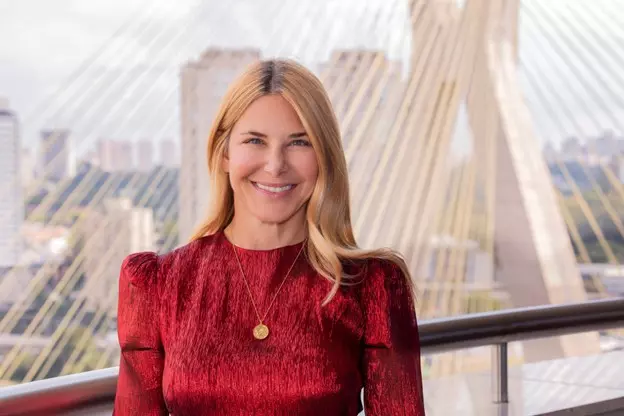
Dresser will oversee global revenue strategy and "will help more businesses put AI to work in their day-to-day operations" at OpenAI. Photo: X|@dhdresser
OpenAI names Slack CEO Denise Dresser as first chief of revenue
Appointment signals ChatGPT maker's push for profitability amid rising competition and trillion-dollar financial obligations for AI infrastructure

San Francisco, Dec 10 (AP) OpenAI on Tuesday said it has picked Slack CEO Denise Dresser as its first chief of revenue, a message to wary investors that the ChatGPT maker is serious about making a profit from its artificial intelligence technology.
OpenAI said Dresser will oversee global revenue strategy and "will help more businesses put AI to work in their day-to-day operations." Dresser had already spent more than a decade at Salesforce when the software pioneer announced in 2020 it was buying work-chatting service Slack for USD 27.7 billion. She helped integrate Slack into the software company before Salesforce CEO Marc Benioff picked her as CEO in 2023.
OpenAI CEO Sam Altman earlier this month set off a "code red" alert in an internal email to employees to improve its flagship product, ChatGPT, and delay other product developments.
OpenAI first released ChatGPT just over three years ago, sparking global fascination and a commercial boom in generative AI technology and giving the San Francisco-based startup an early lead. But the company faces increased competition with rivals, including Google, which last month unleashed Gemini 3, the latest version of its own AI assistant.
Altman said this fall that ChatGPT now has more than 800 million weekly users. But the company, valued at USD 500 billion, does not make a profit and has committed more than USD 1 trillion in financial obligations to the cloud computing providers and chipmakers it relies on to power its AI systems.
The risk that OpenAI will not make enough money to fulfil the expectations of backers like Oracle and Nvidia has amplified investor concerns about an AI bubble.
OpenAI makes revenue from premium subscriptions to ChatGPT, but most users get the free version. OpenAI introduced its own web browser, Atlas, in October, an attempt to compete with Google's Chrome as more internet users rely on AI to answer their questions. But OpenAI has not yet tried to sell ads on ChatGPT, which is how Google makes money from its dominant search business.
Altman's early December memo said the company was delaying work on advertising, AI agents for health and shopping, and a personal assistant called Pulse. (AP)