







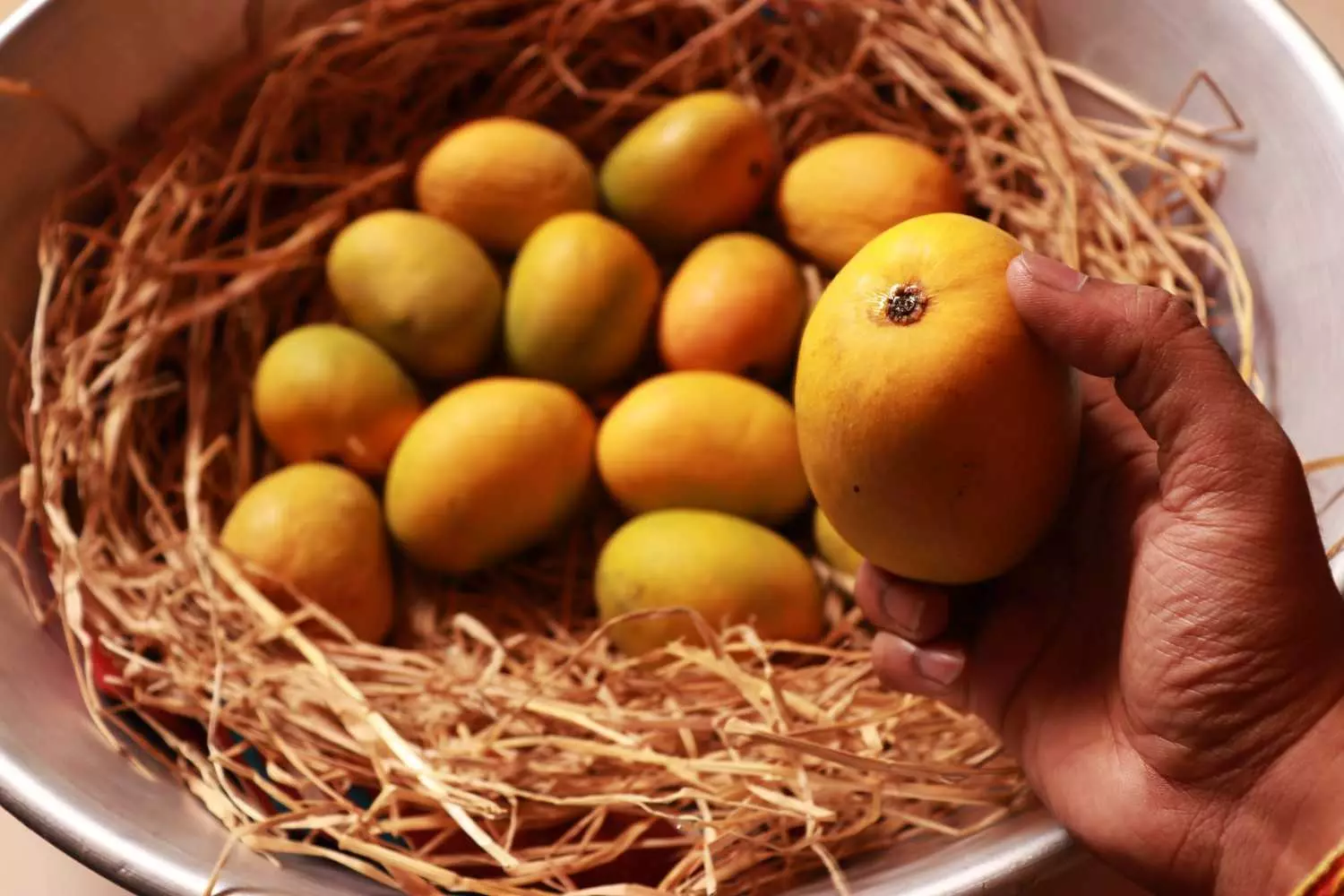
Japan halts Indian mango imports over pest control flaws, blow for exporters
Domestic mango prices not expected to crash, exporters fear Japan's zero-tolerance enforcement could trigger stricter scrutiny from other global markets

Japan has suspended imports of Indian mangoes over concerns related to pest-control procedures, dealing a major blow to exporters during the peak summer season and marking the first such restriction in nearly two decades.
The move affects premium Indian varieties such as Alphonso, Kesar, Langra and Banganapalli, which are exported to Japan under strict phytosanitary regulations. Japanese authorities reportedly flagged operational irregularities at India’s Vapour Heat Treatment (VHT) facilities during inspections conducted earlier this year.
No tolerance policy
VHT is a mandatory non-chemical disinfection process under the India-Japan export agreement. The treatment exposes mangoes to controlled hot and humid air conditions to eliminate pests and fruit fly larvae before export.
Also read: How Iran conflict is devastating mango and banana farmers in Andhra
Japan follows a strict zero-tolerance policy toward invasive pests, especially fruit flies, which are considered a major threat to its agriculture sector.
According to an Economic Times report, Japanese quarantine officials inspected the VHT facility at Rehmanpur in Uttar Pradesh in March and identified deficiencies linked to fumigation and disinfection protocols.
Following the inspection, the Yokohama Plant Protection Association reportedly informed importers that Indian mango consignments carrying inspection certificates issued after March 25, 2026, would no longer be accepted.
Setbacks
The suspension is being viewed as a reputational setback for Indian agricultural exports, even though Japan is not a key market for India’s overall mango trade. Exporters fear the move could trigger wider scrutiny of India’s quality-control systems and export compliance standards in other premium international markets.
Also read: Is your mango safe? Expert offers tips to find out
The development comes at a time for mango growers already grappling with severe crop losses caused by extreme heat and erratic weather conditions linked to the El Nino climate pattern.
In key Alphonso and Kesar-producing regions such as Maharashtra and Karnataka, high temperatures during the flowering season reportedly caused significant premature fruit drop, reducing yields sharply.
Exporters are also facing rising logistical costs and fresh setbacks in other overseas markets. Recent reports indicated that US authorities rejected multiple Indian mango shipments due to documentation issues at a Mumbai treatment facility.
At the same time, soaring airfreight charges and shortages of refrigerated containers have added further pressure on exporters already struggling with reduced production.
Domestic mango prices
Despite the export disruption, domestic mango prices are unlikely to drop significantly. India produces nearly 28 million metric tonnes of mangoes annually and consumes about 98 per cent of the produce domestically.
Exports account for only a small fraction of total production, meaning Japan’s ban is unlikely to flood the local market.
Also read: India's exports fall 7.4 per cent, imports decline amid West Asia crisis
Instead, reduced crop output has pushed retail prices for premium mango varieties to between Rs 150 and Rs 250 per kilogram in several urban markets.
Japan had previously banned Indian mango imports in 1986 over fruit fly concerns before lifting restrictions in 2006, after India strengthened its treatment protocols.