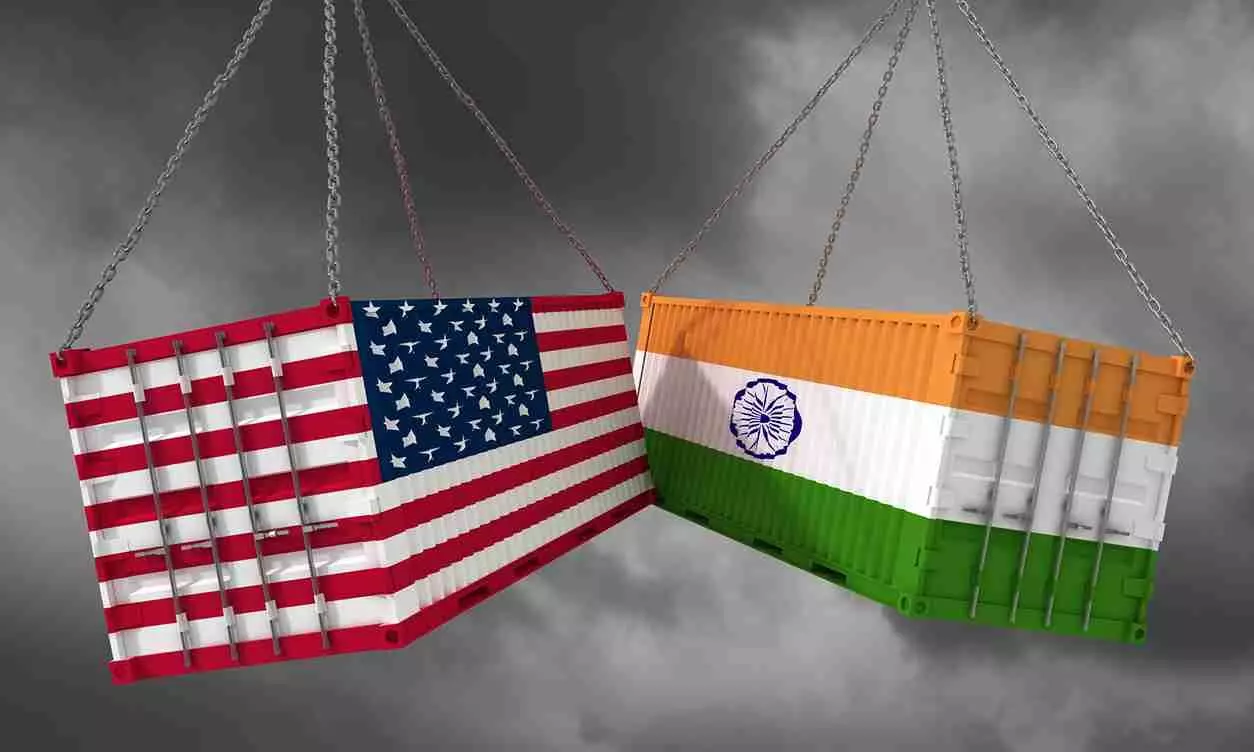
India-US trade deal faces uncertainty as experts push for fresh renegotiation
Experts say the US tariff shift voids earlier assumptions, gives India leverage to revisit concessions, and bolsters the case for a broader multilateral strategy

The recent ruling by the US Supreme Court striking down US President Donald Trump’s global tariffs has thrown ongoing trade negotiations with India into uncertainty, according to trade experts Biswajit Dhar and Abhijit Das.
The US Supreme Court found that the president had overstepped his powers, rendering the reciprocal tariffs, which formed the basis of a bilateral framework agreement, legally void.
Also read | US Supreme Court throws India a lifeline. Will Modi take it?
“Since all the reciprocal tariffs are now illegal, our trade deal, including the joint statement, becomes infructuous,” said Dhar. “We need to go back to the negotiating table and renegotiate terms that were imposed on us. Accepting the previous deal is no longer an option.”
India retains negotiating leverage
India, which had been actively negotiating a framework agreement under which it would face revised reciprocal tariffs of 18%, now faces a landscape altered by Trump’s quick move to replace the struck-down tariffs with a new 10% global levy under Section 122 of the US Trade Act.
Das said India still retains negotiating flexibility, as the interim agreement has not been formally signed. “Even without the deal, we will face 10% tariffs. With the deal, we also face 10% tariffs. There is no rationale to give concessions to the US under these circumstances,” he said. He suggested that India focus on commitments outlined in the February 2025 bilateral statement between Prime Minister Narendra Modi and Trump, which called for a broader bilateral trade agreement rather than concessions tied to the interim tariff framework.
Tariff tools face scrutiny
Experts also delved into the legal distinctions among the different US tariff tools. Section 122 tariffs, introduced by Trump after the Supreme Court ruling, target broad international situations such as significant currency devaluations, while Section 232 tariffs are invoked on national security grounds for sector-specific products. Section 301 tariffs, by contrast, focus on alleged violations by individual countries and can last for years. “From the WTO perspective, all three are illegal,” Das said. “They breach the US’s bound-rate commitments. But enforcement mechanisms are limited, making political strategy more crucial than legal recourse.”
Dhar added that India now has an opportunity to negotiate from a position of strength. “Trump is on the defensive. The US Congress previously voted against similar measures in the Canadian case. India, as the world’s fourth-largest economy, should leverage this moment to renegotiate the framework on stronger terms.”
Call for multilateral challenge
Looking ahead, the experts recommended a multilateral approach to challenge US tariffs. Dhar suggested that India lead a coalition of developing nations, including Brazil and China, to counter unilateral US measures, rather than relying on alignment with developed nations whose interests are often closer to the US. Das pointed to past precedents where countries including India, the EU, Mexico, and Japan successfully challenged US trade actions at the WTO, though he noted that political and diplomatic coalitions would be essential in the current environment.
Also read | Why SC Court order is not the end of Trump's tariffs push? Expert decodes
The ruling also raises questions about potential refunds for duties already paid, though both experts noted that practical and legal uncertainties remain. Das explained that refunds would go to US importers, not exporters, and any restitution to Indian exporters would require private arrangements between importers and exporters, depending on how duties were absorbed.
For India, the combination of legal ambiguity, political recalibration, and a new global tariff regime underscores the complexity of navigating trade relations with the US. “The government must renegotiate from strength and avoid repeating hasty concessions,” Dhar said. “The landscape has changed, and so must our strategy.”