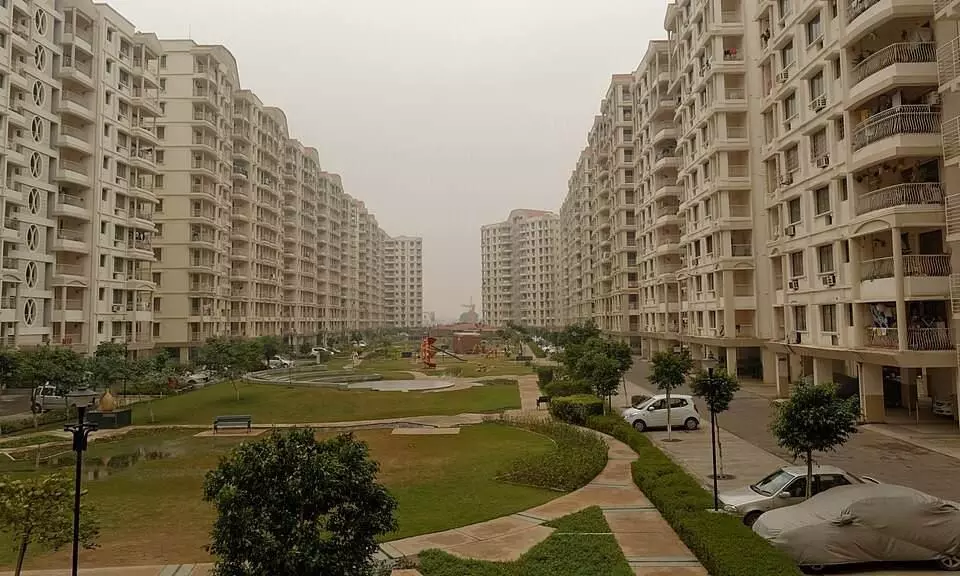
From specialised retirement apartments to integrated communities offering healthcare and concierge services, the sector is emerging as a new opportunity for property companies seeking to diversify beyond conventional residential projects. Representative image: Wikimedia Commons
Why developers are betting on senior living as India’s 60-plus population swells
With India’s elderly population projected to reach 346 million by 2050, developers are building retirement communities that combine premium residences, healthcare support, and professionally-managed services

India’s senior living market is attracting a growing share of real estate developers as demographic shifts, changing family structures, and rising affluence create demand for housing designed around ageing. From specialised retirement apartments to integrated communities offering healthcare and concierge services, the sector is emerging as a new opportunity for property companies seeking to diversify beyond conventional residential projects.
The latest example is the partnership between Manasum Senior Living and Signature Global to develop Manasum Varishta, a 164-unit senior living project at Signature Global Sarvam in DXP Estates, Sector 37D, Gurugram. With an estimated sales potential of Rs 575 crore, the project marks Manasum’s entry into Delhi-NCR.
The development will comprise three-bedroom apartments measuring 1,815 sq ft and 1,840 sq ft, priced at approximately Rs 3.7 crore each. Signature Global will handle land, construction, financing, and approvals, while Manasum will lead sales and manage senior living operations after handover.
The arrangement illustrates how conventional developers can enter a specialised housing segment by partnering with operators that understand the service requirements of older residents.
Ageing population creates new housing market
The opportunity extends well beyond Gurugram. According to a September 2026 report by property consultancy JLL, India had approximately 166 million people aged 60 and above, with the number projected to reach 346 million by 2050. Organised senior living supply stood at around 25,050 units in June 2026, highlighting the gap between demographic demand and available specialised housing.
JLL estimates that the sector could support approximately 74,000 organised units by 2030 under a policy-driven growth scenario, requiring capital investment of Rs 73,100 crore. Its projected market opportunity of USD 10.1 billion includes independent living, assisted care, and integrated health services.
Also Read: Tier-II cities, spiritual hubs, emerge as new growth markets for senior living in India
The demand drivers are structural. Nuclear families, children living overseas or in other cities, longer life expectancy, and a growing number of financially-independent retirees are changing expectations around retirement. Many families increasingly seek professional support without sacrificing residents’ independence.
Developers move beyond selling apartments
For real estate companies, senior living offers a differentiated product in a market where conventional residential housing remains competitive. Instead of selling only square footage and amenities, operators can build recurring service relationships through housekeeping, meals, wellness programmes, emergency assistance, and community activities.
Manasum Varishta will offer food and beverage services, concierge facilities, housekeeping, round-the-clock healthcare support, an ambulance on standby, and community engagement activities.
The project forms part of a 14-acre development with an overall development area of approximately 3.6 million sq ft. Construction is expected to begin within a month, according to the companies’ announcement, with sales targeted to close within 12–18 months and handover expected in around 48 months.
Also Read: What makes Senior Citizen Savings Scheme the best option for elders
The partnership model also divides responsibilities according to expertise: the developer brings land, execution capabilities, and project financing, while the specialist operator manages customer acquisition and the long-term service experience.
This model is gaining relevance as established property groups explore senior housing alongside their traditional residential portfolios. Real estate analysts say that since June 2025, several companies including Max Group, Pioneer Urban, Ashiana Housing, Primus Senior Living, and Manasum are among the players expanding in the segment.
Business opportunity extends beyond luxury housing
While premium projects are attracting attention, the sector’s long-term potential depends on serving different levels of care and affordability. JLL’s research found that assisted living accounts for less than 10 per cent of organised senior living stock, despite the growing needs of older residents requiring additional support.
A report released by the Association of Senior Living India with PwC’s support in October 2026 similarly emphasised that housing must evolve alongside professional care, rehabilitation, memory care, and home-based services. It highlighted shortages in trained caregivers, financing challenges, and the need for clearer quality standards.
Also Read: With rising incidents of crimes against senior citizens, how to make Indian cities seniors-friendly
These gaps represent both a commercial opportunity and an operational challenge. Building accessible homes is only one part of the equation; maintaining reliable healthcare access, trained staff, and consistent service quality over decades requires sustained investment.
Affordability will determine next phase of growth
At approximately Rs 3.7 crore per apartment, Manasum Varishta is positioned in the premium segment. Such projects may appeal to affluent retirees and families willing to pay for managed living, but they do not address the needs of most older Indians.
The next phase of growth will depend on whether developers and operators can offer a broader range of models, including rental housing, assisted living, and flexible care packages. Insurance coverage, financing options, and a larger trained workforce will also influence how quickly organised supply expands.
Also Read: Modi to launch health cover for senior citizens above 70 years on Oct 29
For India’s real estate industry, senior living is becoming more than a niche residential category. It is a long-term business opportunity at the intersection of housing, healthcare, and hospitality. The companies that succeed will need to demonstrate not only their ability to sell homes, but also their ability to deliver dependable care and community living as residents’ needs change.