India’s quick-commerce boom to drive 75 million sq ft. of urban logistics demand by 2030
High rents, limited property availability and zoning constraints could complicate the expansion of rapid-delivery networks

India’s e-commerce sector is poised to drive a significant expansion in urban logistics real estate as quick-commerce operators scale their rapid-delivery networks, with demand for fulfilment and warehousing space projected to reach about 75 million square feet by 2030, according to property consultancy CBRE South Asia Pvt. Ltd.
The projected requirement comprises approximately 42 million square feet for in-city dark stores and another 33 million square feet for larger warehouses, known as mother hubs that replenish multiple outlets. The expansion underscores how the growth of quick commerce is reshaping real estate requirements, creating demand for strategically located properties that can support high-volume order fulfilment and rapid deliveries.
However, securing suitable locations could become a growing challenge as operators expand beyond major metropolitan markets. High rents, limited availability of suitable properties and zoning considerations are expected to complicate the development of fulfilment networks, particularly in densely populated urban areas where proximity to consumers is critical.
Quick-commerce ecosystem expansion
India’s quick-commerce ecosystem had expanded to approximately 7,800 dark stores in 2026, occupying about 27 million square feet across more than 100 cities, according to CBRE’s report, India’s Quick Commerce Scale-up: Decoding Dark Stores and Urban Logistics Demand. The network is projected to exceed 12,000 stores by 2030.
Also read: Festive shopping: e-commerce orders jump 31 pc; 42 pc bookings from tier-3 towns
While the sector remains concentrated in major cities, with 65 per cent to 70 per cent of dark stores located in the top eight markets, expansion into tier-II and tier-III cities is gaining momentum. This geographical diversification could widen demand for urban logistics properties, but it will also require operators to adapt their real estate strategies to local market conditions and operational requirements.
“Quick commerce is reshaping how consumption and urban logistics intersect in India, and real estate sits at the heart of this shift,” said Anshuman Magazine, chairman and chief executive officer for India, South-East Asia, the Middle East and Africa at CBRE.
As platforms move towards more disciplined growth, the emphasis is shifting from simply adding stores to developing dense, efficient and well-located fulfilment networks, he said. This is expected to create opportunities across inner-city locations and urban peripheries.
Real estate constraints
The next phase of quick-commerce growth will depend on more than the number of stores operators can establish. Properties must also meet specific operational requirements, including ground-floor access, efficient loading arrangements, space for delivery riders to circulate and sufficient power to support cold-chain infrastructure.
Location remains particularly important because dark stores must serve nearby consumer catchments while enabling rapid order processing and delivery. A property that offers sufficient floor space but lacks suitable access, loading facilities or proximity to customers may not meet an operator’s requirements.
Also read: Beyond the Metros: India’s next 11 real estate hotspots
“As networks expand, operators will increasingly assess sites on their ability to support high-throughput fulfilment, rather than on floor area alone,” said Ram Chandnani, managing director of leasing services at CBRE India. He identified ground-floor access, rider circulation, loading arrangements, power for cold-chain infrastructure and proximity to the relevant catchment as critical factors determining a location’s viability.
These requirements could narrow the pool of suitable properties in established urban markets. As availability constraints and high rents become more pronounced, operators may need to balance the cost of securing prime locations against the operational benefits of placing inventory closer to consumers.
The challenge is particularly significant for a business model that depends on a dense network of fulfilment points. Expansion requires not only additional stores but also an efficient distribution system capable of replenishing them without increasing operational complexity.
Mother hubs are key growth driver
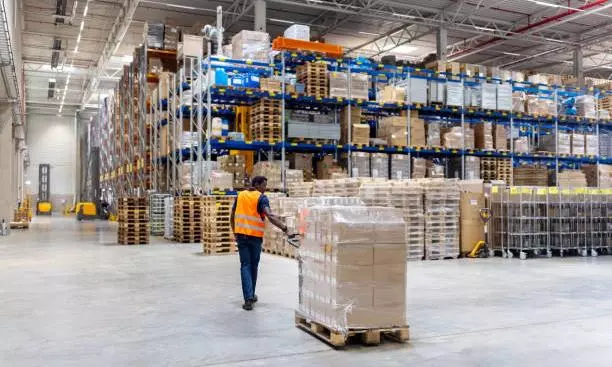
To support their expanding networks, quick-commerce operators are increasingly relying on larger mother hubs located on city outskirts. These facilities supply multiple dark stores through a hub-and-spoke distribution model, helping operators manage inventory and replenish urban outlets.
Mother hubs measuring approximately 100,000 to 125,000 square feet are becoming central to this model. Each typically serves between 30 and 50 dark stores, depending on store density within a city. They also accommodate additional stock-keeping units that cannot be stored in compact urban facilities.
The model is creating a separate source of demand for larger logistics properties, particularly Grade A warehouses in logistics parks.
Quick-commerce-related warehousing demand grew at a compound annual growth rate of 81 per cent between 2021 and 2025, accounting for 4 per cent to 5 per cent of India's total logistics leasing during the period, according to CBRE.
Also read: E-commerce discounts: Economist decodes FOMO, pricing tricks
Annual space take-up increased to 4.3 million square feet in 2025 from 3.1 million square feet in 2024, reflecting the sector’s growing requirements for replenishment and storage infrastructure.
Demand has remained concentrated in a handful of major markets. Delhi-NCR accounted for 21 per cent of quick-commerce-related leasing between 2021 and the first half of 2026, followed by Mumbai at 20 per cent and Bengaluru at 17 per cent. Hyderabad and Chennai accounted for 16 per cent and 11 per cent, respectively.
Tier-II cities, partnerships could reshape demand
As expansion moves beyond metropolitan markets, operators are exploring cities including Jaipur, Lucknow, Surat, Coimbatore and Nagpur, where comparatively cost-effective real estate could support network growth.
However, the availability of suitable space will remain a determining factor. Developers and landlords able to provide well-located, compliant properties designed for fulfilment operations could be better positioned to benefit from the sector’s expansion, Magazine said.
Alternative operating models could also influence leasing patterns through 2030. Franchise-led dark stores may allow platforms to enter smaller cities more quickly, while third-party logistics providers could assume responsibility for warehousing, fulfilment and last-mile delivery.
Shared fulfilment infrastructure and partnerships with neighbourhood kirana stores, which could function as micro-warehouses, offer additional ways to expand distribution networks without relying exclusively on dedicated facilities.
Also read: Delhi-NCR, Chennai drive 47 pc of warehousing leasing as volumes rise 26 pc: Report
Such arrangements could help operators manage property costs and deploy capital more selectively, particularly in markets where establishing a dense network of owned or directly operated stores may be difficult. “The next phase of growth will also require a more differentiated real estate network, with dense inner-city dark stores supported by larger Grade A mother hubs for replenishment and wider assortments,” Chandnani said.
Urban logistics demand
Purpose-built and shared fulfilment facilities could become increasingly important as operators contend with rising property constraints and seek more capital-efficient expansion strategies, he added.
The projected requirement for 75 million square feet of urban logistics space by 2030 highlights the growing importance of real estate in India's quick-commerce expansion. But converting that demand into viable operations will depend on whether operators can secure properties that combine suitable locations, manageable costs and the infrastructure needed to support rapid fulfilment.
For developers and landlords, the opportunity will extend beyond adding warehouse capacity to providing a network of specialised assets that can serve both densely populated urban catchments and the larger distribution hubs supporting them.