



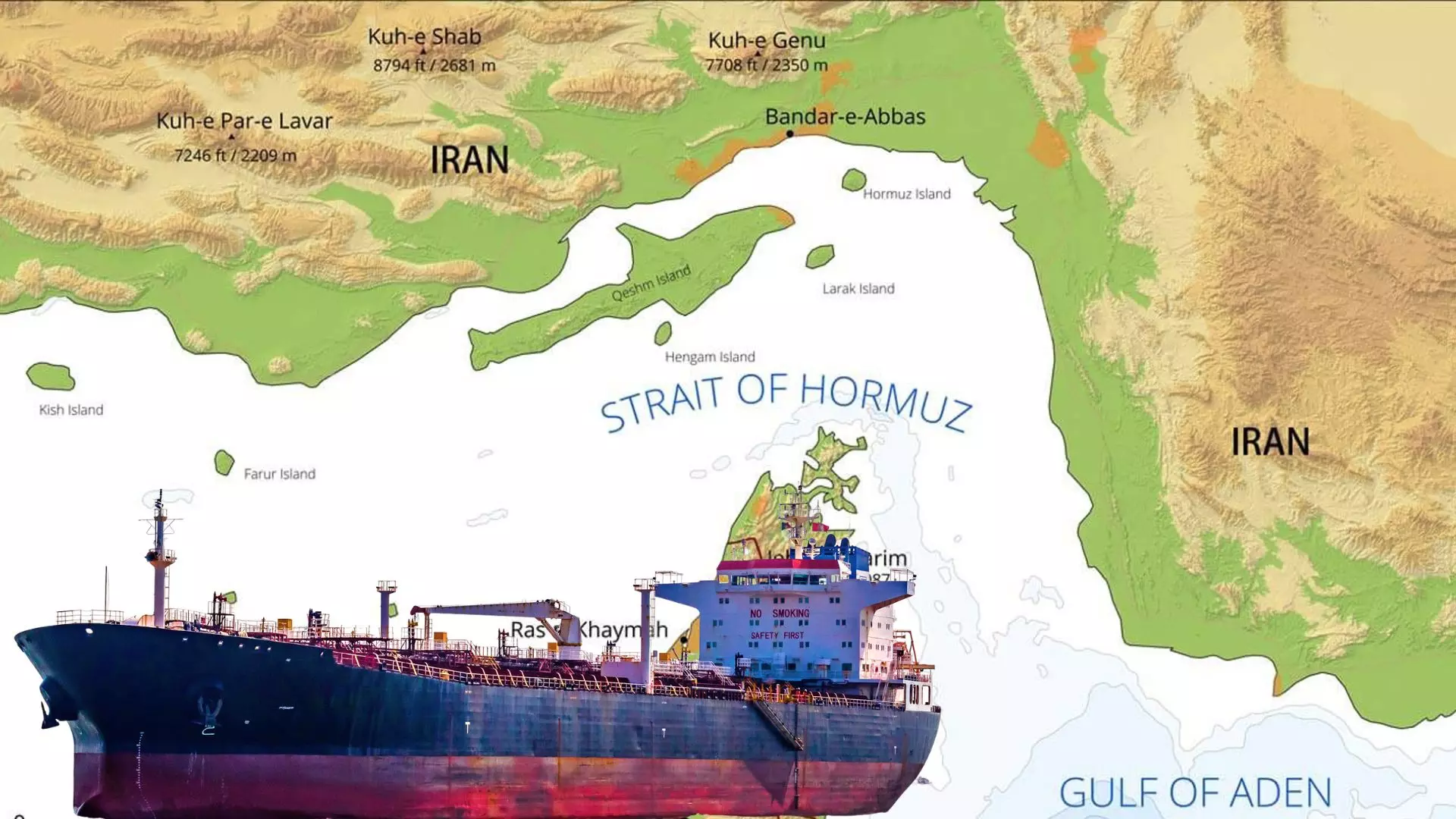
Explained: How closure of Strait of Hormuz impacts India
US and Israeli strikes on Iran shift focus to the Strait of Hormuz. If this oil lifeline is disrupted, could India face soaring fuel costs?

The world’s attention is fixed on one narrow stretch of water — the Strait of Hormuz. After US and Israeli strikes on Iran, markets are watching the events closely, fearing possible retaliation that could disrupt global oil supplies.
What began as military action is now an economic concern. The key question is whether the Strait of Hormuz will remain open and safe for commercial shipping.
The Strait is one of the world’s most critical energy choke points. Around a third of global seaborne oil exports and about 20 percent of liquid natural gas exports pass through it.
Why it matters
In 2025, more than 14 million barrels per day flowed through the Strait. Nearly three-quarters of those shipments went to China, India, Japan, and South Korea. China alone receives half of its crude imports through this route.
Iran, the fourth-largest oil producer in OPEC, pumps just over 3 million barrels per day and shares a coastline along the Strait. That geography gives Tehran proximity and strategic leverage.
After the strikes, markets began pricing in the risk of disruption. Even the possibility of instability can move oil prices sharply.
War premium
Oil traders often factor in what is known as a “war premium.” Prices rise not because supply has stopped, but because of fear that it might.
Energy analyst Bob McNally, a former White House energy adviser to former President George W. Bush, told CNBC that crude prices could jump by “5 to 7 dollars per barrel” when markets open.
On Friday, Brent crude settled at 72 dollars and 48 cents per barrel. But if the Strait becomes unsafe for commercial traffic, prices could spike above 100 dollars per barrel. McNally has warned that a prolonged closure would be “a guaranteed global recession.”
India impact
For India, the stakes are high. The country imports most of its crude oil, and around half of these imports pass through the Strait, particularly shipments from Saudi Arabia, Iraq, the UAE, and Kuwait.
India’s crude basket was around 70 dollars and 86 cents. The country has maintained some cost advantage by importing discounted Russian oil, roughly 6 to 10 dollars below benchmark rates.
However, if disruption continues, India could feel the impact in three stages.
First, global crude prices would rise. Since India buys oil at international rates, higher prices would increase fuel costs and add pressure on inflation.
Second, freight and insurance costs would climb. If the region is classified as high risk, tanker operators demand higher charges and insurers raise premiums. These costs are passed on to importing nations.
Reports indicate that more than 20 million barrels of crude were loaded for export in the Gulf on February 28. However, some tankers have reportedly diverted instead of passing through the Strait, signalling caution in the market.
Supply risks
Third, supply chains could slow down. Ships may avoid the route or wait for security clearance, causing delays. Even short disruptions can tighten supply and create uncertainty.
Alternative routes exist but are limited. Saudi Arabia has a pipeline to the Red Sea, and the UAE has a pipeline that bypasses the Strait into the Gulf of Oman. However, these cannot fully replace the Strait’s capacity.
Higher oil prices would have ripple effects for India. They could raise fuel prices, widen the current account deficit, increase inflationary pressure, and strain government finances.
India does have some cushion. It maintains strategic petroleum reserves designed for emergencies and has diversified crude sourcing in recent years.
There is also a military dimension. Tehran is believed to possess naval mines and short-range missiles. Even limited deployment could disrupt traffic through the narrow waterway.
Nearly a fifth of the world’s oil trade moves through the Strait of Hormuz. This is not just a regional issue; it is a global vulnerability.
If tensions ease, markets may stabilise quickly. But if the situation escalates, oil prices could surge sharply, affecting economies worldwide.
Because sometimes geopolitics shakes markets not through bombs alone — but through sea routes.
And right now, one sea route holds enormous power over the global economy: the Strait of Hormuz.
The content above has been transcribed from video using a fine-tuned AI model. To ensure accuracy, quality, and editorial integrity, we employ a Human-In-The-Loop (HITL) process. While AI assists in creating the initial draft, our experienced editorial team carefully reviews, edits, and refines the content before publication. At The Federal, we combine the efficiency of AI with the expertise of human editors to deliver reliable and insightful journalism.


