Cheaper clothes, smaller cities: How value fashion is reshaping India’s apparel market
Much of the industry’s growth is coming from opening more stores, particularly in smaller cities, rather than customers spending significantly more at existing outlets

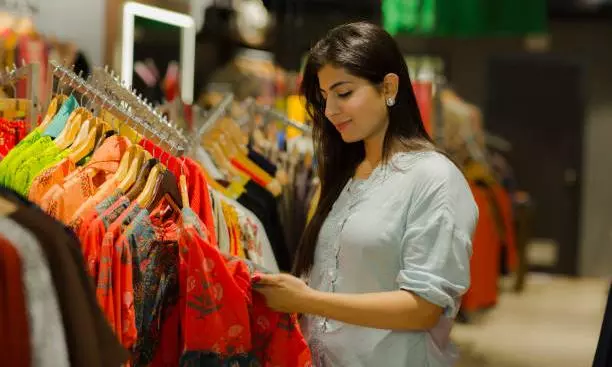
For Indian shoppers looking to stretch their festive budgets, fashion is increasingly becoming a game of getting more for less. Affordable apparel is gaining ground even as consumers spread their discretionary spending across travel, eating out and other lifestyle categories. For organised clothing retailers, that shift is translating into healthy volumes — but not necessarily higher value.
India’s organised apparel retail sector is expected to grow 12-13% this fiscal, slower than the roughly 15% growth clocked last year, as consumers diversify their discretionary spending, according to a new Crisil Ratings analysis. The report, however, suggests that the biggest opportunity for retailers is coming from the very segment that is making fashion more affordable: value fashion.
Value fashion drives growth
The trend has significant implications for both shoppers and retailers. Consumers are getting a wider choice of fashionable clothing at lower price points, while retailers are increasingly relying on high-volume, lower-priced merchandise and expansion into smaller cities to drive growth.
Also read | Why India’s electronics boom in BRICS comes with a concentration risk
Crisil’s analysis of 41 organised apparel retailers, accounting for around 28% of the organised apparel market, found that value fashion has been growing more than twice as fast as other segments over the past three fiscals. Its share of sector revenue has consequently risen from 39% to 46%.
“Value fashion has emerged as the key growth driver for organised retailers,” said Anuj Sethi, Senior Director, Crisil Ratings, adding that the shift reflects rising aspirational consumption among price-conscious consumers, wider choice at lower price points and greater penetration into smaller cities.
Festive season to test the trend
The timing is crucial. The festive season, which has just begun, typically contributes nearly 35% of annual apparel sales, making the next few months a key test of consumer demand.
Apparel revenue growth between April and August remained in the high single digits, according to Crisil, but much of that growth came from value fashion. The festive season will show whether consumers are prepared to spend more on clothes or whether they continue to prioritise affordability.
The shift towards cheaper fashion is also reflected in the broader market mix. Value fashion, fast fashion and mid-premium apparel — largely products priced below Rs 2,500 — together account for around two-thirds of organised apparel retail revenue.
For consumers, that means more options at accessible prices. For retailers, however, it creates a difficult equation: Selling more pieces does not automatically translate into proportionately higher revenue or margins.
Cotton prices squeeze retailers
The pressure is particularly visible on the cost side.
Cotton prices have risen and operating costs remain elevated, but retailers may find it difficult to pass on the entire increase to consumers because competition remains intense. Crisil expects operating margins to contract by around 100 basis points to nearly 14% this fiscal.
That leaves retailers walking a narrow line between keeping prices attractive enough to drive volumes and protecting profitability. “Maintaining the balance between growth and profitability will remain critical,” said Poonam Upadhyay, Director, Crisil Ratings.
Revenue productivity provides another reason for caution. Revenue per square foot has remained broadly flat at around Rs 11,000 over the past three fiscals and is unlikely to improve meaningfully this year as same-store sales growth remains subdued, Crisil said.
In other words, much of the industry’s growth is coming from opening more stores rather than customers spending significantly more at existing outlets.
Smaller cities drive expansion
That is pushing organised retailers deeper into tier-II and tier-III cities, where the economics of expansion can be more attractive.
Value-fashion chains are leading the store rollout as retailers look beyond saturated large-city markets. Lower store set-up and operating costs in smaller cities also mean that companies can expand without taking on disproportionate financial risk.
Crisil expects industry capital expenditure to remain around Rs 2,500 crore this fiscal, broadly in line with last year.
For rated apparel retailers, average gearing is expected to remain around 1.3 times, while interest cover is projected at about 8 times, suggesting that the expansion is unlikely to materially weaken credit profiles in the near term.
Physical stores remain crucial
Despite the rapid rise of e-commerce, the physical store remains at the heart of India's apparel business.
Online sales account for only around 10% of total retail sales, according to Crisil, but changing shopping behaviour is forcing brands to invest more in digital capabilities. Consumers increasingly discover products online, compare prices and then move between digital and physical channels before making a purchase.
For retailers, therefore, the battle is shifting towards an omnichannel model — using online platforms to acquire and engage customers while relying on stores for the bulk of sales.
The expansion into smaller cities could make that equation even more important as organised retail reaches consumers who previously had fewer branded fashion options.
Faster fashion tightens inventory
The growth of value fashion is also changing the industry's supply chain.
With shorter fashion cycles and frequent product refreshes, retailers need to replenish popular products quickly while avoiding excess inventory. Faster sourcing and more responsive supply chains can help reduce obsolete stock and write-offs without significantly increasing working-capital requirements.
Also read | Apple unveils foldable iPhone Duo, iPhone 18 Pro: Check price, colours, pre-book date
That discipline could become particularly important as margins come under pressure. For now, Crisil expects the industry's credit profile to remain stable, helped by measured expansion and relatively low capital requirements in smaller markets.
But the sector’s next phase of growth will depend less on simply opening more stores and more on whether those stores generate adequate sales, whether consumers continue to favour value fashion and whether retailers can absorb higher cotton and operating costs.
For shoppers, the immediate outcome is likely to be continued access to affordable fashion. For retailers, the challenge is making that affordability profitable.
The festive season, the durability of value-fashion demand and the movement in cotton prices will determine whether India’s apparel industry can turn its volume-led growth into sustainable earnings this fiscal.