Budget 2026 | The same old grouse: Kerala feels Left out
Exclusion from 7 national high-speed corridors highlights friction between the state's RRTS plan and Centre-backed high-speed rail proposal

The Union Budget 2026–27 has projected high-speed rail as a cornerstone of India’s next phase of infrastructure-led growth, announcing seven corridors that the Centre says will function as “growth connectors” between major economic regions.
Yet Kerala finds no mention in this national blueprint, a silence that has renewed questions about the state’s place in India’s transport future and sharpened an already fraught relationship between the Left Democratic Front (LDF) government and the Union government.
Also read: Budget 2026-27 unveils high-speed rail, freight corridors push
Finance Minister Nirmala Sitharaman announced high-speed rail corridors linking Mumbai–Pune, Pune–Hyderabad, Hyderabad–Bengaluru, Hyderabad–Chennai, Chennai–Bengaluru, Delhi–Varanasi and Varanasi–Siliguri. The proposed grid links western India with the Deccan plateau, southern metros with one another, and northern India with the eastern corridor. Kerala, despite its dense population, high urbanisation, ports, and strong inter-state economic links, remains entirely outside this network.
Kerala ignored
The omission is especially stark in the southern context. While Tamil Nadu and Karnataka are connected through the Chennai–Bengaluru high-speed corridor, no extension towards Kochi or Thiruvananthapuram has been proposed. As a result, Kerala’s major urban centres—Thiruvananthapuram, Kochi and Kozhikode—are left dependent on conventional rail and road networks even as neighbouring states prepare for high-speed inter-city travel.
The Budget positions high-speed rail not merely as a transport upgrade but as a strategic economic intervention. These corridors are expected to compress travel time, integrate labour markets, ease business mobility and create large, contiguous economic regions. Once operational, cities like Bengaluru, Chennai and Hyderabad could function as a single, high-speed economic cluster, with travel times reduced to a few hours.
Also read: Why a high-speed rail network could lead to Kerala-Centre flashpoint
Kerala’s exclusion carries long-term economic implications. Travel between Kochi and Bengaluru or Chennai currently takes several hours by rail or road, limiting daily commuting and business integration. As high-speed corridors reshape investment patterns elsewhere, Kerala risks falling behind in regional competitiveness despite its strong human development indicators and service-led economy.
Kerala’s RRTS proposal
The Budget silence on Kerala’s rail connectivity comes against the backdrop of the state government’s proposal for a Regional Rapid Transit System (RRTS), a semi-high-speed rail network designed for Kerala’s specific conditions—short distances between cities, high population density and limited land availability.
Also read: SilverLine out, central high-speed rail in: The contest over Kerala’s mobility control
The LDF government has argued that a semi-high-speed system with more frequent stations is more viable than a full-fledged bullet train in Kerala’s narrow geography. However, the Centre has not granted the project the clearances or financial backing the state has sought. Concerns over cost, land acquisition and viability have been cited, but Kerala has consistently framed the delay as part of a broader pattern of fiscal and administrative resistance from the Union government.
Centre-backed proposal
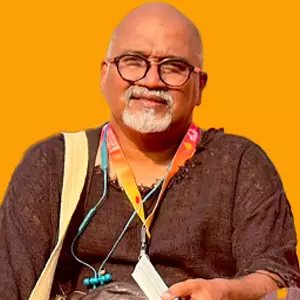
The debate took a sharper turn when veteran engineer E Sreedharan announced at a news conference that the Union government would soon announce a high-speed rail corridor from Thiruvananthapuram to Kannur. He said the Delhi Metro Rail Corporation (DMRC) would be a partner in preparing the Detailed Project Report (DPR) and that an office had been opened at Ponnani in Malappuram district for preliminary work.
The statement appeared to contradict both the budget announcements and the state government’s understanding of the Centre’s position. LDF leaders publicly questioned the claim, stating that the state government had received no communication from the Union government regarding any such project. They pointed out that projects of this scale require formal consultations, approvals and correspondence, none of which had taken place.
Also read: Will support rail projects in Kerala if environmentally, financially viable: Satheesan
The state also clarified that it had not been approached regarding land acquisition, alignment studies or funding models for a Thiruvananthapuram–Kannur high-speed rail line. In the absence of any official confirmation, the LDF described the announcement as premature and lacking institutional backing.
Though Nirmala Sitharaman did not mention about high speed rail project in Kerala, Metroman E. Sreedharan has said that there is still hope for the high-speed rail project for Kerala. He stated that he already knew there would be no announcement about the project in the Union Budget. Meanwhile, the office related to the project, in Ponnani, will begin functioning tomorrow itself. He clarified that central approval would be obtained in due course.
E Sreedharan plans to open the office on Monday (February 2)
He accused the state government of being the main reason for the delay, stating that the biggest setback was the failure to officially inform the Centre that Kerala did not want the K-Rail project. Despite repeated requests, the Chief Minister has not sent a letter to the Centre. According to him, the RRTS project now being proposed by the government is merely an “election stunt.”
Rail plans unclear
The episode highlighted the lack of clarity surrounding Kerala’s rail future which is caught between an unapproved state proposal and informal signals about a national high-speed project that has not found reflection in budgetary or policy documents.
Kerala had expected an ocean of hope, but what it got was just a turtle, CPI(M) M P John Brittas said mockingly. “This is a Budget based on reports that destabilise the Finance Commission, and one in which not even a single demand raised by Kerala has been considered”, Brittas said.
This was a Budget in which not even one of Kerala’s demands found place. They want Kerala to move like a turtle.
John Brittas also criticised E Sreedharan, saying that Sreedharan is only a private individual and that permission for a high-speed rail project has to come from the Union Railway Ministry.
“They have already announced 22 AIIMS. There is a state that has two AIIMS. An Ayurveda AIIMS has also been announced, and Kerala is not included there either. Kerala, which has inland waterways, has been ignored, while Patna and Varanasi have been given projects. This was a Budget in which not even one of Kerala’s demands found place. They want Kerala to move like a turtle. This Budget legitimises that approach,” said John Brittas.
Kerala in Budget
While Kerala is absent from the high-speed rail map, the Budget does include several Kerala-linked sectoral announcements. The state features in the proposed rare earth corridor alongside Odisha, Andhra Pradesh and Tamil Nadu. It is also included in turtle conservation initiatives and stands to benefit from national schemes for coconut promotion, cashew development, fisheries value chains and coastal cargo promotion.
These interventions align with Kerala’s natural resources and traditional sectors but do not constitute transformative infrastructure investments. Rare earth corridors are concentrated in coastal Kerala, coconut and cashew schemes support existing agricultural livelihoods, and fisheries initiatives strengthen coastal economies. They offer incremental gains rather than the structural shift associated with large-scale connectivity projects.
The Budget also outlines an ambitious plan to increase the share of inland waterways and coastal shipping from 6 per cent to 12 per cent by 2047. While Kerala’s coastline and backwaters make it a natural beneficiary, none of the 20 proposed new National Waterways have been specifically identified in the state.
Also read: Scrapping of Rail Budget: The original sin behind India’s railway crisis
The budget’s emphasis on City Economic Regions (CERs), with ₹5,000 crore allocated per region over five years through a challenge-based selection process, adds another layer of uncertainty. Kerala’s cities could theoretically compete for CER status, but the absence of high-speed rail connectivity may itself weaken their competitiveness when compared to cities that are part of national high-speed corridors.
Kerala’s exclusion from the high-speed rail plan has become emblematic of a wider debate on cooperative federalism. The state argues that infrastructure planning must accommodate regional realities and state-specific proposals, while the Centre’s approach reflects a selective, corridor-driven national strategy.
Union Budget 2026–27 thus presents a contradictory picture for Kerala. The state is acknowledged for its natural resources and traditional economic strengths, yet excluded from the infrastructure that is expected to define India’s future economic geography.